Mallapragada Saahithi, Lyu Ruqian, Williams-Katek Arianna L, Fischer Brandon K, Vannan Annika, Hadad Niran, Mee Evan D, Shirazi Shawyon P, Jetter Christopher S, Negretti Nicholas M, Hilgendorff Anne, Eldredge Laurie C, Deutsch Gail H, McCarthy Davis J, Kropski Jonathan A, Sucre Jennifer M S, Banovich Nicholas E
Division of Bioinnovation and Genome Sciences, Translational Genomics Research Institute, Phoenix, AZ, USA.
School of Life Sciences, Arizona State University, Tempe, AZ, USA.
bioRxiv. 2025 Jun 5:2025.06.02.656433. doi: 10.1101/2025.06.02.656433.
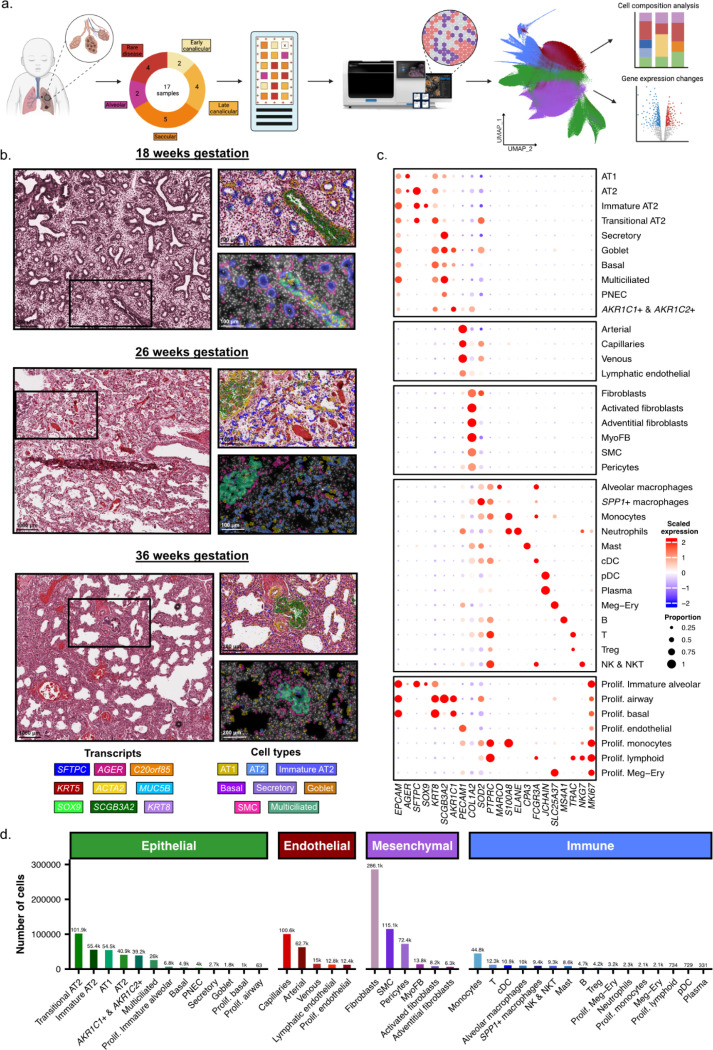
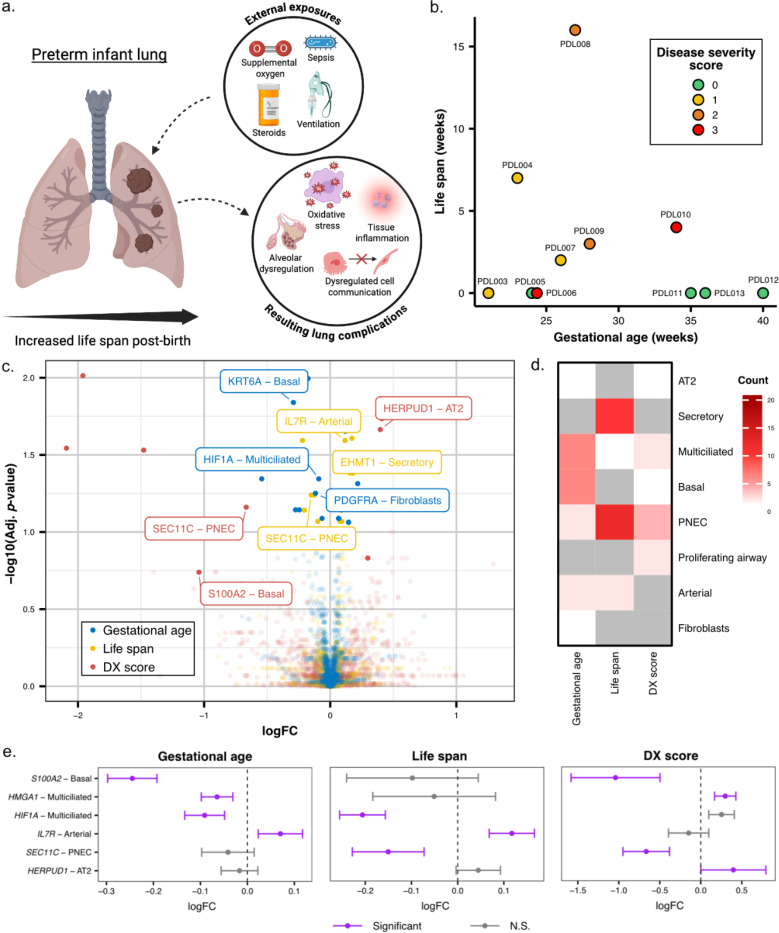
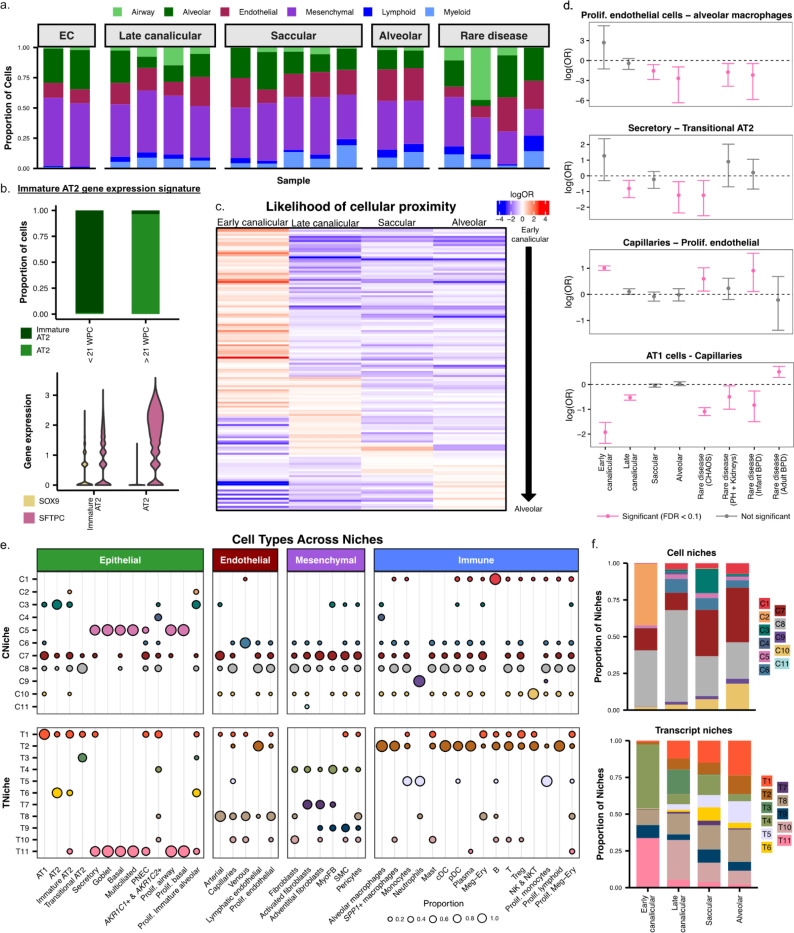
A molecular understanding of lung organogenesis requires delineation of the timing and regulation of the cellular transitions that ultimately form and support a surface capable of gas exchange. While the advent of single-cell transcriptomics has allowed for the discovery and identification of transcriptionally distinct cell populations present during lung development, the spatiotemporal dynamics of these transcriptional shifts remain undefined. With imaging-based spatial transcriptomics, we analyzed the gene expression patterns in 17 human infant lungs at varying stages of development and injury, creating a spatial transcriptomic atlas of ~1.2 million cells. We applied computational clustering approaches to identify shared molecular patterns among this cohort, informing how tissue architecture and molecular spatial relationships are coordinated during development and disrupted in disease. Recognizing that all preterm birth represents an injury to the developing lung, we created a simplified classification scheme that relies upon the routinely collected objective measures of gestational age and life span. Within this framework, we have identified cell type patterns across gestational age and life span variables that would likely be overlooked when using the conventional "disease vs. control" binary comparison. Together, these data represent an open resource for the lung research community, supporting discovery-based inquiry and identification of targetable molecular mechanisms in both normal and arrested human lung development.
对肺器官发生的分子理解需要明确最终形成并支持能够进行气体交换表面的细胞转变的时间和调控机制。虽然单细胞转录组学的出现使得在肺发育过程中存在的转录上不同的细胞群体得以发现和鉴定,但这些转录变化的时空动态仍不明确。通过基于成像的空间转录组学,我们分析了17个处于不同发育和损伤阶段的人类婴儿肺中的基因表达模式,创建了一个包含约120万个细胞的空间转录组图谱。我们应用计算聚类方法来识别该队列中的共享分子模式,以了解在发育过程中组织结构和分子空间关系是如何协调的,以及在疾病中是如何被破坏的。认识到所有早产都代表着对发育中的肺的一种损伤,我们创建了一种简化的分类方案,该方案依赖于常规收集的胎龄和寿命的客观测量指标。在此框架内,我们确定了跨胎龄和寿命变量的细胞类型模式,而使用传统的“疾病与对照”二元比较时这些模式可能会被忽视。总之,这些数据为肺研究界提供了一个开放资源,支持在正常和停滞的人类肺发育中基于发现的探究以及可靶向分子机制的识别。