
早期胃癌腹腔镜保留幽门胃切除术的争议与共识
Controversies and consensus surrounding laparoscopic pylorus-preserving gastrectomy for early gastric cancer.
作者信息
Ye Ying-Xuan, Wu Chu-Ying, Chen Li-Quan, Wu Si-Jia, Ye Kai
机构信息
School of Medicine, South China University of Technology, Guangzhou 510000, Guangdong Province, China.
Department of Gastrointestinal Surgery, The Second Affiliated Hospital of Fujian Medical University, Quanzhou 362000, Fujian Province, China.
出版信息
World J Gastrointest Surg. 2025 May 27;17(5):105295. doi: 10.4240/wjgs.v17.i5.105295.
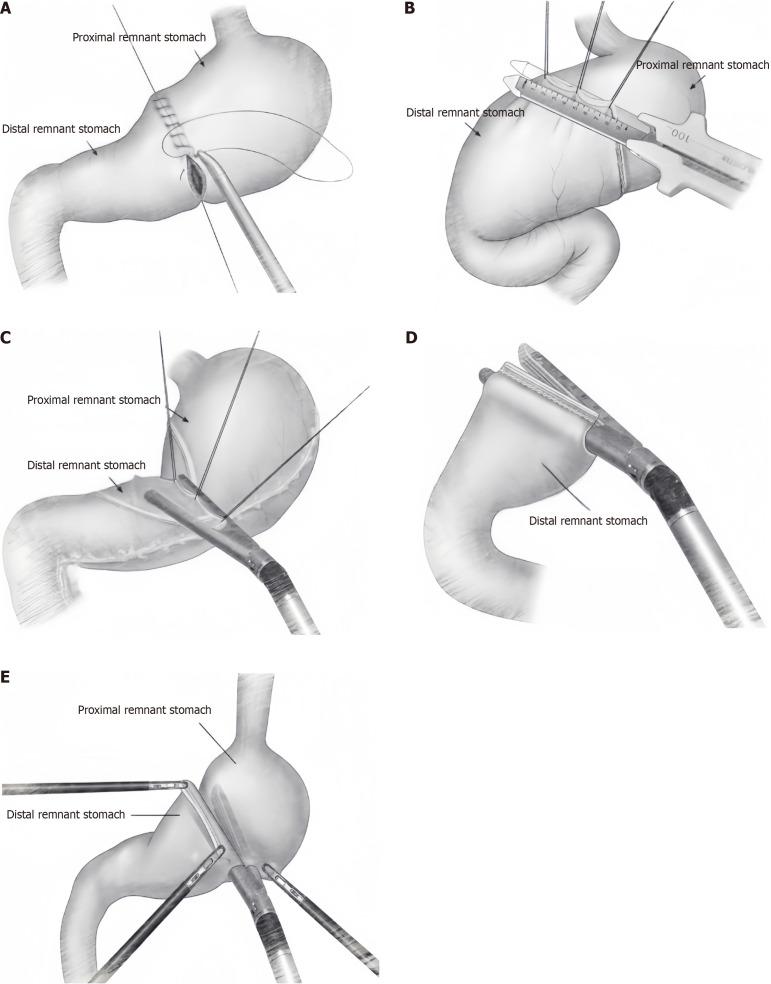
In recent years, the detection rate of early gastric cancer in China has significantly increased. Early gastric cancer is associated with a favourable prognosis; thus, enhancing the postoperative quality of life for patients has become an increasingly pressing issue in treating gastric cancer. Consequently, function-preserving gastrectomy has emerged as a viable option. This surgical approach aims to minimize the extent of resection while preserving some gastric function, all within the framework of radical tumour excision. Pylorus-preserving gastrectomy (PPG) serves as a representative example of a function-preserving technique and is particularly suitable for early-stage gastric cancer of the middle segment of the stomach. Compared with distal gastrectomy, laparoscopic PPG offers several advantages: (1) Results in less surgical trauma; and (2) Reduces the incidence of postoperative complications such as dumping syndrome, bile reflux gastritis, and gallstones while also improving nutritional status postsurgery. However, the implementation of PPG remains contentious within the medical community. In light of new Japanese guidelines for gastric cancer treatment and informed by current research trends along with relevant evidence-based medicine principles, this review examines various aspects related to laparoscopic PPG, including its definition and indications, safety profile, benefits, technical considerations, methods for digestive tract reconstruction and postoperative complications.
近年来,我国早期胃癌的检出率显著提高。早期胃癌预后良好,因此,提高患者术后生活质量已成为胃癌治疗中日益紧迫的问题。因此,保留功能的胃切除术已成为一种可行的选择。这种手术方法旨在在根治性肿瘤切除的框架内,在保留部分胃功能的同时尽量减少切除范围。保留幽门的胃切除术(PPG)是保留功能技术的一个典型例子,特别适用于胃中段的早期胃癌。与远端胃切除术相比,腹腔镜PPG具有以下几个优点:(1)手术创伤较小;(2)降低术后倾倒综合征、胆汁反流性胃炎和胆结石等并发症的发生率,同时改善术后营养状况。然而,PPG的实施在医学界仍存在争议。根据日本新的胃癌治疗指南,并结合当前的研究趋势以及相关循证医学原则,本综述探讨了与腹腔镜PPG相关的各个方面,包括其定义和适应症、安全性、益处、技术考量、消化道重建方法及术后并发症。
 Zotero 插件