Sadagopan Nishanth S, Gomez Mateo, Tripathi Shashwat, Billingham Leah K, DeLay Susan L, Cady Martha A, Congivaram Harrshavasan T S, Chia Tzu-Yi, Wan Hanxiao, Wang Si, Raleigh David R, Kaluba Faith C, Lien Evan C, Heimberger Amy B, Lee-Chang Catalina, Youngblood Mark W, Magill Stephen T, Miska Jason M
Northwestern University Feinberg School of Medicine.
University of California.
Res Sq. 2025 Jun 4:rs.3.rs-6779386. doi: 10.21203/rs.3.rs-6779386/v1.
is increasingly implicated for its oncogenic role in many malignancies, including meningiomas. While prior work has linked expression to higher-grade meningiomas and treatment resistance, the metabolic phenotype of activation remains unexplored in meningioma.
We performed single-cell RNA sequencing on NOTCH3 + human meningioma cell lines. Using the CH157-MN meningioma cell model, we overexpressed intracellular domain (ICD) and performed untargeted metabolomic, lipidomic, and bulk RNA sequencing analyses as well as functional metabolic assays.
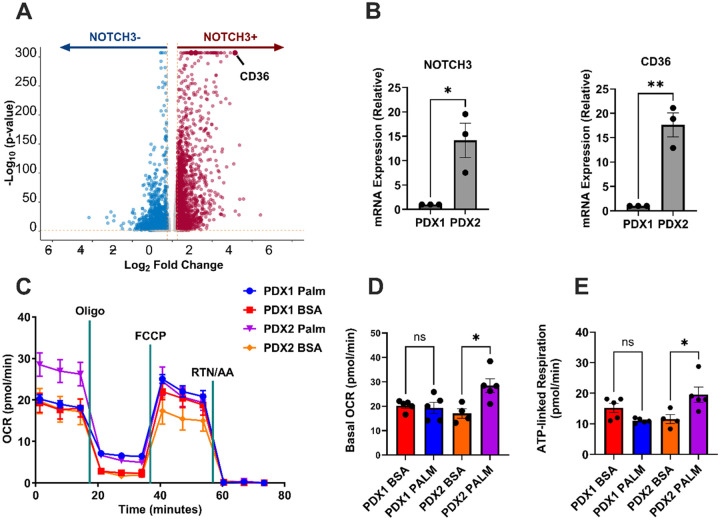
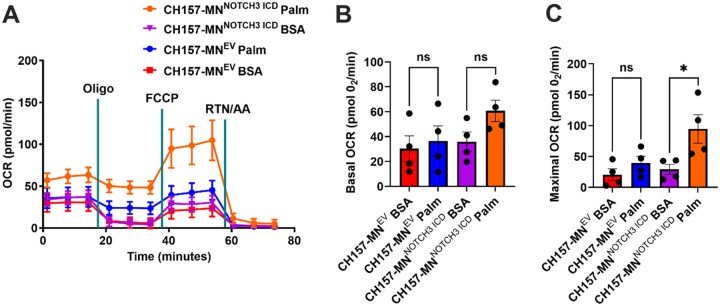
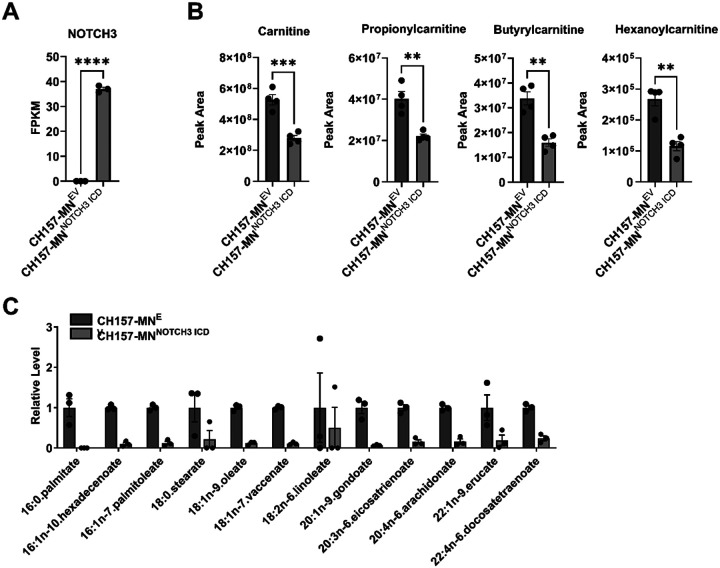
We show that mediates a metabolic shift towards fatty acid oxidation (FAO), depleting lipid availability and conferring resistance to ferroptosis. Single-cell RNA sequencing revealed a correlation with CD36, a key fatty acid transporter. Furthermore, patient-derived primary meningioma lines stratified by expression confirmed higher CD36 expression and increased maximal mitochondrial respiration in -high cells in the presence of palmitate, supporting enhanced FAO. ICD overexpression (OE) exhibited depletion of fatty acid pools, alongside transcriptional upregulation of canonical FAO genes. Functional mitochondrial assays confirmed elevated oxidative respiration in the presence of palmitate compared with controls. Additionally, OE cells exhibit increased resistance to RSL3-induced ferroptosis, a phenotype that was reversed with CPT1.
These data establish a link between signaling, lipid metabolic reprogramming, and ferroptosis evasion in aggressive meningioma cells. This metabolic shift may contribute to the malignant behavior observed in meningiomas, offering new insight into the biochemical vulnerabilities of these tumors.
在包括脑膜瘤在内的许多恶性肿瘤中,其致癌作用越来越受到关注。虽然先前的研究已将其表达与高级别脑膜瘤和治疗耐药性联系起来,但在脑膜瘤中,其激活的代谢表型仍未得到探索。
我们对NOTCH3 + 人脑膜瘤细胞系进行了单细胞RNA测序。使用CH157-MN脑膜瘤细胞模型,我们过表达其细胞内结构域(ICD),并进行了非靶向代谢组学、脂质组学和批量RNA测序分析以及功能性代谢测定。
我们表明,它介导了向脂肪酸氧化(FAO)的代谢转变,耗尽脂质可用性并赋予对铁死亡的抗性。单细胞RNA测序揭示了与关键脂肪酸转运蛋白CD36的相关性。此外,按其表达分层的患者来源的原发性脑膜瘤细胞系证实,在棕榈酸存在下,高表达细胞中CD36表达更高,最大线粒体呼吸增加,支持增强的FAO。ICD过表达(OE)表现出脂肪酸池的耗尽,同时经典FAO基因的转录上调。功能性线粒体测定证实,与对照相比,在棕榈酸存在下氧化呼吸升高。此外,NOTCH3 OE细胞对RSL3诱导的铁死亡表现出增加的抗性,这种表型被CPT1逆转。
这些数据在侵袭性脑膜瘤细胞中建立了NOTCH3信号传导、脂质代谢重编程和铁死亡逃避之间的联系。这种代谢转变可能导致在NOTCH3脑膜瘤中观察到的恶性行为,为这些肿瘤的生化脆弱性提供了新的见解。