Lei Bo, Zhan Ao, You Guoliang, Wu Honggang, Chen Shu, Zhang Daobao, Liu Zhiye, Zheng Niandong
Department of Cerebrovascular Disease, People's Hospital of Leshan, Leshan, 614000, PR China.
Department of Neurosurgery, People's Hospital of Leshan, Leshan, 614000, PR China.
Discov Oncol. 2025 Jun 13;16(1):1089. doi: 10.1007/s12672-025-02912-6.
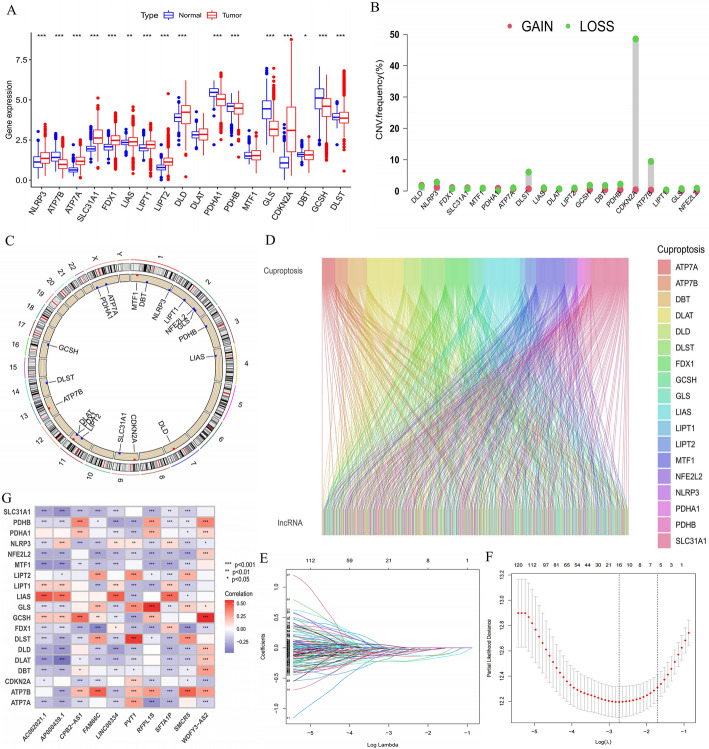
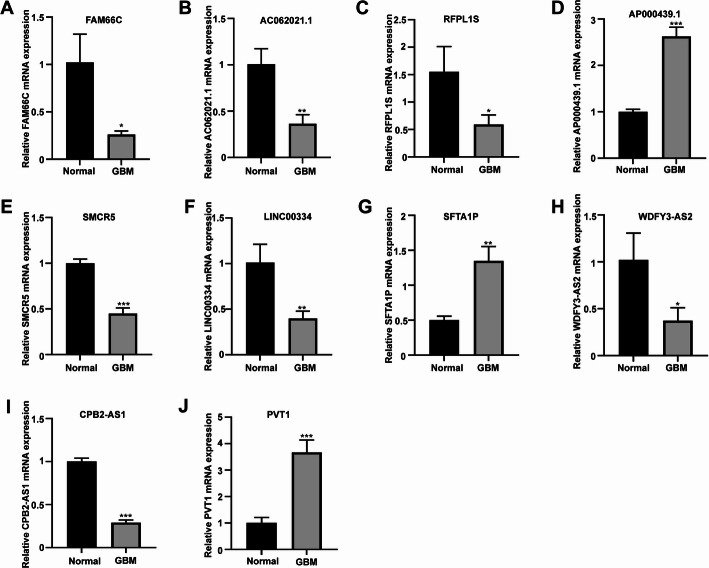
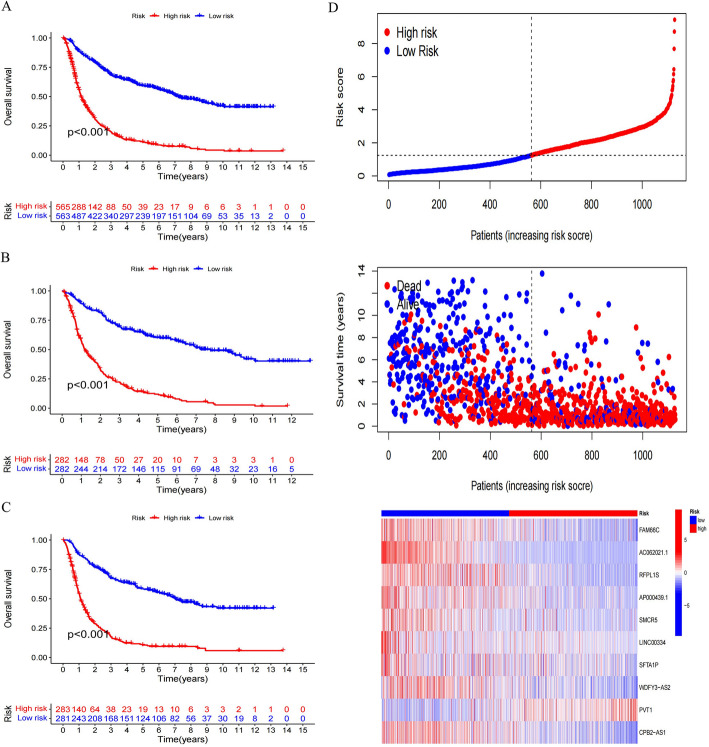
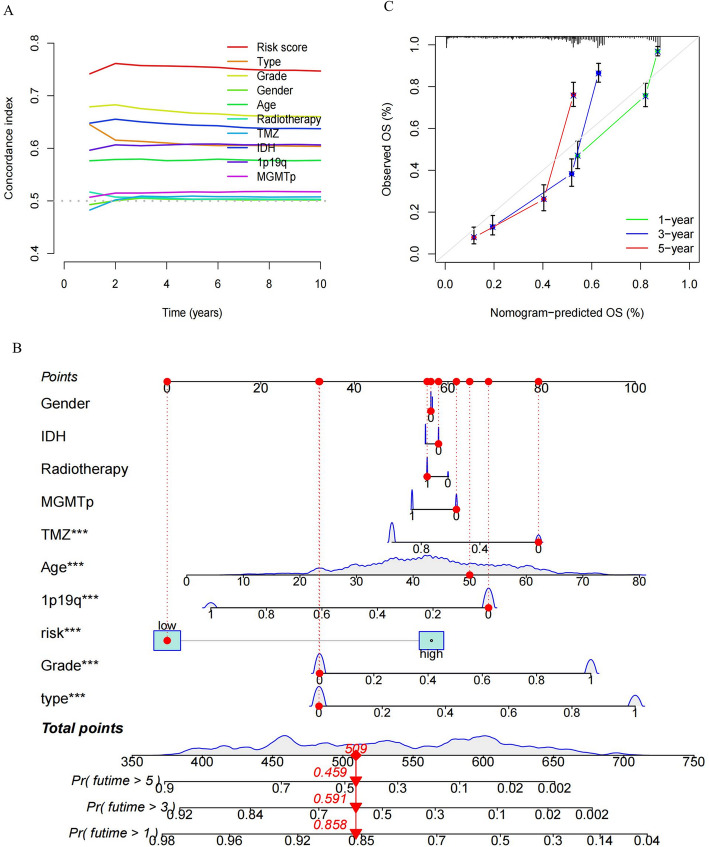
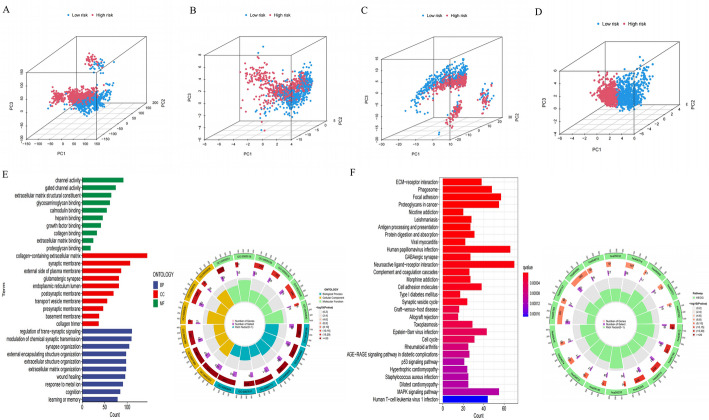
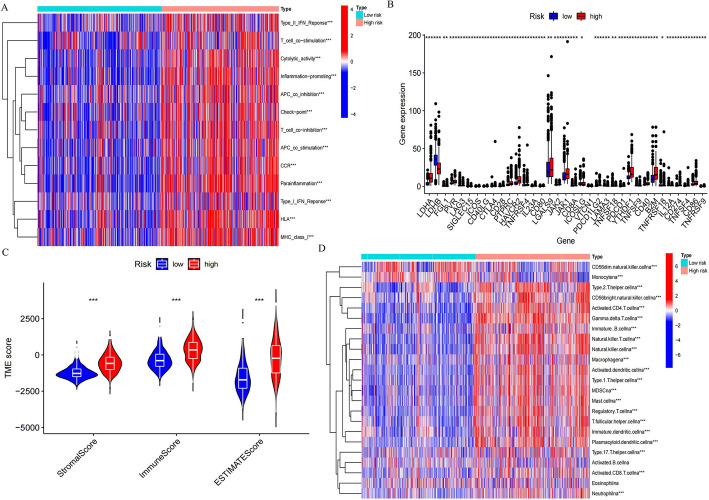
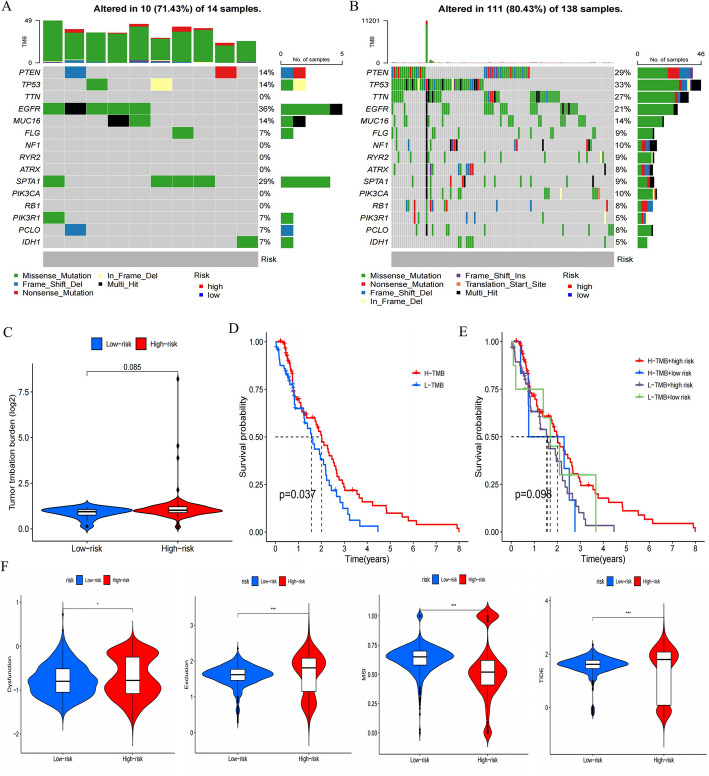
Recent studies have identified cuproptosis as a novel form of regulated cell death (RCD), and long non-coding RNAs (lncRNAs) have been implicated in glioma progression and prognosis. However, the role of cuproptosis-associated lncRNAs in gliomas has not been systematically assessed. In this study, data from the Cancer Genome Atlas (TCGA) and the Chinese Glioma Genome Atlas (CGGA) databases were used, and cuproptosis-related genes were obtained from previous research. Cuproptosis-associated lncRNAs were identified through co-expression network analysis, Cox regression, and Least Absolute Shrinkage and Selection Operator (LASSO). A total of 10 cuproptosis-associated lncRNAs were selected to construct a prognostic prediction model. The high-risk group was associated with poor overall survival (OS) and progression-free survival (PFS). Multivariate Cox regression, Receiver Operating Characteristic (ROC) curve analysis, C-index, and nomogram demonstrated the accuracy of the 10-lncRNA signature in predicting outcomes in glioma patients. Gene Ontology (GO), Kyoto Encyclopedia of Genes and Genomes (KEGG), and Gene Set Variation Analysis (GSVA) enrichment analyses revealed a strong association between the signature and immune response pathways. Immune cell infiltration and Single-Sample Gene Set Enrichment Analysis (ssGSEA) further confirmed that the signature is closely linked to immune responses in glioma patients. Further investigation revealed significant differences in tumor immune dysfunction and rejection (TIDE) scores and half-maximal inhibitory concentration (IC50) values for many drugs between low- and high-risk subgroups. This risk signature may serve as a prognostic tool and offer valuable insights into treatment strategies for glioma patients. Additionally, the expression levels of the 10 signature genes were validated by quantitative real-time polymerase chain reaction (qRT-PCR).
The online version contains supplementary material available at 10.1007/s12672-025-02912-6.
最近的研究已将铜死亡确定为一种新型的程序性细胞死亡(RCD)形式,并且长链非编码RNA(lncRNA)与神经胶质瘤的进展和预后有关。然而,与铜死亡相关的lncRNA在神经胶质瘤中的作用尚未得到系统评估。在本研究中,使用了来自癌症基因组图谱(TCGA)和中国神经胶质瘤基因组图谱(CGGA)数据库的数据,并从先前的研究中获得了与铜死亡相关的基因。通过共表达网络分析、Cox回归和最小绝对收缩和选择算子(LASSO)确定了与铜死亡相关的lncRNA。总共选择了10个与铜死亡相关的lncRNA来构建预后预测模型。高风险组与较差的总生存期(OS)和无进展生存期(PFS)相关。多变量Cox回归、受试者工作特征(ROC)曲线分析、C指数和列线图证明了10-lncRNA特征在预测神经胶质瘤患者预后方面的准确性。基因本体论(GO)、京都基因与基因组百科全书(KEGG)和基因集变异分析(GSVA)富集分析揭示了该特征与免疫反应途径之间的强烈关联。免疫细胞浸润和单样本基因集富集分析(ssGSEA)进一步证实,该特征与神经胶质瘤患者的免疫反应密切相关。进一步研究发现,低风险和高风险亚组之间在肿瘤免疫功能障碍和排斥(TIDE)评分以及许多药物的半数最大抑制浓度(IC50)值方面存在显著差异。这种风险特征可作为一种预后工具,并为神经胶质瘤患者的治疗策略提供有价值的见解。此外,通过定量实时聚合酶链反应(qRT-PCR)验证了10个特征基因的表达水平。
在线版本包含可在10.1007/s12672-025-02912-6获取的补充材料。