Ding Jianyi, Hu Haoran, Zhu Yashi, Xu Xinxin, Yin Bo, Yang Meiqin, Zhou Huijuan, Huang Tiefeng, Li Mengjie, Kou Yifan, Rahim Zilale, Huang Baoyou, Li Ang, Wang Wei, Han Lingfei
Department of Gynecology, Shanghai Key Laboratory of Maternal Fetal Medicine, Shanghai Institute of Maternal-Fetal Medicine and Gynecologic Oncology, Shanghai First Maternity and Infant Hospital, School of Life Science and Technology, Tongji University, Shanghai 200092, China.
Department of Gynecology, Shanghai Tenth People's Hospital, School of Medicine, Tongji University, Shanghai, China.
J Immunother Cancer. 2025 Jun 13;13(6):e011776. doi: 10.1136/jitc-2025-011776.
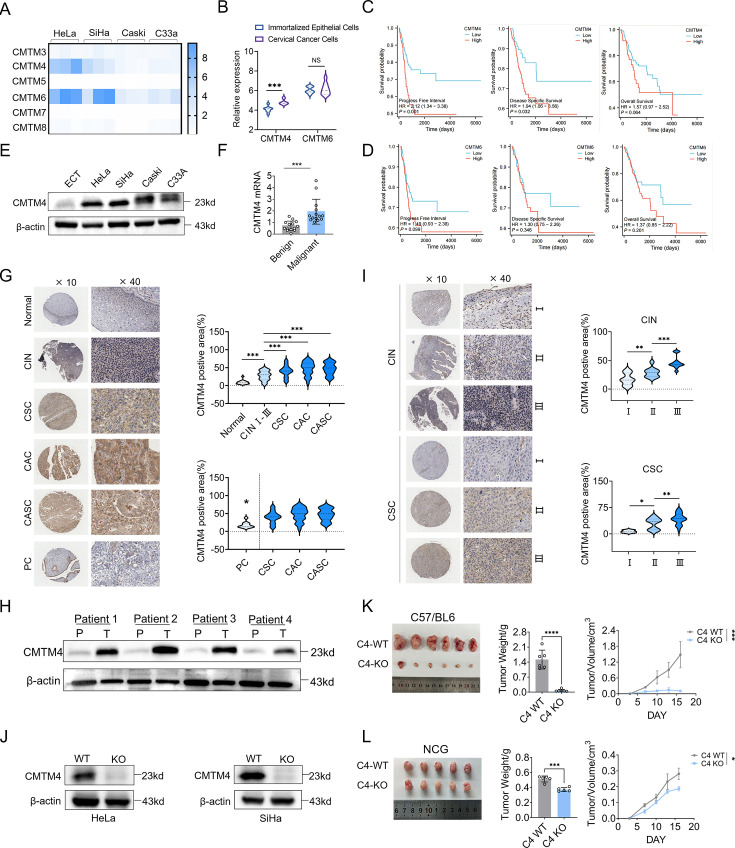
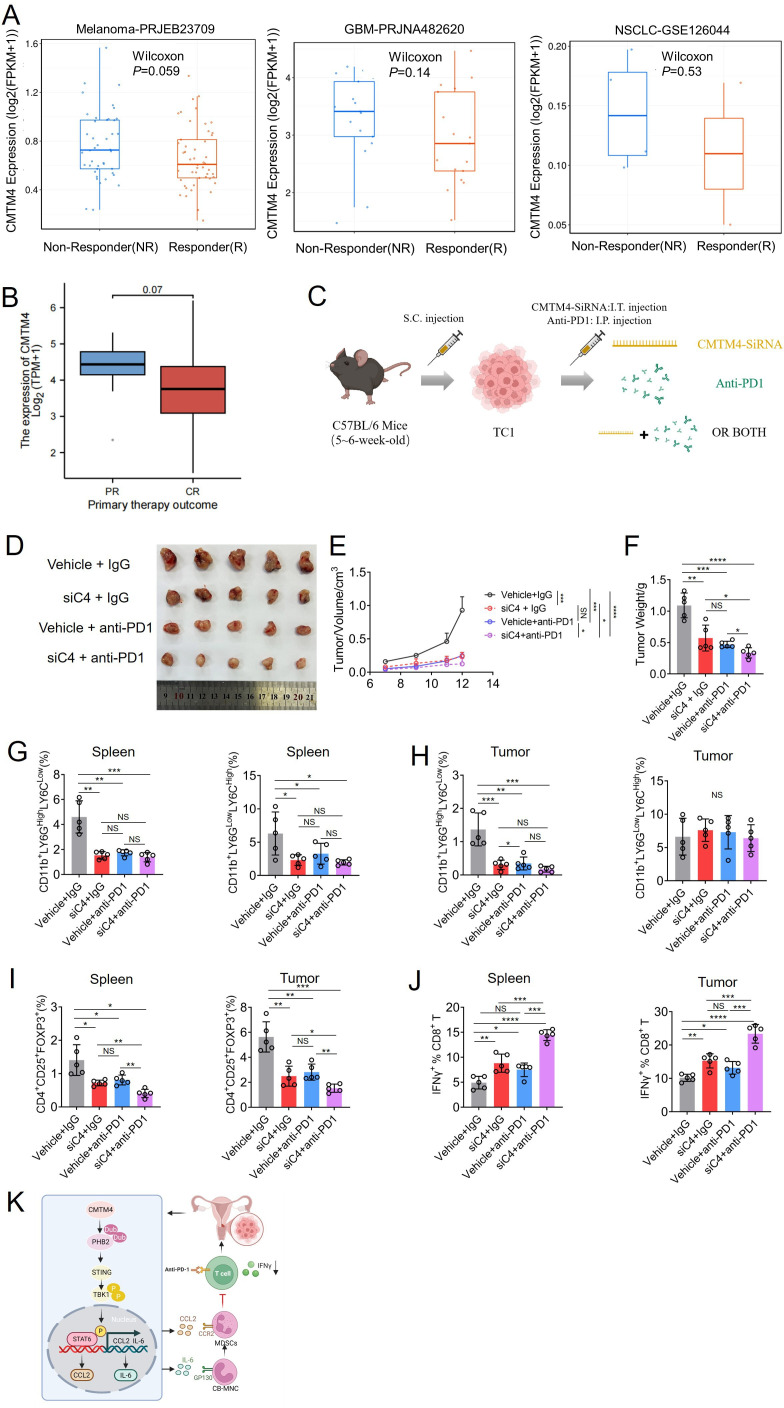
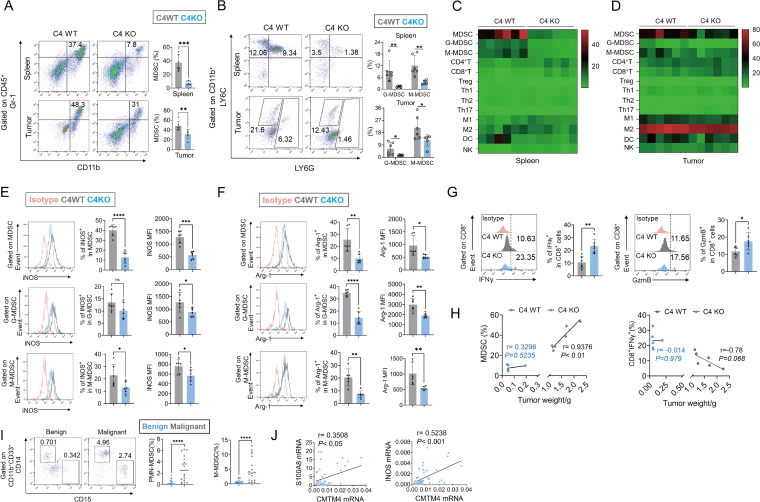
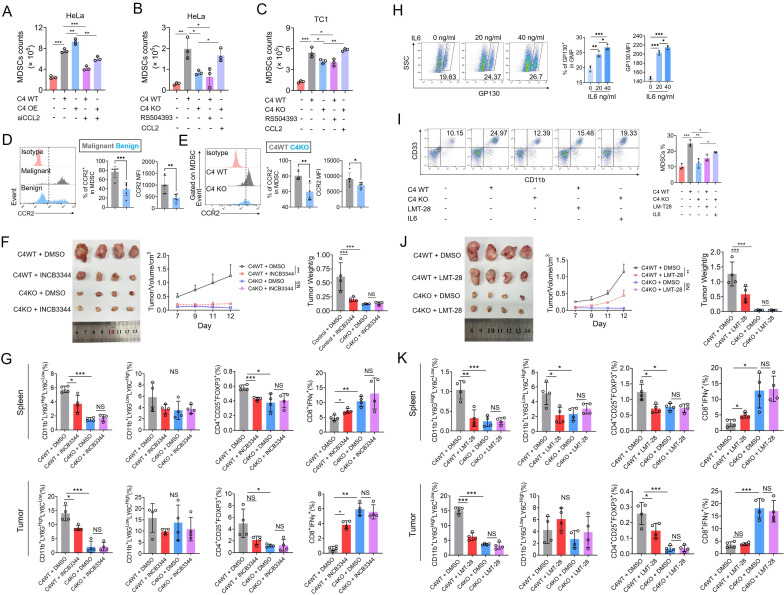
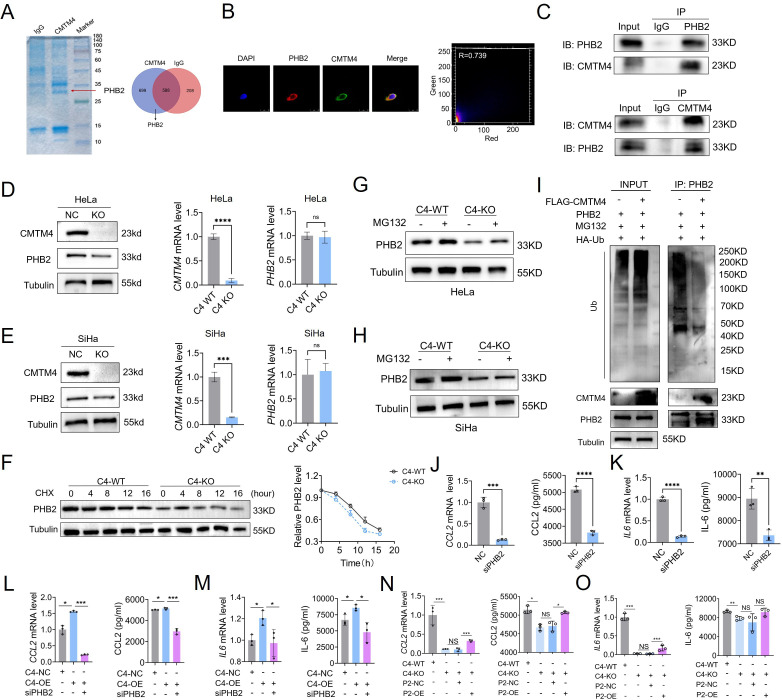
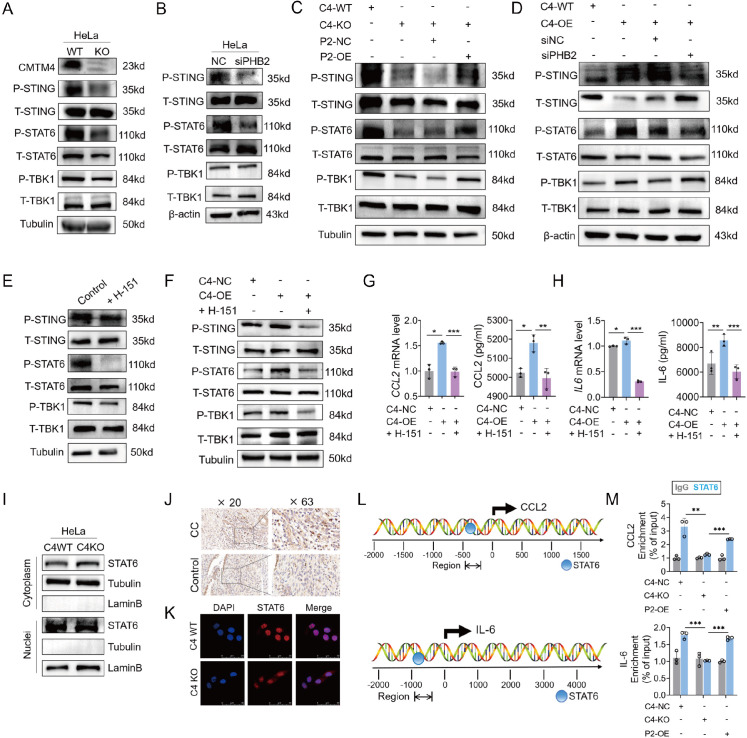
CKLF (chemokine-like factor)-like MARVEL transmembrane domain-containing family member 4 (CMTM4), belonging to the CMTM family of transmembrane domain proteins, plays a significant role in the initiation, progression, and metastasis of cancer. Nevertheless, its involvement in tumor immunity remains elusive. In the present investigation, we observed an upregulation of CMTM4 expression in patients with cervical cancer (CC), which also serves as a prognostic indicator for patients with CC. In vitro experiments and therapeutic models have demonstrated that CMTM4 upregulates the expansion of myeloid-derived suppressor cells (MDSCs) in the tumor microenvironment via the CCL2 (C-C motif chemokine ligand 2)/CCR2 (C-C motif chemokine ligand 2) and IL-6 (interleukin-6)/GP130 (glycoprotein 130) axes. This process exerts immunosuppressive effects and promotes the occurrence and progression of CC. Mechanistically, CMTM4 interacts and stabilizes PHB2 (prohibitin 2) through post-translational modification, which further induces activation of the STING (stimulator of interferon genes)/TBK1 (TANK-binding kinase 1)/STAT6 (signal transducer and activator of transcription 6) pathway, facilitating the nuclear translocation of STAT6 which binds to the CCL2/IL-6 promoter, leading to the upregulation of CCL2/IL-6 transcription expression. Importantly, targeting CMTM4 with CMTM4-small interfering RNA enhanced the effectiveness of anti-programmed cell death protein 1 (anti-PD-1) therapy. Our study identifies CMTM4 as a crucial determinant guiding the homing of MDSCs to CC, thereby contributing to MDSCs-mediated immune suppression and tumor progression. The combination of CMTM4 inhibition and anti-PD-1 treatment shows promising antitumor efficacy against CC. These findings offer novel insights into the tumor microenvironment and have the potential to inform the development of innovative immunotherapy approaches for CC.
趋化因子样因子(CKLF)样含MARVEL跨膜结构域家族成员4(CMTM4)属于跨膜结构域蛋白的CMTM家族,在癌症的发生、发展和转移中起重要作用。然而,其在肿瘤免疫中的作用仍不清楚。在本研究中,我们观察到宫颈癌(CC)患者中CMTM4表达上调,其也可作为CC患者的预后指标。体外实验和治疗模型表明,CMTM4通过CCL2(C-C基序趋化因子配体2)/CCR2(C-C基序趋化因子受体2)和IL-6(白细胞介素-6)/GP130(糖蛋白130)轴上调肿瘤微环境中髓源性抑制细胞(MDSC)的扩增。这一过程发挥免疫抑制作用,促进CC的发生和发展。机制上,CMTM4通过翻译后修饰与PHB2(抑制素2)相互作用并使其稳定,进而诱导干扰素基因刺激因子(STING)/TANK结合激酶1(TBK1)/信号转导和转录激活因子6(STAT6)通路的激活,促进STAT6核转位,后者与CCL2/IL-6启动子结合,导致CCL2/IL-6转录表达上调。重要的是,用CMTM4小干扰RNA靶向CMTM4可增强抗程序性细胞死亡蛋白1(抗PD-1)治疗的效果。我们的研究确定CMTM4是指导MDSC归巢至CC的关键决定因素,从而导致MDSC介导的免疫抑制和肿瘤进展。抑制CMTM4与抗PD-1治疗联合显示出对CC有良好的抗肿瘤疗效。这些发现为肿瘤微环境提供了新的见解,并有可能为CC创新免疫治疗方法的开发提供依据。