Knop Mirjam, Treitz Christian, Bettendorf Stina, Bossen Judith, von Frieling Jakob, Doms Shauni, Saboukh Abdulgawaad, Bruchhaus Iris, Kühnlein Ronald P, Baines John F, Tholey Andreas, Roeder Thomas
Department Zoology, Kiel University, Kiel, Germany.
IEM, Systematic Proteomics, Kiel University, Kiel, Germany.
Anim Microbiome. 2025 Jun 13;7(1):63. doi: 10.1186/s42523-025-00431-x.
Sirtuins are deacetylases that are highly conserved throughout the animal kingdom. They act as metabolic sensors that coordinate cellular responses, allowing an adapted response to various stressors. Epithelial cells, especially those of the intestine, are directly exposed to a wide range of stressors. Together with the microbiota, they form a complex ecosystem with mutual influences. The significance of sirtuins in this complex system is still waiting to be clarified.
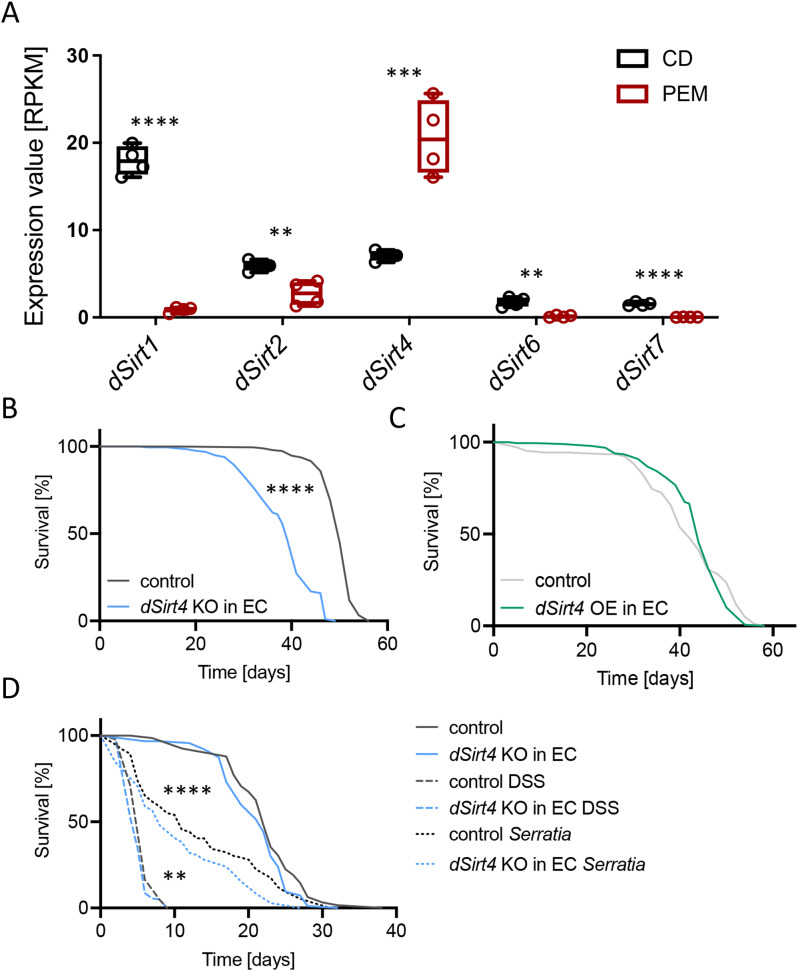
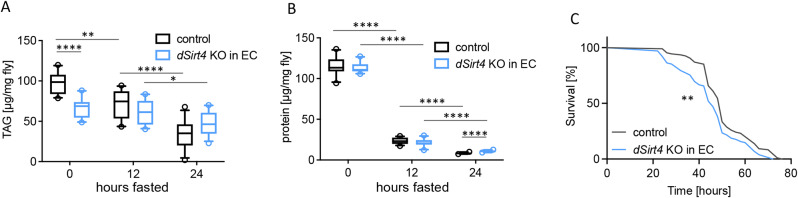
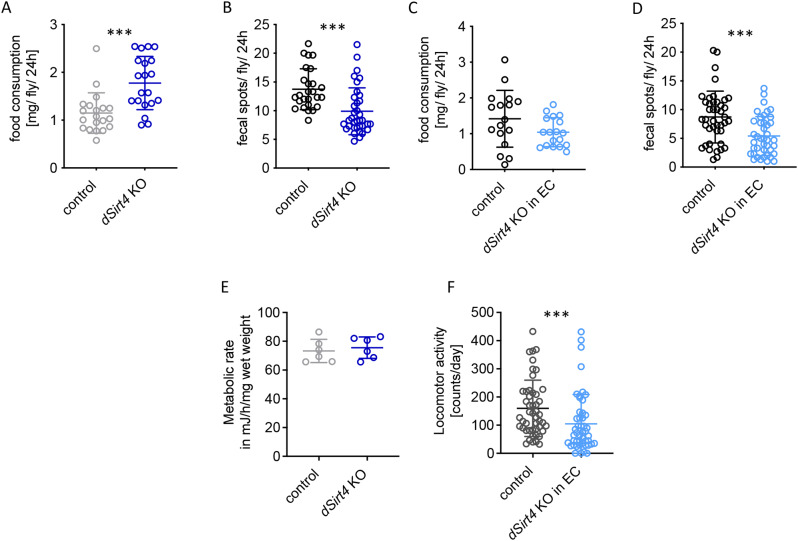
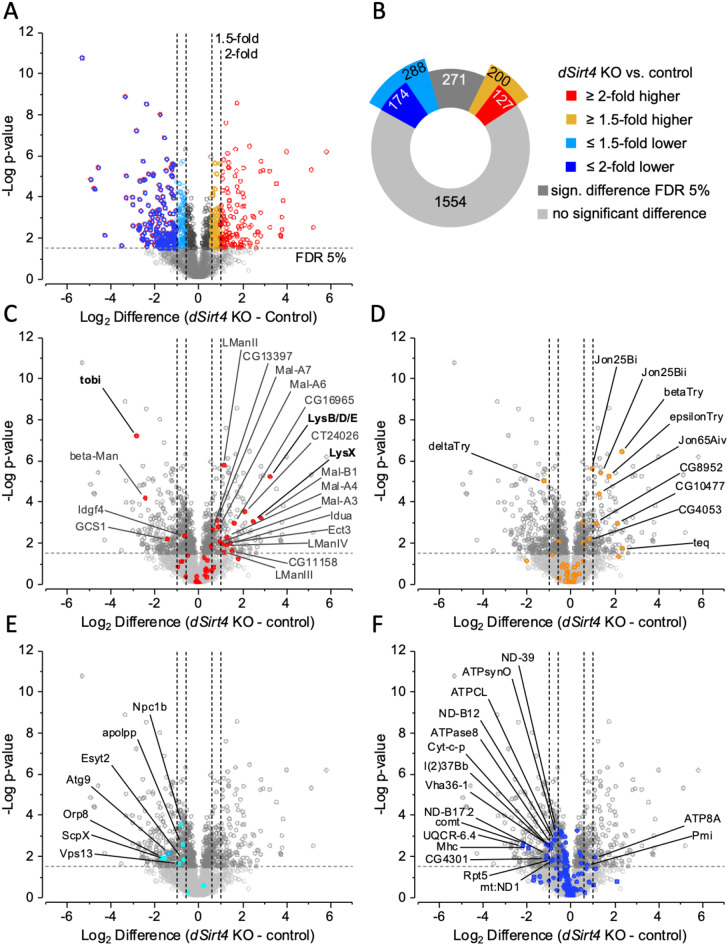
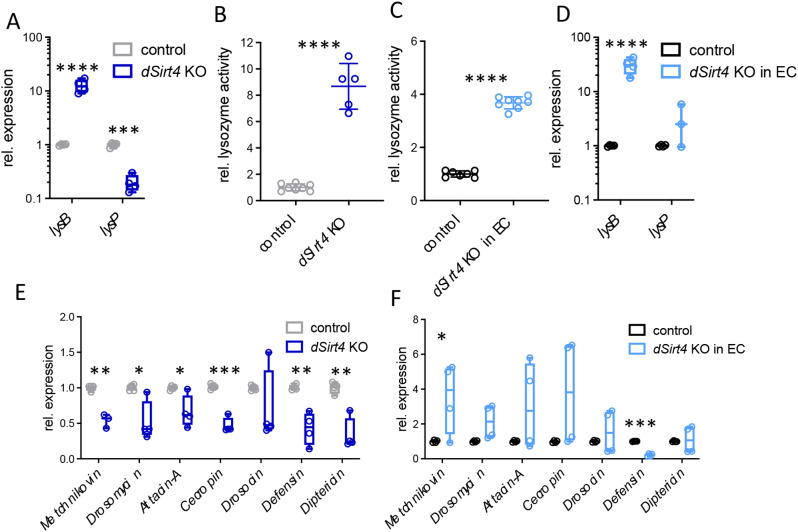
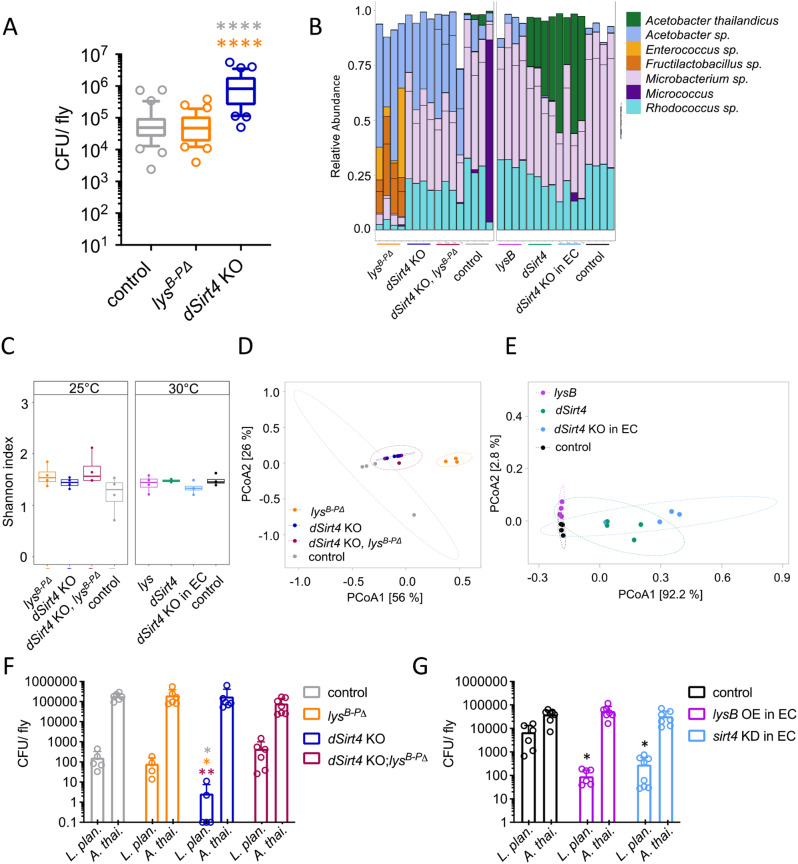
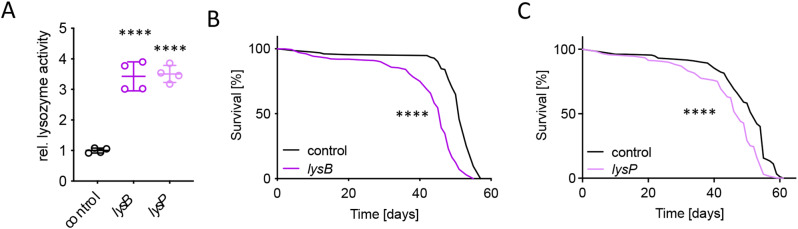
Here, we show that a protein-restricted diet strongly increases the intestinal expression of sirtuin 4 (dSirt4), the only mitochondrial sirtuin in Drosophila. To elucidate the effects of deregulated dSirt4 expression in the intestine, we analyzed dSirt4 knockout flies. These flies showed substantial changes in their intestinal proteome and physiological properties. One of the most striking effects was the strong induction of lysozymes in the intestine, with a corresponding increase in lysozyme activity. This effect was organ-autonomous, as it was also observed in flies with dSirt4 knocked out only in intestinal enterocytes. The significant increase in lysozyme abundance in response to tissue-specific dSirt4 knockdown did not reduce the total number of bacteria in the intestine. However, it did affect the microbiota composition by reducing the number of gram-positive bacteria. This effect on microbiota composition can be attributed to dSirt4-dependent lysozyme expression, which is absent in a lysozyme-deficient background. dSirt4 knockout in the enterocytes shortened the lifespan of the flies, as did ectopic lysozyme overexpression in the enterocytes.
The only mitochondrial sirtuin in Drosophila, dSirt4, is induced by dietary stress in intestinal epithelial cells, which directly regulates the lysozyme activity of these cells. We could associate this altered lysozyme activity with a shift in the microbiota composition, demonstrating a direct link between stress, nutrition, and the host's microbiota regulation.
沉默调节蛋白是在整个动物界高度保守的去乙酰化酶。它们作为代谢传感器来协调细胞反应,从而对各种应激源做出适应性反应。上皮细胞,尤其是肠道上皮细胞,直接暴露于多种应激源中。它们与微生物群共同形成了一个相互影响的复杂生态系统。沉默调节蛋白在这个复杂系统中的意义仍有待阐明。
在这里,我们表明蛋白质限制饮食会强烈增加果蝇中唯一的线粒体沉默调节蛋白——沉默调节蛋白4(dSirt4)在肠道中的表达。为了阐明肠道中dSirt4表达失调的影响,我们分析了dSirt4基因敲除果蝇。这些果蝇的肠道蛋白质组和生理特性发生了显著变化。最显著的影响之一是肠道中溶菌酶的强烈诱导,同时溶菌酶活性相应增加。这种效应是器官自主性的,因为在仅肠道肠细胞中敲除dSirt4的果蝇中也观察到了这种效应。对组织特异性dSirt4基因敲低的反应中,溶菌酶丰度的显著增加并没有减少肠道中的细菌总数。然而,它确实通过减少革兰氏阳性菌的数量影响了微生物群组成。这种对微生物群组成的影响可归因于dSirt4依赖的溶菌酶表达,而在溶菌酶缺陷背景中则不存在这种表达。肠细胞中dSirt4基因敲除缩短了果蝇的寿命,肠细胞中异位溶菌酶过表达也有同样的效果。
果蝇中唯一的线粒体沉默调节蛋白dSirt4在肠道上皮细胞中受饮食应激诱导,它直接调节这些细胞的溶菌酶活性。我们可以将这种改变的溶菌酶活性与微生物群组成的变化联系起来,证明了应激、营养和宿主微生物群调节之间的直接联系。