Jeraiby Mohammed A, Moshi Jobran M, Maashi Sama M, Shubaili Ali I, Nadeem Mayssa S, Abdelwahab Siddig I, Taha Manal M, Alhazmi Ajiad
From the 1Department of Basic Medical Science (Jeraiby), College of medicine and from the Department of Medical Laboratory Technology (Moshiy, Maashi) College of Nursing and Health Science; from the Health Research Centre (Abdelwahab, Taha), Jazan University, Jazan; from the Department of Public Health (Alhazmi), College of Public Health, Imam Abdulrahman Bin Faisal University, Dammam, Kingdom of Saudi Arabia.
Saudi Med J. 2025 Jun;46(6):617-623. doi: 10.15537/smj.2025.46.6.202501212.
To analyze the prevalence of DM focusing on demographic trends, gender disparities, and age distribution. Additionally, it evaluates diabetes control rates.
A retrospective cross-sectional study examined DM trends (2021-2023). It included patients with type 1 or type 2 DM from various healthcare settings.
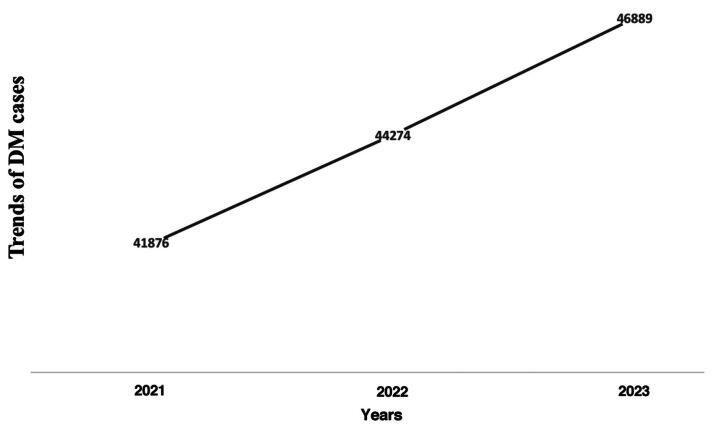
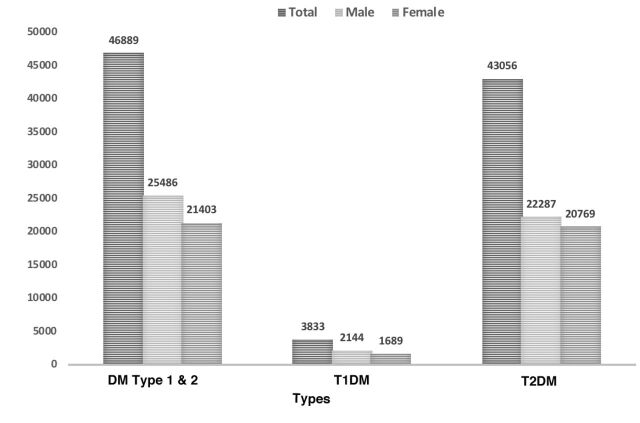
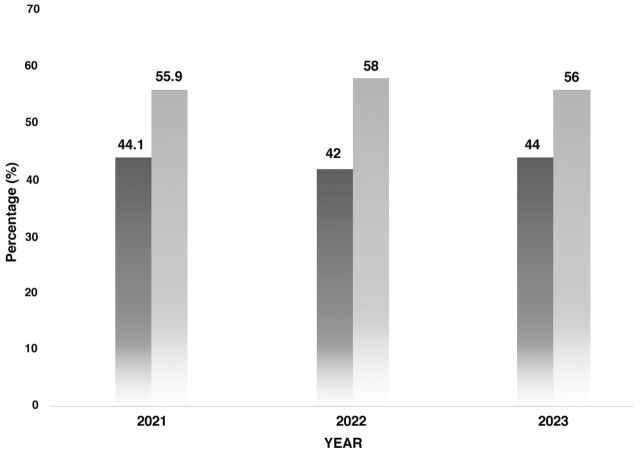
The number overall number of diabetes cases has grown from 41,876 in 2021 to 46,889 in 2023, reflecting an annual rise of 5.7% (2022) and 6% (2023). The majority of cases (85.1%) were observed in individuals aged 40 and above, having the greatest prevalence in the 50-59 age group (25.3%). A significant gender disparity was found, with 54.4% of cases occurring in males and 45.6% in females (χ²=355.539, degrees of freedom=1, <0.001), indicating a statistically significant association between gender and diabetes prevalence. The proportion of controlled diabetes cases fluctuated, accounting for 44.1% in 2021, 42% in 2022, and 44% in 2023.
The findings indicate a steady increase in DM prevalence in Jazan, with significant age and gender disparities. The study underscores the need for early screening programs, targeted lifestyle interventions, and improved diabetes management strategies to address the growing burden of the disease.
分析糖尿病(DM)的患病率,重点关注人口趋势、性别差异和年龄分布。此外,评估糖尿病控制率。
一项回顾性横断面研究调查了2021 - 2023年的糖尿病趋势。研究纳入了来自不同医疗机构的1型或2型糖尿病患者。
糖尿病病例总数从2021年的41876例增加到2023年的46889例,反映出2022年的年增长率为5.7%以及2023年为6%。大多数病例(85.1%)出现在40岁及以上人群中,在50 - 59岁年龄组中患病率最高(25.3%)。发现了显著的性别差异,54.4%的病例发生在男性中,45.6%发生在女性中(χ² = 355.539,自由度 = 1,<0.001),表明性别与糖尿病患病率之间存在统计学上的显著关联。糖尿病控制病例的比例有所波动,2021年占44.1%,2022年占42%,2023年占44%。
研究结果表明,吉赞地区糖尿病患病率稳步上升,存在显著的年龄和性别差异。该研究强调需要开展早期筛查项目、针对性的生活方式干预以及改进糖尿病管理策略,以应对日益加重的疾病负担。