Zhang Di, Liu Yuchen, Li Ying, Jiang Guosheng, Meng Mingzhu, Wang Jihua
School of Life Science and Technology, Harbin Normal University, Harbin, China.
Department of Smart Agriculture, Heilongjiang Agricultural Economy Vocational College, Mudanjiang, China.
PeerJ. 2025 Jun 11;13:e19300. doi: 10.7717/peerj.19300. eCollection 2025.
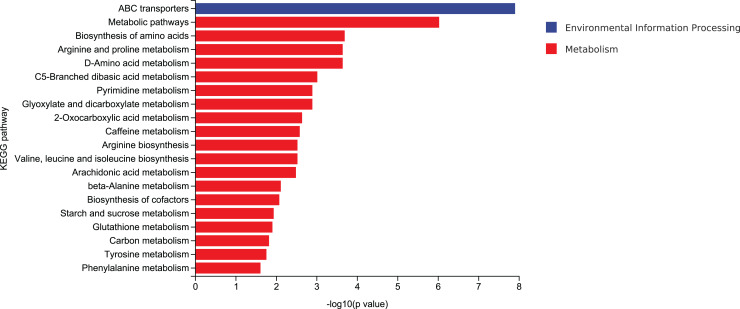
is an important edible fungus, and the choice of its cultivation medium is very important to improve the yield and quality. Traditionally, mostly uses wood chips as cultivation substrate, but with the increase of agricultural waste, exploring agricultural straw as an alternative substrate has become a research hotspot. In this study, a wild strain W-ZD22 with good adaptability to straw matrix was used to measure mycelia growth characteristics and extracellular enzyme activity. Transcriptomics and non-targeted metabolomics methods were used to compare the effects of mycelia using agricultural straw matrix and wood chips matrix. It was found that the lignin enzyme activities of corn straw and wood chips were similar. By transcriptomic and metabolomic analysis, we further analyzed the transcription profiles of mycelia grown in different substrates (straw and corn stalk, straw and sawdust, corn stalk and sawdust), and identified 5,149, 2,740 and 2,933 different expression genes (DEGs), respectively. The three control groups had a total of 526 gene variants. The top 20 pathways with the highest concentration of DEGs mainly involved glyoxylate and dicarboxylate metabolism, glycine, serine and threonine metabolism, glycolysis/gluconeogenesis, pyruvate metabolism, oxidative phosphorylation, endoplasmic reticulum protein processing and ribosome. In order to further understand the similarity of enzyme activity of mycelium on corn stalk and wood chips, metabolomic analysis of substrate of corn stalk and wood chips was conducted. It was found that different metabolites were significantly enriched in starch and sucrose metabolism, glutathione metabolism, carbon metabolism and other pathways, which provided theoretical basis for efficient comprehensive utilization of corn stalk in auricularia growth.
是一种重要的食用菌,其栽培基质的选择对于提高产量和品质非常重要。传统上,大多使用木屑作为栽培基质,但随着农业废弃物的增加,探索将农作物秸秆作为替代基质已成为研究热点。在本研究中,使用了对秸秆基质具有良好适应性的野生菌株W-ZD22来测定菌丝体生长特性和胞外酶活性。采用转录组学和非靶向代谢组学方法比较了使用农作物秸秆基质和木屑基质的菌丝体的效果。发现玉米秸秆和木屑的木质素酶活性相似。通过转录组学和代谢组学分析,我们进一步分析了在不同基质(秸秆与玉米秸秆、秸秆与锯末、玉米秸秆与锯末)中生长的菌丝体的转录谱,分别鉴定出5149、2740和2933个差异表达基因(DEGs)。三个对照组共有526个基因变体。DEGs浓度最高的前20条通路主要涉及乙醛酸和二羧酸代谢、甘氨酸、丝氨酸和苏氨酸代谢、糖酵解/糖异生、丙酮酸代谢、氧化磷酸化、内质网蛋白加工和核糖体。为了进一步了解菌丝体在玉米秸秆和木屑上酶活性的相似性,对玉米秸秆和木屑基质进行了代谢组学分析。发现不同的代谢物在淀粉和蔗糖代谢、谷胱甘肽代谢、碳代谢等通路中显著富集,这为黑木耳生长中玉米秸秆的高效综合利用提供了理论依据。