Ncho Chris Major
Department of Environmental Systems Science, Institute of Agricultural Sciences, ETH Zürich, Zurich, 8092, Switzerland.
J Anim Sci Biotechnol. 2025 Jun 16;16(1):85. doi: 10.1186/s40104-025-01225-6.
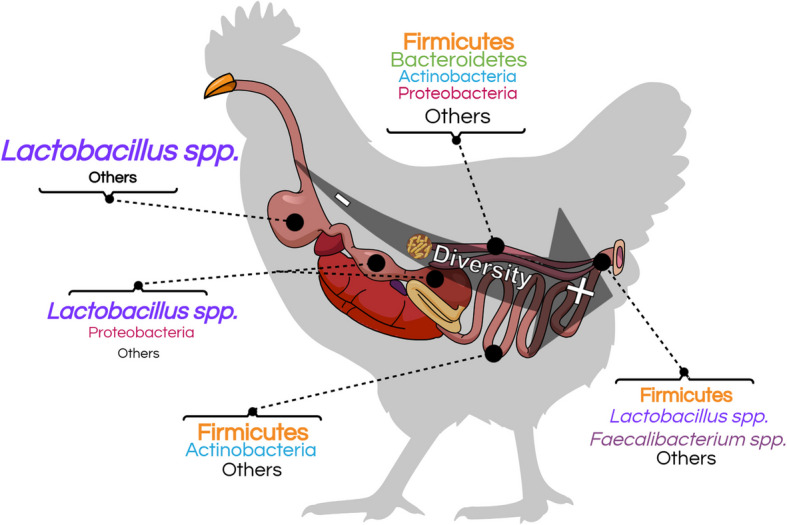
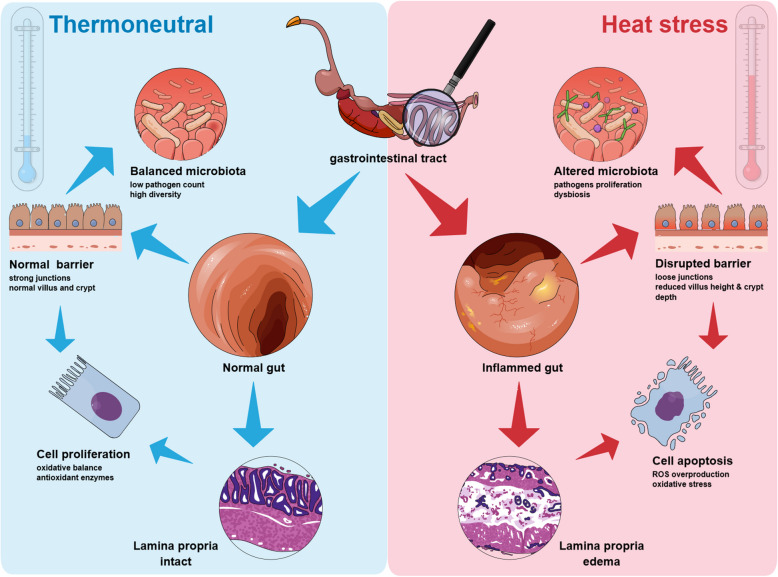
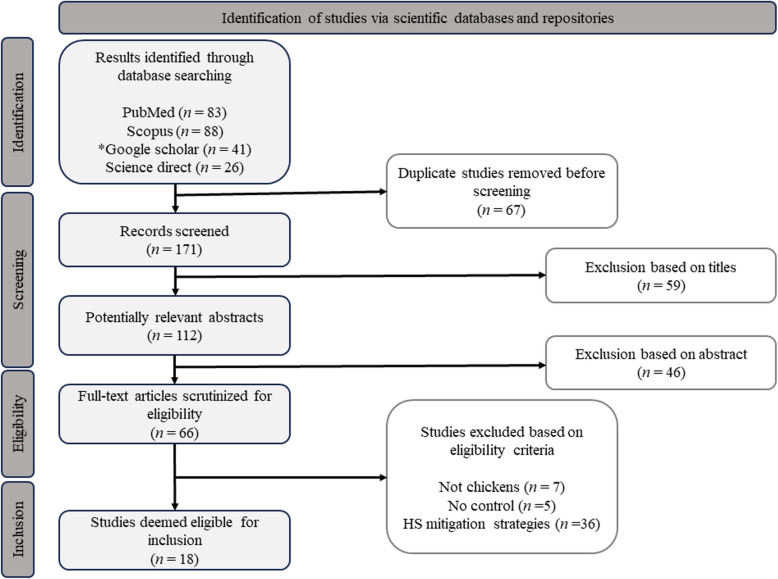
Heat stress (HS) has become a significant challenge for poultry farming due to an increase in global temperatures. Existing literature suggests that the health effects of HS in chickens are related to its impact on the gastrointestinal tract. While there is evidence of the detrimental consequences of HS on the gut structure, little is known about the effects of HS on the microbial population inhabiting this organ. Fortunately, recent advancements in "omics" technologies have made investigating the interaction between HS and the gut microbiota possible. Therefore, a systematic review was conducted to assess the effects of HS on chicken gut microbiota. In July 2024, a comprehensive literature search was performed across scientific repositories, including Scopus, PubMed, Science Direct, and Google Scholar. Eighteen studies met the eligibility criteria for inclusion and a qualitative synthesis of their results was conducted according to the PRISMA guidelines. Current evidence indicates that HS poses a significant challenge to the gastrointestinal system of chickens, resulting in a range of physiological reactions. These changes trigger fierce competition among beneficial microbial species for limited nutrients, promote microbial shifts from obligate to facultative anaerobes, and increase the abundance of microbial species with high resistance to elevated environmental temperatures. Furthermore, the proliferation of pathogens is exacerbated. Ultimately, gut microbiota profiling highlights changes in microbial diversity, alterations in the composition of microbial populations, disruptions in specific microbial functional pathways (tricarboxylic acid cycle, amino acid metabolism, antioxidant biosynthesis, and fatty acid degradation), and the breakdown of complex networks that govern microbial interactions. Understanding the complex relationship between HS and microbial shifts within the chicken gut can provide valuable insights for the development of sustainable mitigation strategies. Further research is needed to expand the current knowledge and employ more advanced literature synthesis techniques such as meta-analyses.
由于全球气温上升,热应激(HS)已成为家禽养殖面临的一项重大挑战。现有文献表明,热应激对鸡的健康影响与其对胃肠道的影响有关。虽然有证据表明热应激对肠道结构有不利影响,但关于热应激对栖息在该器官中的微生物群落的影响却知之甚少。幸运的是,“组学”技术的最新进展使得研究热应激与肠道微生物群之间的相互作用成为可能。因此,进行了一项系统综述,以评估热应激对鸡肠道微生物群的影响。2024年7月,在包括Scopus、PubMed、Science Direct和谷歌学术在内的科学数据库中进行了全面的文献检索。18项研究符合纳入标准,并根据PRISMA指南对其结果进行了定性综合分析。目前的证据表明,热应激对鸡的胃肠道系统构成了重大挑战,导致一系列生理反应。这些变化引发了有益微生物物种之间对有限营养物质的激烈竞争,促使微生物从专性厌氧菌向兼性厌氧菌转变,并增加了对环境温度升高具有高抗性的微生物物种的丰度。此外,病原体的增殖加剧。最终,肠道微生物群分析突出了微生物多样性的变化、微生物种群组成的改变、特定微生物功能途径(三羧酸循环、氨基酸代谢、抗氧化剂生物合成和脂肪酸降解)的破坏以及控制微生物相互作用的复杂网络的瓦解。了解热应激与鸡肠道内微生物变化之间的复杂关系可为制定可持续缓解策略提供有价值的见解。需要进一步研究以扩展当前知识,并采用更先进的文献综合技术,如荟萃分析。