Ingle Rahul G, M Elossaily Gehan, Ansari Mohd Nazam, Makhijani Shivani
Datta Meghe College of Pharmacy, Datta Meghe Institute of Higher Education & Research (DMIHER), Deemed to be University, Wardha, India.
Department of Basic Medical Sciences, College of Medicine, AlMaarefa University, Riyadh, Saudi Arabia.
Ann Med. 2025 Dec;57(1):2516697. doi: 10.1080/07853890.2025.2516697. Epub 2025 Jun 17.
Several severe disorders, such as inherited diseases (e.g. cystic fibrosis and beta thalassemia), genetic diseases (e.g. malignant tumors and diabetes), and infectious diseases (e.g. HIV) are pose significant challenges to human health.
Over the past few decades, researchers have been working on gene therapies, and currently, terrible dreams have come true. To date, the Food and Drug Administration (FDA) has approved multiple gene therapies such as Kynamro for familial hypercholesterolaemia, Exondys51 for duchenne muscular dystrophy, Spinraza for spinal muscular atrophy, etc., rest for cancer, infectious diseases, and rare diseases.
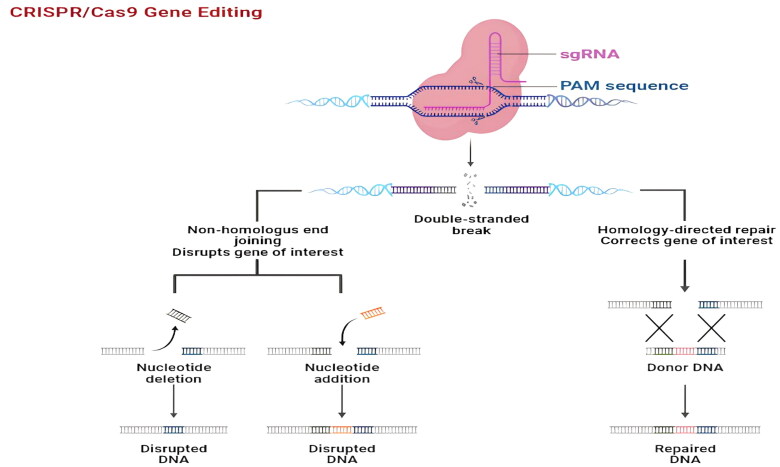
The authors have summarized recent advances in gene therapy, its background, molecular basis (e.g. viral and non-viral vectors), gene-editing techniques (e.g. CRISPR/Cas9, TALEN, ZFN), and its foremost applications in severe disorders, such as cancer, monogenic disorders (e.g. spinal muscular atrophy), polygenic disorders (e.g. autism), neurogenic disorders (e.g. Parkinson disease and Alzheimer's disease), and infectious diseases (e.g. HIV).
In addition, we explored the major challenges faced by gene therapies during targeted delivery, immunogenicity, efficacy, and safety.
To date, most of the promising approaches, such as different vectors, target cell populations, and both and have paved the foundation for applications of gene therapies. Additionally, advances in enhancing the immune system that would certainly lower the healthcare costs. This review highlights the translatory potential of gene therapy in revolutionizing the treatment landscape for severe disorders.
几种严重疾病,如遗传性疾病(如囊性纤维化和β地中海贫血)、基因疾病(如恶性肿瘤和糖尿病)以及传染病(如艾滋病病毒),对人类健康构成了重大挑战。
在过去几十年里,研究人员一直在致力于基因治疗,目前,可怕的梦想已经成真。迄今为止,美国食品药品监督管理局(FDA)已批准多种基因疗法,如用于家族性高胆固醇血症的Kynamro、用于杜氏肌营养不良症的Exondys51、用于脊髓性肌萎缩症的Spinraza等,其余的用于癌症、传染病和罕见病。
作者总结了基因治疗的最新进展、其背景、分子基础(如病毒和非病毒载体)、基因编辑技术(如CRISPR/Cas9、TALEN、ZFN),以及其在严重疾病中的首要应用,如癌症、单基因疾病(如脊髓性肌萎缩症)、多基因疾病(如自闭症)、神经源性疾病(如帕金森病和阿尔茨海默病)和传染病(如艾滋病病毒)。
此外,我们探讨了基因治疗在靶向递送、免疫原性、疗效和安全性方面面临的主要挑战。
迄今为止,大多数有前景的方法,如不同的载体、靶细胞群体,以及两者都为基因治疗的应用奠定了基础。此外,增强免疫系统的进展肯定会降低医疗成本。这篇综述强调了基因治疗在彻底改变严重疾病治疗格局方面的转化潜力。