Zhang Mengdi, Yang Junting, Li Yan, Li Yuan, Li Tong, Dong Ziqi, Gong Shuo, Wu Yahui, Ren Minrui, Fan Chunxiang, Zhang Lina, Wang Yi, Wang Yali, Ren Jingtian, Sun Feng, Shen Chuanyong, Li Keli, Liu Zhike, Zhan Siyan
Department of Epidemiology and Biostatistics, School of Public Health, Peking University, 38 Xueyuan Road, Haidian District, Beijing, 100191, China, 86 10-82805162, 86 10-82805162.
Key Laboratory of Epidemiology of Major Diseases, Peking University, Ministry of Education, Beijing, China.
JMIR Public Health Surveill. 2025 Jun 17;11:e63161. doi: 10.2196/63161.
Active vaccine safety surveillance (AVSS) stands as a top priority for the World Health Organization (WHO), serving as a critical indicator of the fourth maturity level for national regulatory agencies.
This review aims to define the minimal data scope for association studies in vaccine safety, providing a reference framework for implementing AVSS systems worldwide, especially in low- and middle-income countries.
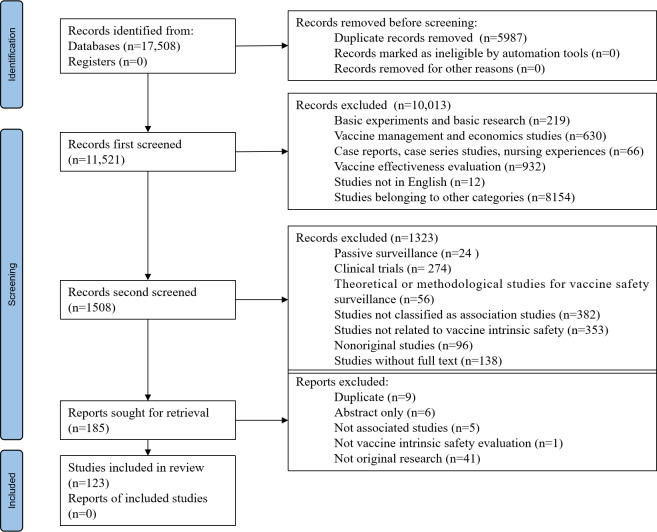
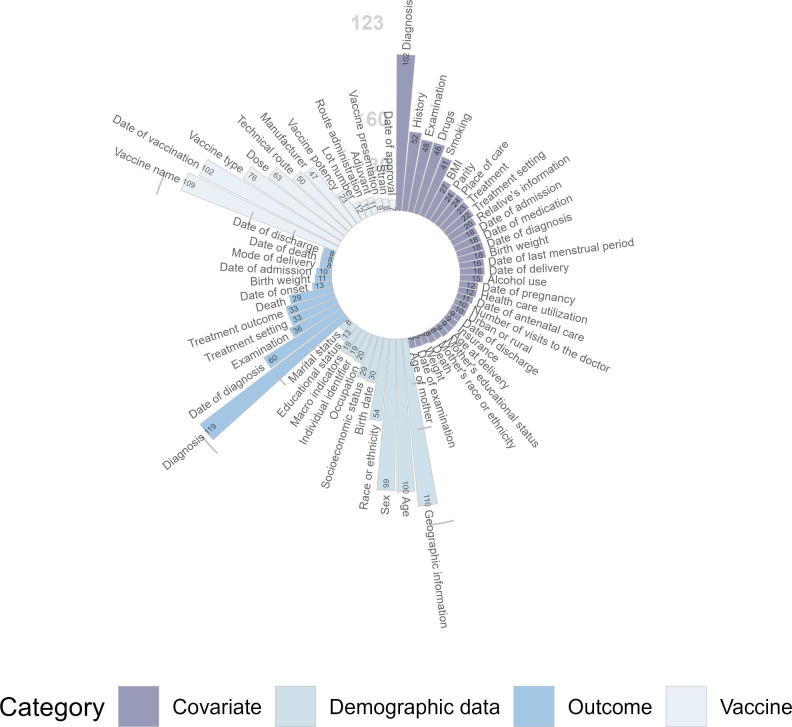
The study systematically searched PubMed, Embase, and Web of Science for cohort and case-control studies related to AVSS published between January 1, 2018, and September 7, 2022. Guided by the WHO and Council for International Organizations of Medical Sciences guidelines (CIOMS), we developed a 4D framework for Minimum Data Sets (MDSs), including "Vaccine," "Outcome," "Demographic Data," and "Covariate." Variables with a frequency of at least 5% were included in the MDS.
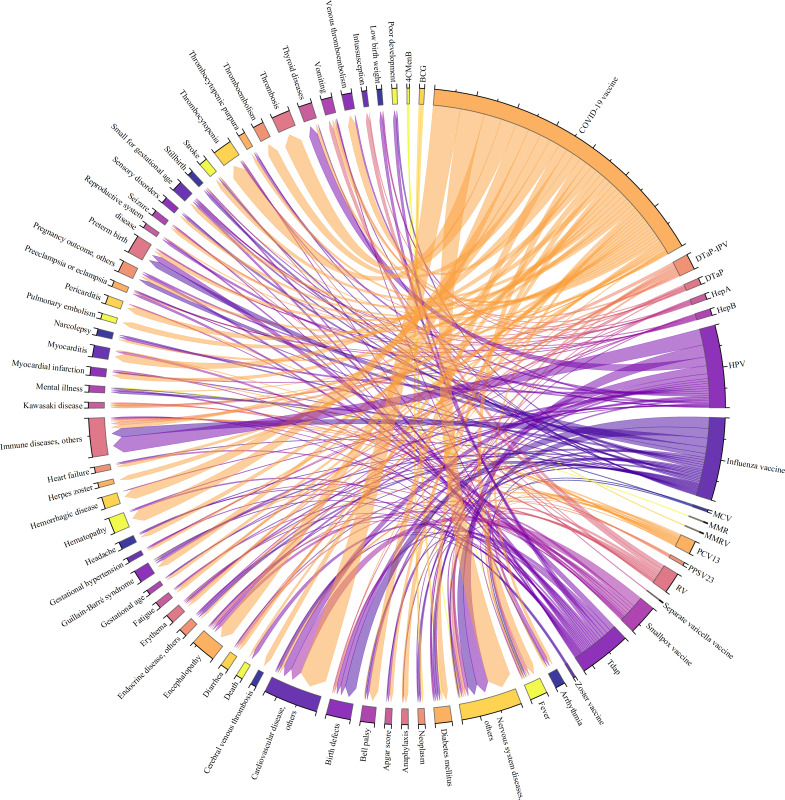
Of the 123 included studies, 102 (82.9%) were cohort studies and 98 (79.7%) originated from high-income countries, covering populations across the entire life course. The MDS for COVID-19 vaccines identified 54 variables, while the MDS for maternal populations included 96 variables. WHO guidelines were found to align better with practical applications compared to CIOMS guidelines, though both require further optimization based on the MDS findings. However, metadata for these essential variables were inadequately described across the studies.
The proposed MDS provides clear guidance and concise requirements for AVSS data scope. Establishing a globally standardized MDS and comprehensive metadata based on these findings is essential to enhancing the global vaccine safety ecosystem.
主动疫苗安全性监测(AVSS)是世界卫生组织(WHO)的首要任务,是国家监管机构第四成熟度水平的关键指标。
本综述旨在确定疫苗安全性关联研究的最小数据范围,为在全球范围内,尤其是在低收入和中等收入国家实施AVSS系统提供参考框架。
该研究系统检索了PubMed、Embase和Web of Science,以获取2018年1月1日至2022年9月7日期间发表的与AVSS相关的队列研究和病例对照研究。在WHO和国际医学科学组织理事会指南(CIOMS)的指导下,我们开发了一个最小数据集(MDS)的4D框架,包括“疫苗”、“结果”、“人口统计学数据”和“协变量”。MDS中纳入了频率至少为5%的变量。
在纳入的123项研究中,102项(82.9%)为队列研究,98项(79.7%)来自高收入国家,涵盖了整个生命历程的人群。COVID-19疫苗的MDS确定了54个变量,而孕产妇人群的MDS包括96个变量。与CIOMS指南相比,发现WHO指南与实际应用的契合度更高,不过两者都需要根据MDS的结果进一步优化。然而,这些重要变量的元数据在各项研究中的描述并不充分。
所提出的MDS为AVSS数据范围提供了明确的指导和简洁的要求。基于这些发现建立全球标准化的MDS和全面的元数据对于加强全球疫苗安全生态系统至关重要。