Cheng Zhuo, Hu Yan, Liu Yingqi, Wang Xuan, Xue Rui, Cai Kaiyong, Li Liqi, Li Menghuan, Luo Zhong
School of Life Science, Chongqing University, Chongqing 400044, China.
Key Laboratory of Biorheological Science and Technology, Ministry of Education, The National "111" Project for Biomechanics and Tissue Repair Engineering, Chongqing University, Chongqing 400044, China.
Fundam Res. 2023 Jun 2;5(3):1047-1062. doi: 10.1016/j.fmre.2023.02.029. eCollection 2025 May.
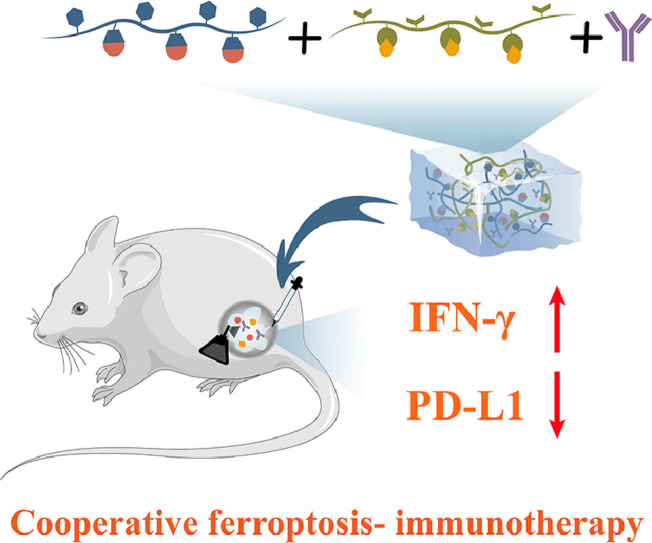
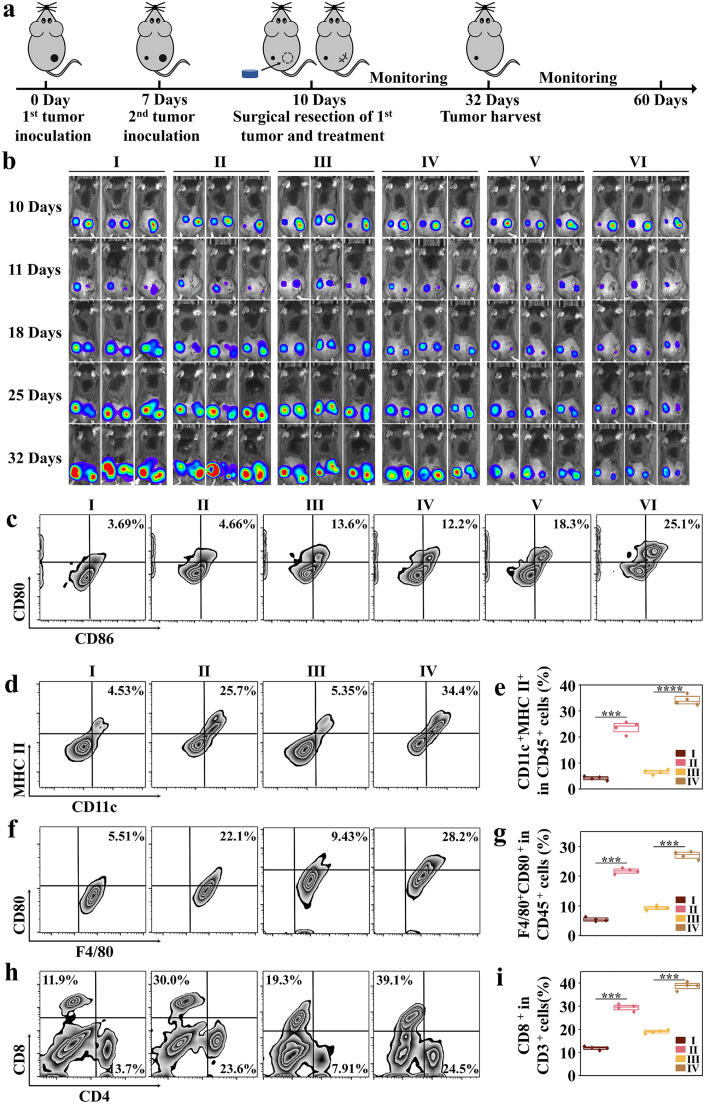
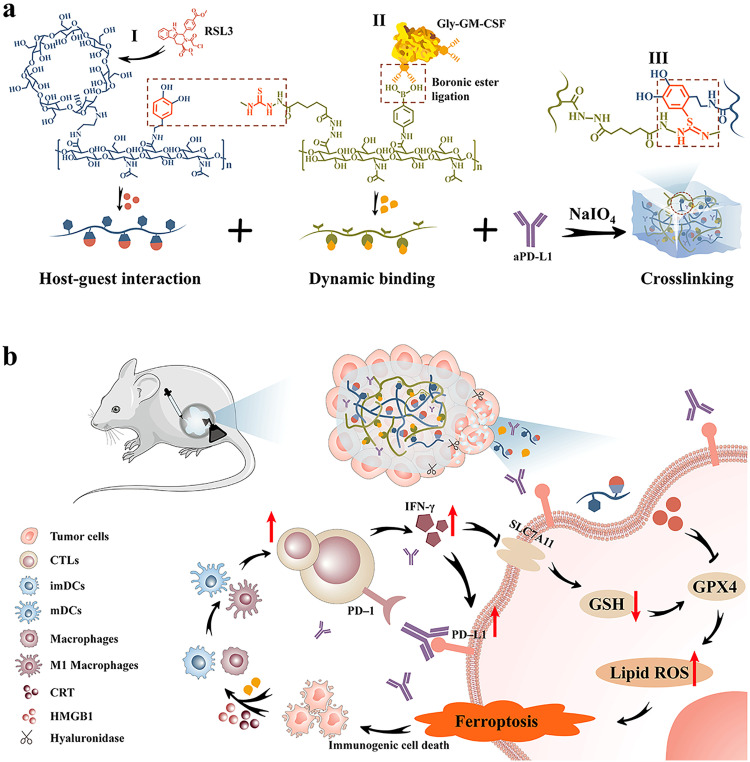
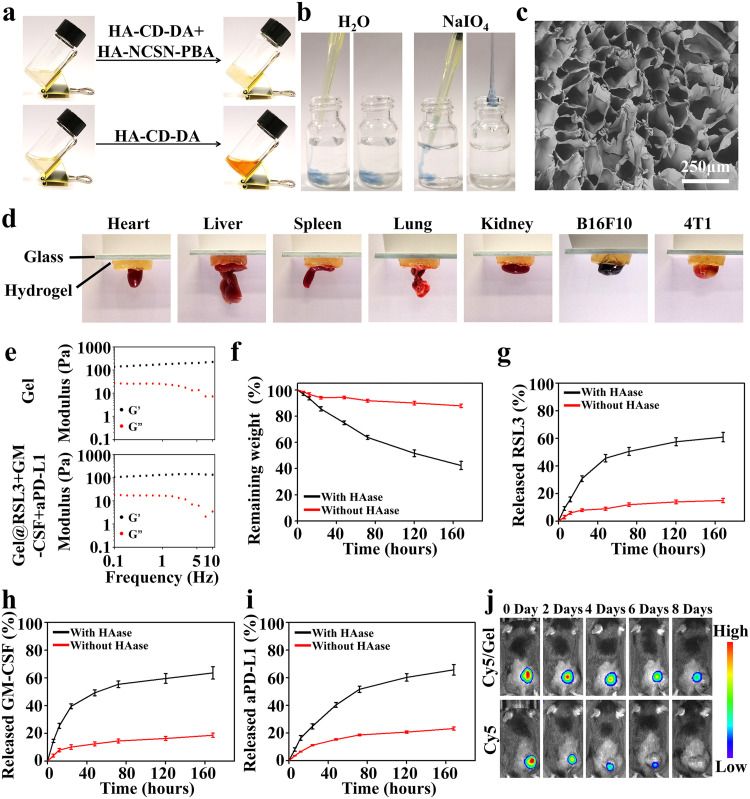
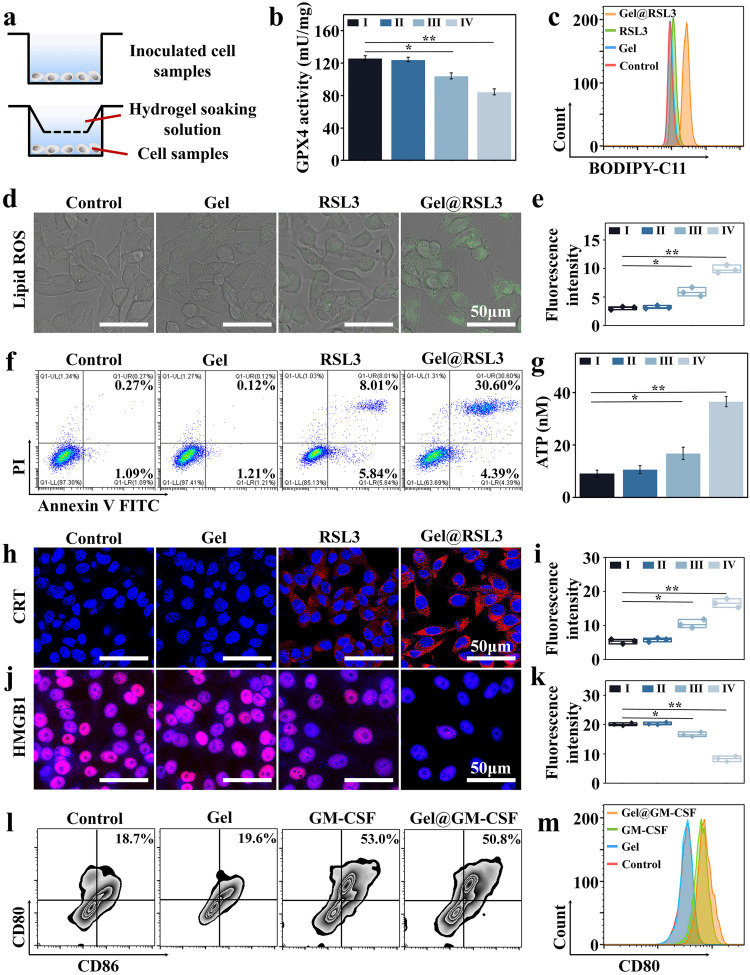
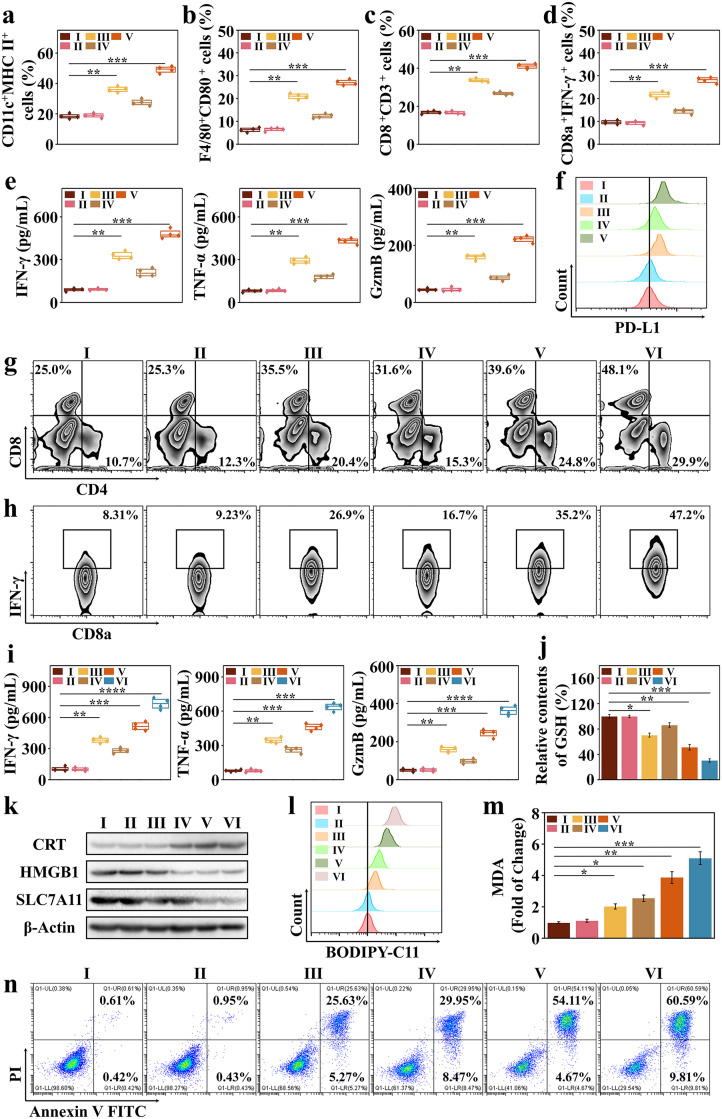
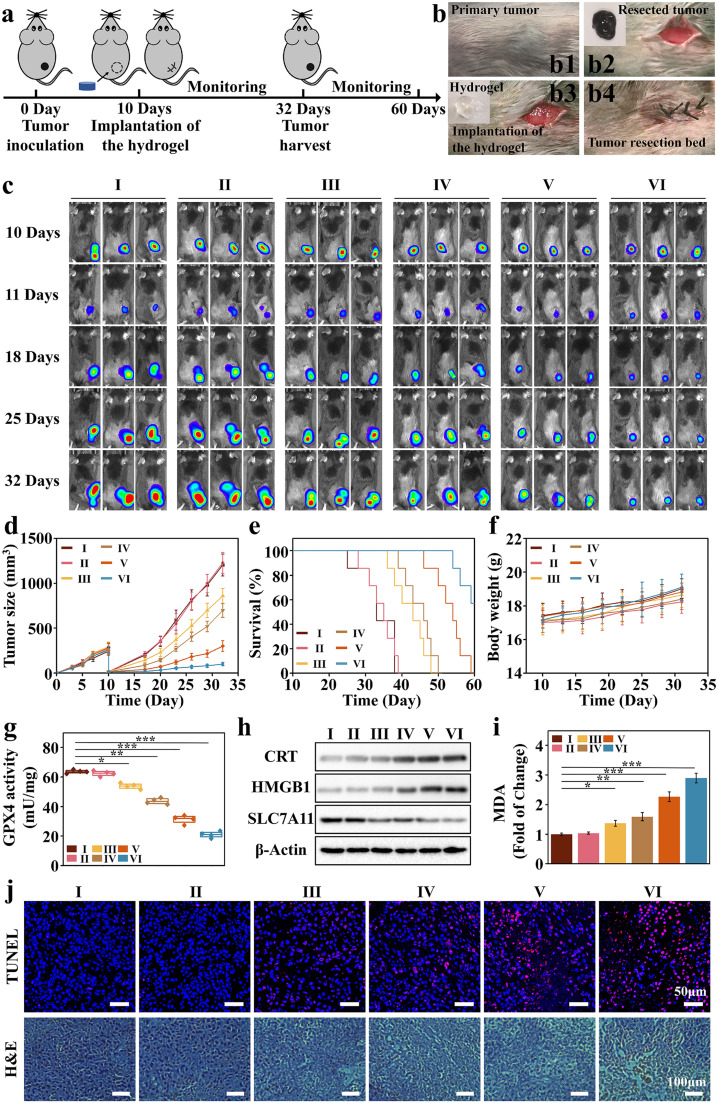
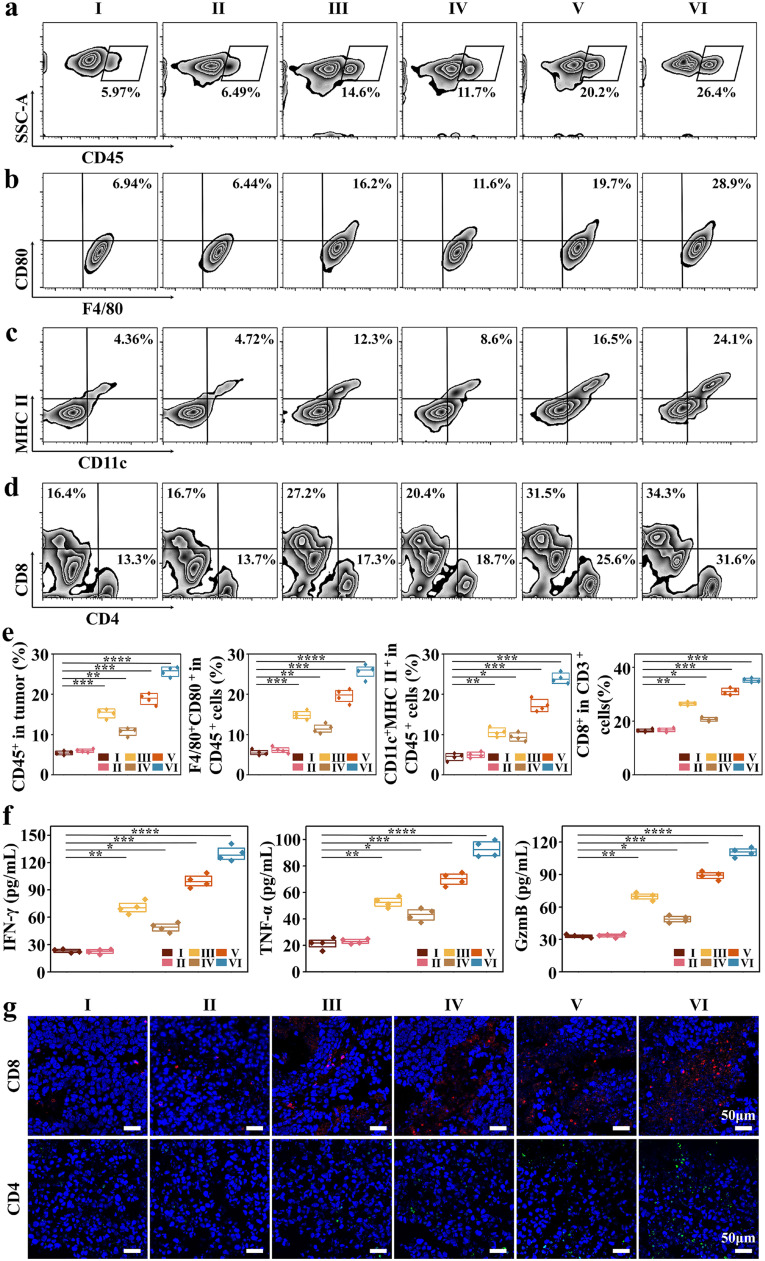
Post-resection tumors with microscopic foci and immunosuppressive microenvironments have high risk of recurrence and metastasis but respond poorly to various therapies. Herein, we propose a biomimetic hydrogel as a biocompatible, biodegradable and bioadhesive postoperative dressing that could be formed in situ by NaIO-initiated thiourea-catechol crosslinking after syringe-injection into the resection cavity. The thiourea or catechol-bearing hyaluronic acid precursors are also separately engineered with phenylboronic acid and β-cyclodextrin (β-CD) groups, potentiating the reversible immobilization of (1S, 3R) RAS-selective lethal 3 (RSL3) and glycosylated granulocyte macrophage-colony stimulating factor (GM-CSF) without invasive chemical reactions. Meanwhile, the interconnected porous superstructure of the hydrogels allows the incorporation and self-regulated delivery of PD-L1 antibody (aPD-L1). RSL3-induced immunogenic ferroptosis and GM-CSF could cooperatively trigger robust adaptive tumor-specific immune responses, while aPD-L1 further alleviates the accumulated immunoresistance of tumor cells due to interferon γ-mediated PD-L1 upregulation, thus stimulating potent local and whole-body antitumor immunity to prevent postoperative tumor recurrence and metastasis. The biomimetic hydrogel may serve as a promising solution for the postoperative treatment of solid tumors.
具有微小病灶和免疫抑制微环境的切除后肿瘤具有高复发和转移风险,但对各种治疗反应不佳。在此,我们提出一种仿生水凝胶作为一种生物相容性、可生物降解和生物粘附性的术后敷料,在通过注射器注射到切除腔内后,可由NaIO引发的硫脲-儿茶酚交联原位形成。含硫脲或儿茶酚的透明质酸前体也分别用苯硼酸和β-环糊精(β-CD)基团进行工程改造,在无侵入性化学反应的情况下增强(1S,3R)RAS选择性致死3(RSL3)和糖基化粒细胞巨噬细胞集落刺激因子(GM-CSF)的可逆固定。同时,水凝胶相互连接的多孔超结构允许掺入和自调节递送程序性死亡受体配体1抗体(aPD-L1)。RSL3诱导的免疫原性铁死亡和GM-CSF可协同触发强大的适应性肿瘤特异性免疫反应,而aPD-L1进一步减轻由于干扰素γ介导的PD-L1上调导致的肿瘤细胞累积免疫抵抗,从而刺激有效的局部和全身抗肿瘤免疫,以防止术后肿瘤复发和转移。这种仿生水凝胶可能是实体瘤术后治疗的一种有前景的解决方案。