Zhao Hejia, Chen Yanjun, Mao Huamin, Ye Junpu, Fu Min, Qiu Jinhao, Zhang Yunhan, Pan Er, Xiong Ke
From the Department of Ophthalmology, Nanfang Hospital Branch, Southern Medical University, Guangzhou, Guangdong, China.
Department of Occupational Health and Occupational Medicine, School of Public Health, Southern Medical University, Guangzhou, Guangdong, China.
Plast Reconstr Surg Glob Open. 2025 Jun 17;13(6):e6876. doi: 10.1097/GOX.0000000000006876. eCollection 2025 Jun.
Blepharoplasty is the third most common plastic surgical procedure worldwide. However, its impact on the ocular surface microbiota remains unclear. This study aimed to investigate microbial changes before and after blepharoplasty.
A clinical case-control study was conducted involving 30 blepharoplasty patients and 23 controls. Ocular surface swabs were collected, and 16S rRNA sequencing was used to identify bacterial species and abundance. Bioinformatics analysis was performed to annotate and visualize microbial composition.
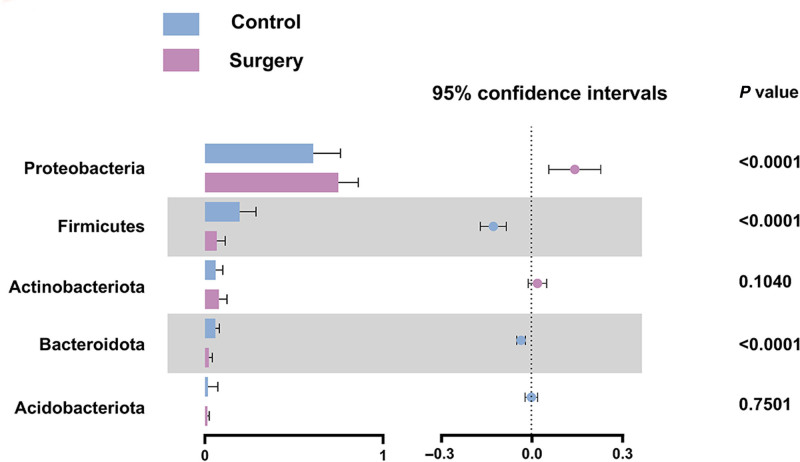
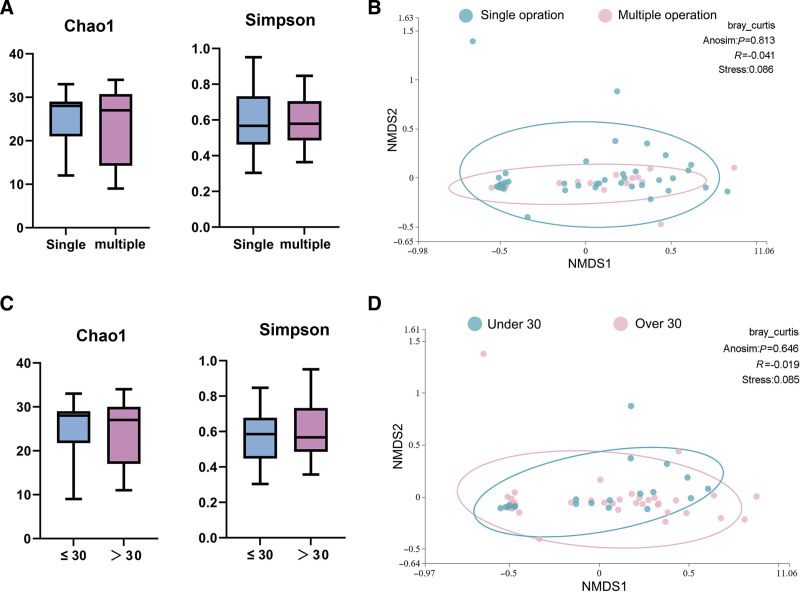
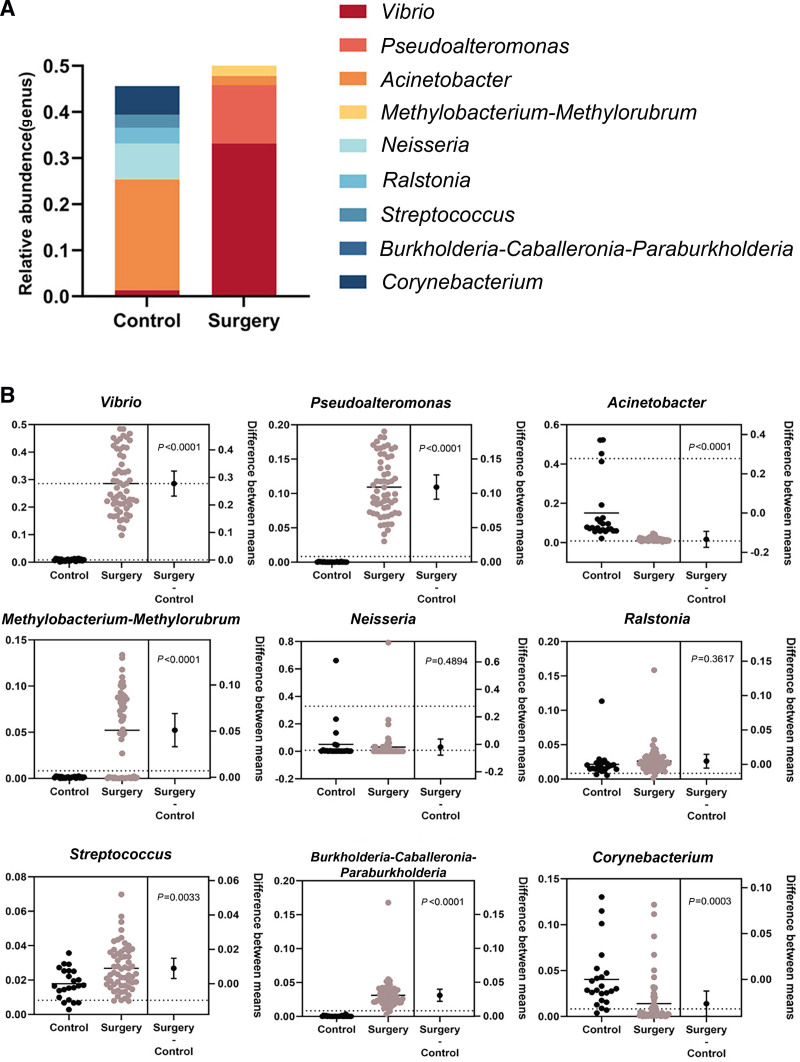
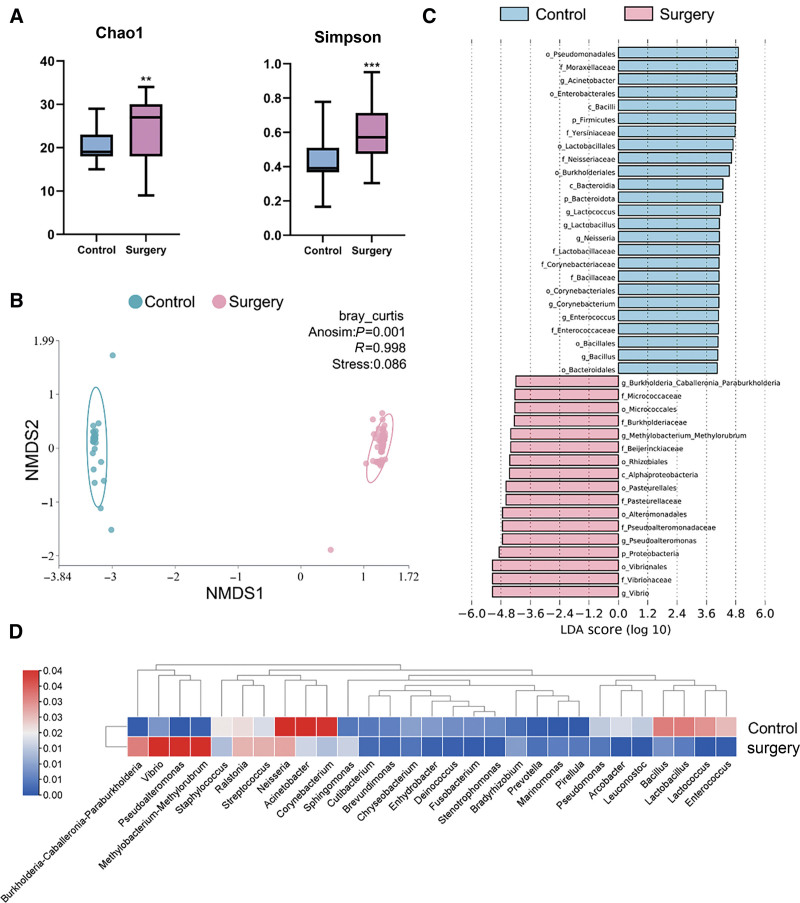
Comparison between groups revealed that patients who underwent blepharoplasty had increased colonization by pathogenic bacteria, whereas controls were primarily colonized by neutral bacteria. Alpha diversity analysis showed a significantly higher bacterial abundance in the surgical group. Beta diversity analysis indicated significant differences in microbial community structure between the 2 groups. Subgroup analysis based on age and sex in the surgical group revealed no significant effects of these factors on microbial composition and abundance.
Blepharoplasty may disrupt the ocular mucosal barrier, altering the ocular microenvironment and promoting colonization by pathogenic bacteria. This microbial imbalance may contribute to postoperative ocular discomfort or dysfunction. Notably, age, sex, and surgery frequency did not influence the microbial profile in blepharoplasty patients.
睑成形术是全球第三常见的整形手术。然而,其对眼表微生物群的影响仍不清楚。本研究旨在调查睑成形术前后的微生物变化。
进行了一项临床病例对照研究,纳入30例睑成形术患者和23例对照。采集眼表拭子,采用16S rRNA测序鉴定细菌种类和丰度。进行生物信息学分析以注释和可视化微生物组成。
组间比较显示,接受睑成形术的患者病原菌定植增加,而对照组主要由中性菌定植。α多样性分析显示手术组细菌丰度显著更高。β多样性分析表明两组之间微生物群落结构存在显著差异。手术组基于年龄和性别的亚组分析显示,这些因素对微生物组成和丰度无显著影响。
睑成形术可能破坏眼黏膜屏障,改变眼微环境并促进病原菌定植。这种微生物失衡可能导致术后眼部不适或功能障碍。值得注意的是,年龄、性别和手术频率并未影响睑成形术患者的微生物谱。