Chastain Daniel B, White Bryan P, Henao-Martínez Andrés F, Tu Patrick J, Bland Christopher M, Foster Rachel A, Cluck David B
Department of Clinical and Administrative Pharmacy, University of Georgia College of Pharmacy, 1000 Jefferson Street, Albany, GA 31701, USA.
OU Health Medical Center, Oklahoma City, OK, USA.
Ther Adv Infect Dis. 2025 Jun 14;12:20499361251343969. doi: 10.1177/20499361251343969. eCollection 2025 Jan-Dec.
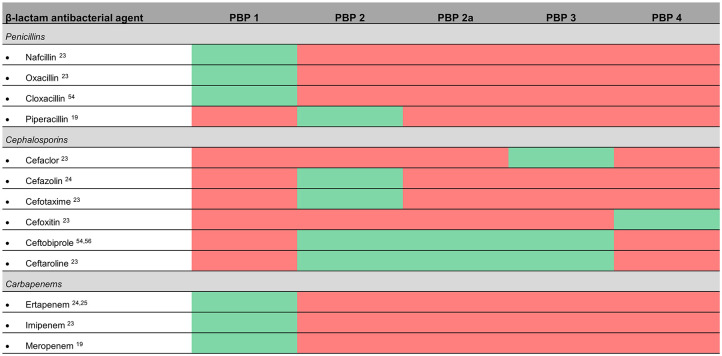
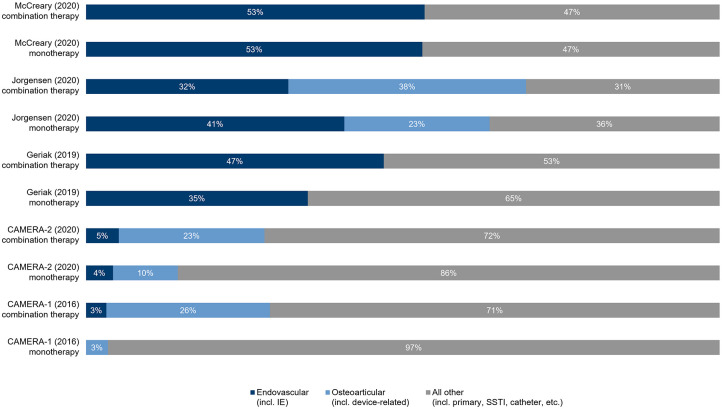
bacteremia (SAB) remains a major clinical challenge, with persistently high mortality despite advancements in antimicrobial therapy. The evolving epidemiology of SAB, characterized by a rise in community-acquired infections, increased use of indwelling medical devices, and a growing burden of metastatic complications, adds to its complexity. Given these challenges, adjunctive β-lactam therapy has been proposed as a strategy to enhance bactericidal activity and improve patient outcomes. β-lactams may exert synergistic effects when combined with other antistaphylococcal agents by saturating multiple penicillin-binding proteins and modifying bacterial cell wall structure, thereby increasing susceptibility to host immune responses. Early evidence for adjunctive β-lactam therapy emerged from retrospective studies and incidental observations of "unplanned synergy," which suggested improved bacterial clearance. Subsequent randomized controlled trials have explored this approach, with some demonstrating reductions in bacteremia duration. However, survival benefits have been inconsistent, and concerns regarding acute kidney injury (AKI) have tempered enthusiasm. Recent investigations, however, suggest that judicious β-lactam selection and targeted patient selection can mitigate AKI risk. A limitation of many randomized controlled trials evaluating combination therapy for SAB is the adoption of uniform treatment protocols that fail to account for patient heterogeneity. This approach may limit the generalizability of findings and obscure potential benefits in specific patient subgroups. Conversely, retrospective analyses suggest that high-risk patients, including those with rapid blood culture positivity, inadequate source control, significant comorbidities, and metastatic disease, may derive the greatest benefit from early combination therapy. Optimizing SAB management necessitates a multifaceted strategy that incorporates patient-specific clinical factors, refined risk stratification, and innovative assessment frameworks. Approaches such as the Desirability of Outcome Ranking (DOOR) and Response Adjusted for Duration of Antibiotic Risk (RADAR) enable holistic evaluations of treatment efficacy and safety, accounting for the overall patient experience. Future research should prioritize individualized treatment strategies, leveraging biomarkers and refined risk stratification to identify patients most likely to benefit from adjunct β-lactam therapy while minimizing adverse events.
金黄色葡萄球菌菌血症(SAB)仍然是一项重大的临床挑战,尽管抗菌治疗取得了进展,但死亡率仍然居高不下。SAB不断演变的流行病学特征为社区获得性感染增加、留置医疗器械使用增多以及转移性并发症负担加重,这增加了其复杂性。鉴于这些挑战,辅助性β-内酰胺治疗已被提议作为增强杀菌活性和改善患者预后的一种策略。β-内酰胺类药物与其他抗葡萄球菌药物联合使用时,可能通过使多种青霉素结合蛋白饱和并改变细菌细胞壁结构而发挥协同作用,从而增加对宿主免疫反应的敏感性。辅助性β-内酰胺治疗的早期证据来自回顾性研究和对“意外协同作用”的偶然观察,这些研究表明细菌清除有所改善。随后的随机对照试验对这种方法进行了探索,一些试验表明菌血症持续时间有所缩短。然而,生存获益并不一致,并且对急性肾损伤(AKI)的担忧减弱了人们的热情。不过,最近的研究表明,明智地选择β-内酰胺类药物和有针对性地选择患者可以降低AKI风险。许多评估SAB联合治疗的随机对照试验的一个局限性是采用了统一的治疗方案,没有考虑患者的异质性。这种方法可能会限制研究结果的普遍性,并掩盖特定患者亚组的潜在益处。相反,回顾性分析表明,高危患者,包括血培养快速阳性、源控制不足、有严重合并症和转移性疾病的患者,可能从早期联合治疗中获益最大。优化SAB管理需要一种多方面的策略,该策略纳入患者特定的临床因素、精细的风险分层和创新的评估框架。诸如结局期望排名(DOOR)和抗生素风险持续时间调整反应(RADAR)等方法能够对治疗效果和安全性进行全面评估,同时考虑患者的整体体验。未来的研究应优先考虑个体化治疗策略,利用生物标志物和精细的风险分层来识别最有可能从辅助性β-内酰胺治疗中获益的患者,同时将不良事件降至最低。