Fan Cheng-Hui, Hao Ying, Chen Lyu-Fan, Cheng Jing, Wang Yi-Qiong, Xu Ling-Hao, Li Ji-Ming
Department of Cardiovascular Medicine, State Key Laboratory of Cardiovascular Diseases and Medical Innovation Center, Shanghai East Hospital, School of Medicine, Tongii University, Shanghai, 200092, China.
Department of Cardiovascular Medicine, Shanghai East Hospital, Nanjing Medical University, Nanjing, 211166, China.
Thromb J. 2025 Jun 18;23(1):66. doi: 10.1186/s12959-025-00753-5.
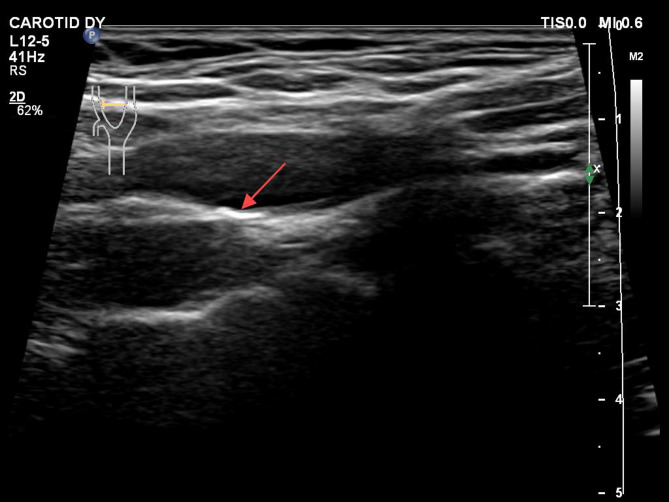
Atherosclerotic plaque regression under lipid-lowering therapy shows considerable individual variation, and the factors influencing this variability remain incompletely understood. This study aimed to investigate the relationship between carotid plaque echogenicity and plaque regression in patients receiving lipid-lowering therapy, and to identify ultrasound characteristics that might predict plaque regression.
A total of 838 patients with carotid plaques receiving lipid-lowering therapy were enrolled between July 2020 and May 2024 and followed up for 12 months. Carotid ultrasound was performed at baseline and follow-up to evaluate plaque characteristics. Plaque regression was defined as meeting any of the following criteria: (1) reduction in plaque area ≥ 5%, (2) decrease in plaque thickness ≥ 0.4 mm, or (3) reduction in plaque number, as assessed by vascular ultrasound imaging. Plaque echogenicity was classified into three types: hypoechoic, hyperechoic, and mixed echogenicity. Cox proportional hazards regression analysis was performed to assess the association between plaque echogenicity and plaque regression, adjusting for potential confounding factors.
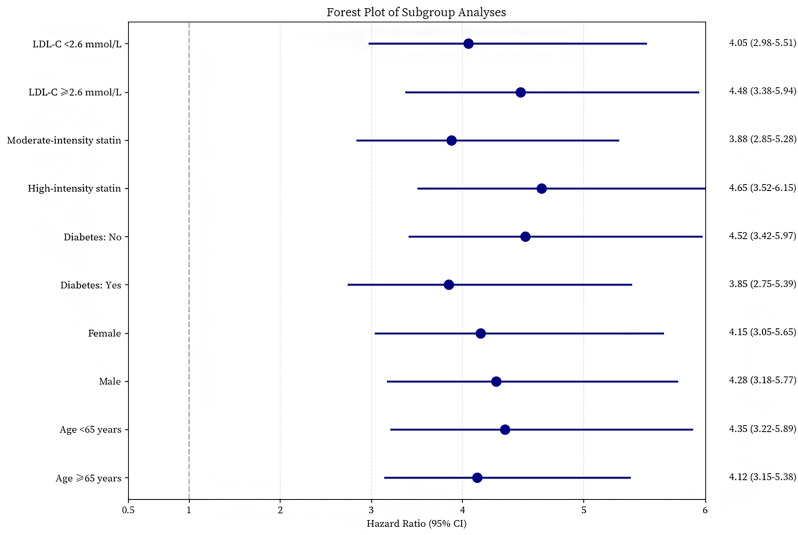
Hypoechoic plaques showed higher rates of regression (72.8%) compared to hyperechoic (37.7%) and mixed echogenicity plaques (50.0%) (p < 0.001). After adjusting for confounding variables, hypoechoic plaques exhibited greater odds of regression compared to hyperechoic plaques (adjusted HR = 4.52, 95% CI: 3.18-6.43, p < 0.001). Additionally, the median percentage reduction in plaque size was more pronounced in hypoechoic plaques, (15.2%, IQR: 7.7-22.3%) compared with other echogenicities (p < 0.001).
Carotid plaque echogenicity is strongly associated with the likelihood plaque regression, with hypoechoic plaques exhibiting higher regression rates and greater reductions in plaque size. These findings may help guide personalized treatment strategies and improve risk assessment.
降脂治疗下动脉粥样硬化斑块的消退存在显著个体差异,而影响这种变异性的因素仍未完全明确。本研究旨在探讨接受降脂治疗患者的颈动脉斑块回声性与斑块消退之间的关系,并确定可能预测斑块消退的超声特征。
2020年7月至2024年5月期间,共纳入838例接受降脂治疗的颈动脉斑块患者,并随访12个月。在基线和随访时进行颈动脉超声检查以评估斑块特征。斑块消退定义为符合以下任何一项标准:(1)斑块面积减少≥5%,(2)斑块厚度减少≥0.4毫米,或(3)通过血管超声成像评估的斑块数量减少。斑块回声性分为三种类型:低回声、高回声和混合回声。进行Cox比例风险回归分析以评估斑块回声性与斑块消退之间的关联,并对潜在混杂因素进行校正。
与高回声斑块(37.7%)和混合回声斑块(50.0%)相比,低回声斑块显示出更高的消退率(72.8%)(p<0.001)。在调整混杂变量后,与高回声斑块相比,低回声斑块出现消退的几率更高(调整后HR = 4.52,95%CI:3.18 - 6.43,p<0.001)。此外,与其他回声性相比,低回声斑块的斑块大小中位数减少百分比更为明显(15.2%,IQR:7.7 - 22.3%)(p<0.001)。
颈动脉斑块回声性与斑块消退的可能性密切相关,低回声斑块表现出更高的消退率和更大的斑块大小减少。这些发现可能有助于指导个性化治疗策略并改善风险评估。