Lang Tong, Meng Lingbing
Department of Respiratory and Critical Care Medicine, Weifang Second People's Hospital, 7 Yuanxiao St, Weifang, Shandong Province, 261041, China.
Cardiometabolic Medicine Center, National Clinical Research Center for Cardiovascular Diseases, Fuwai Hospital, National Center for Cardiovascular Diseases, Chinese Academy of Medical Sciences and Peking Union Medical College, A 167 Beilishi Rd, Xicheng District, Beijing, 100037, China.
J Cardiothorac Surg. 2025 Jun 18;20(1):262. doi: 10.1186/s13019-025-03510-x.
The proportion of patients with lung cancer complicated by atrial fibrillation (AF) is increasing. Identifying shared molecular targets between these two conditions may provide important prognostic insights for patients with comorbidities.
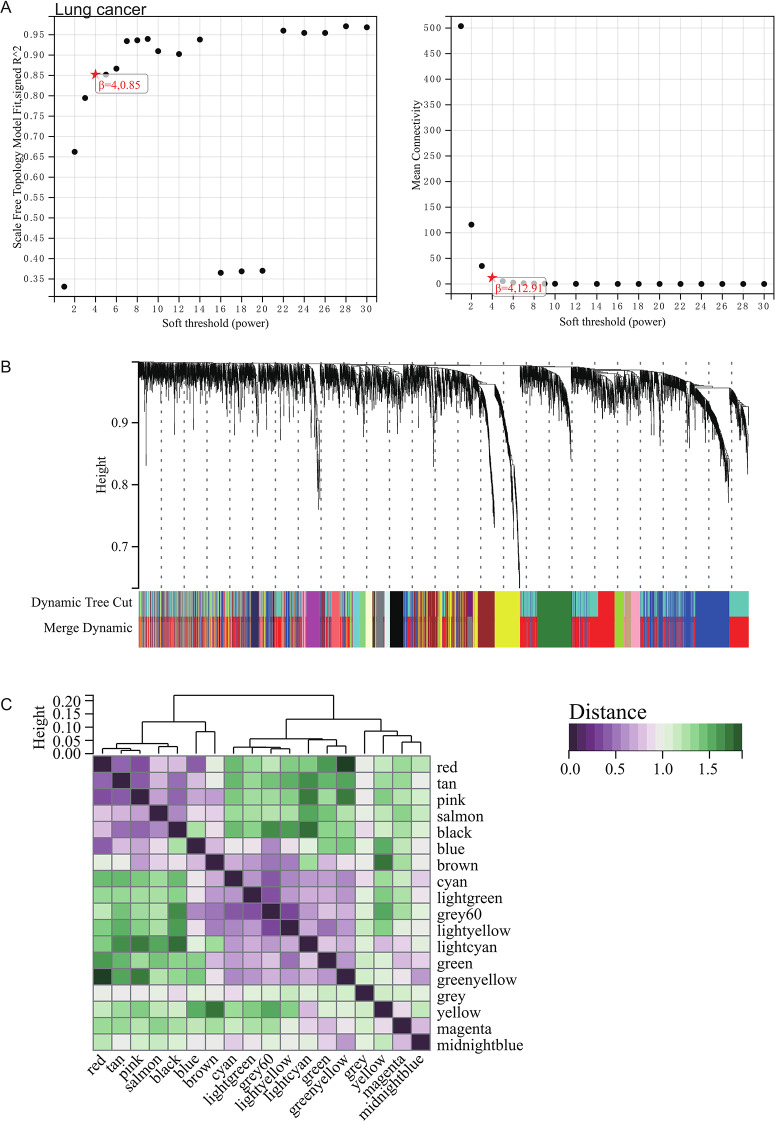
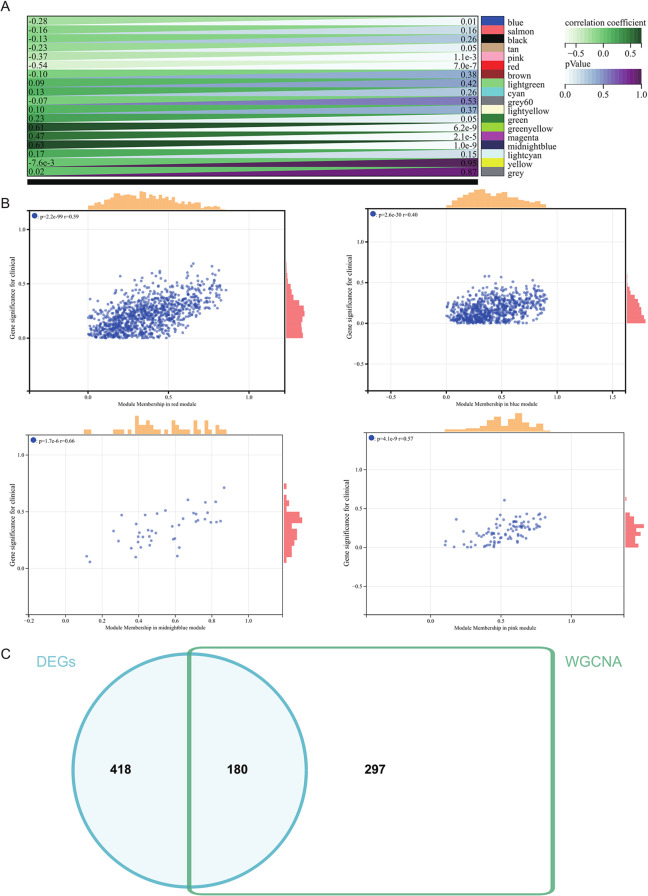
The GSE8569 and GSE41177 datasets were downloaded from the Gene Expression Omnibus (GEO) database. Differential expression analysis was performed using the limma package in R. Weighted gene co-expression network analysis (WGCNA) was conducted to identify significant gene modules. Gene Ontology (GO) and Kyoto Encyclopedia of Genes and Genomes (KEGG) analyses, along with gene set enrichment analysis (GSEA), were used to explore biological functions. Clinical survival data for lung cancer were obtained from The Cancer Genome Atlas (TCGA), and receiver operating characteristic (ROC) analysis was conducted using the R package ROC (version 1.17.0.1).
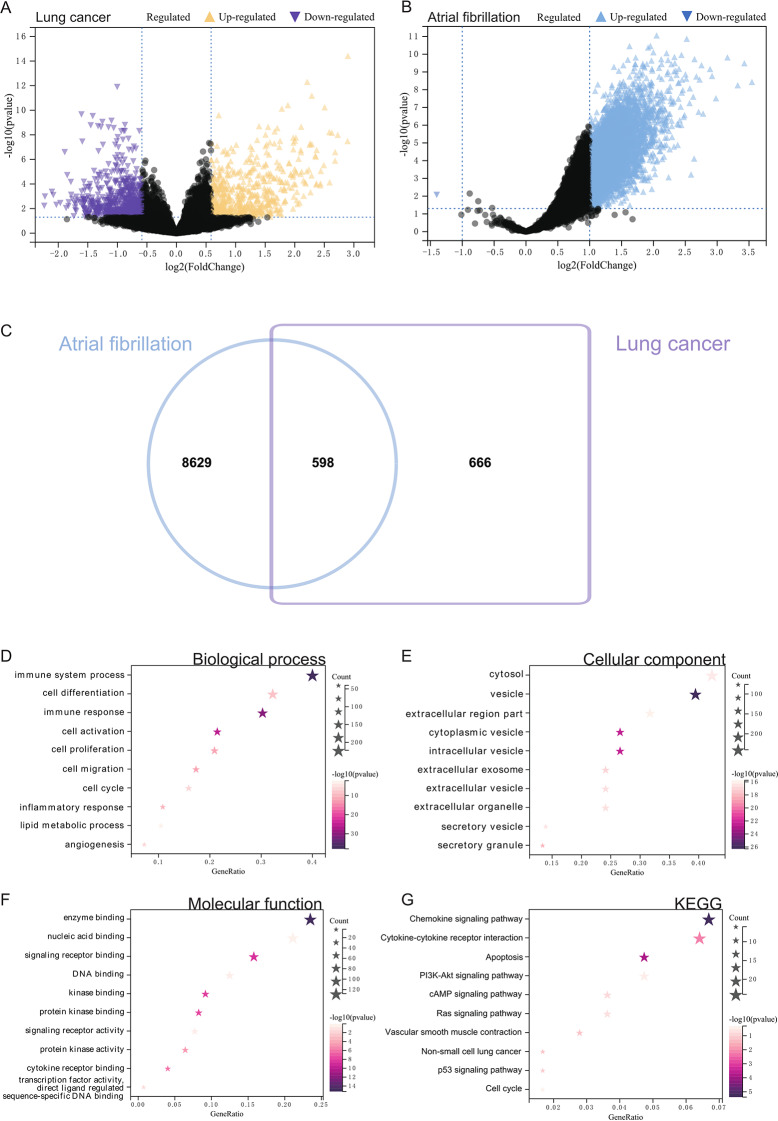
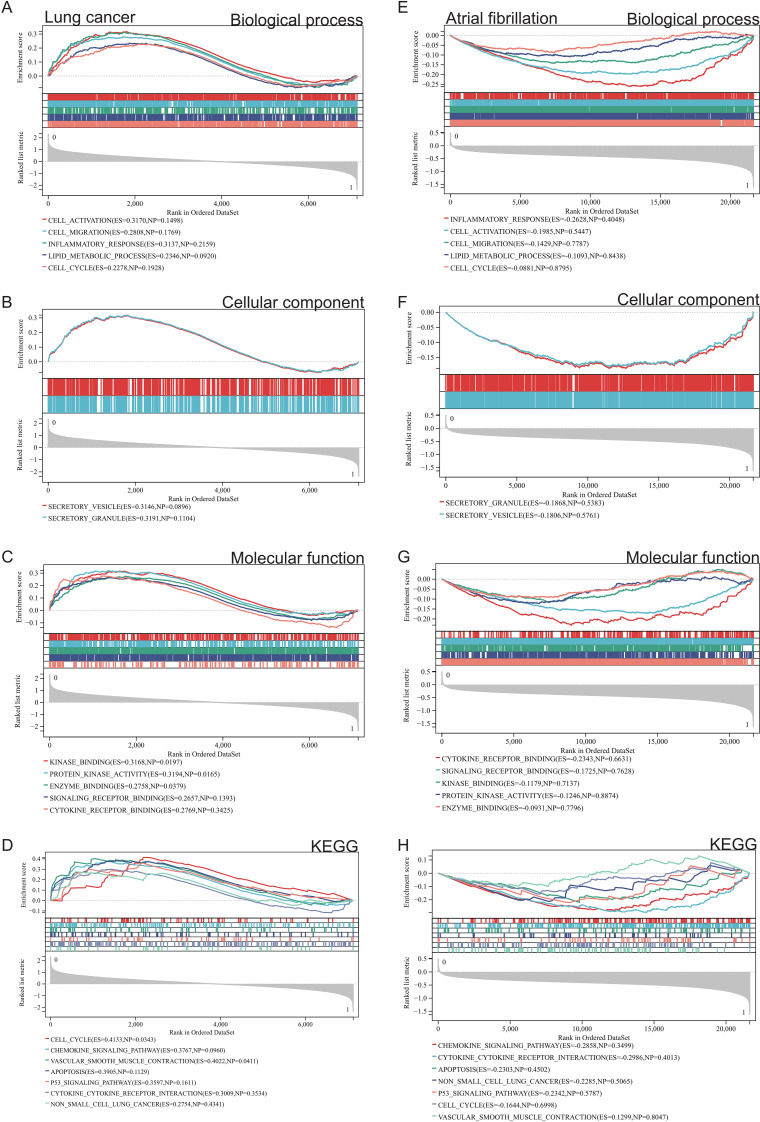
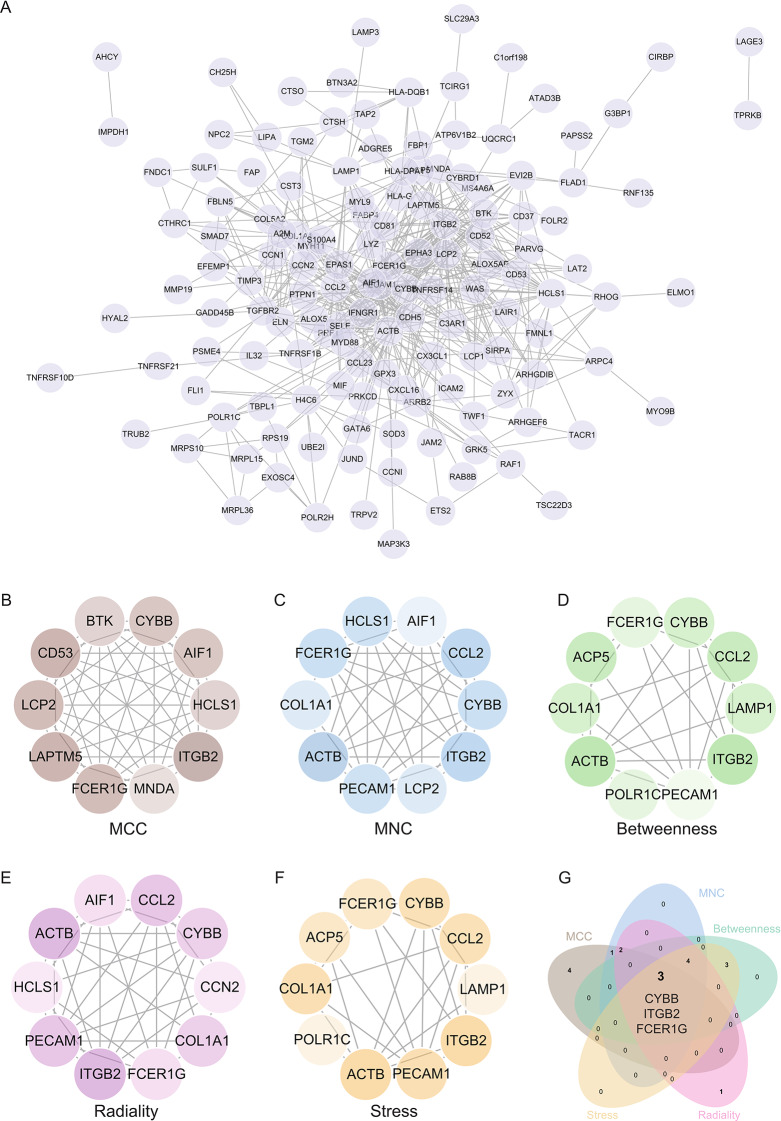
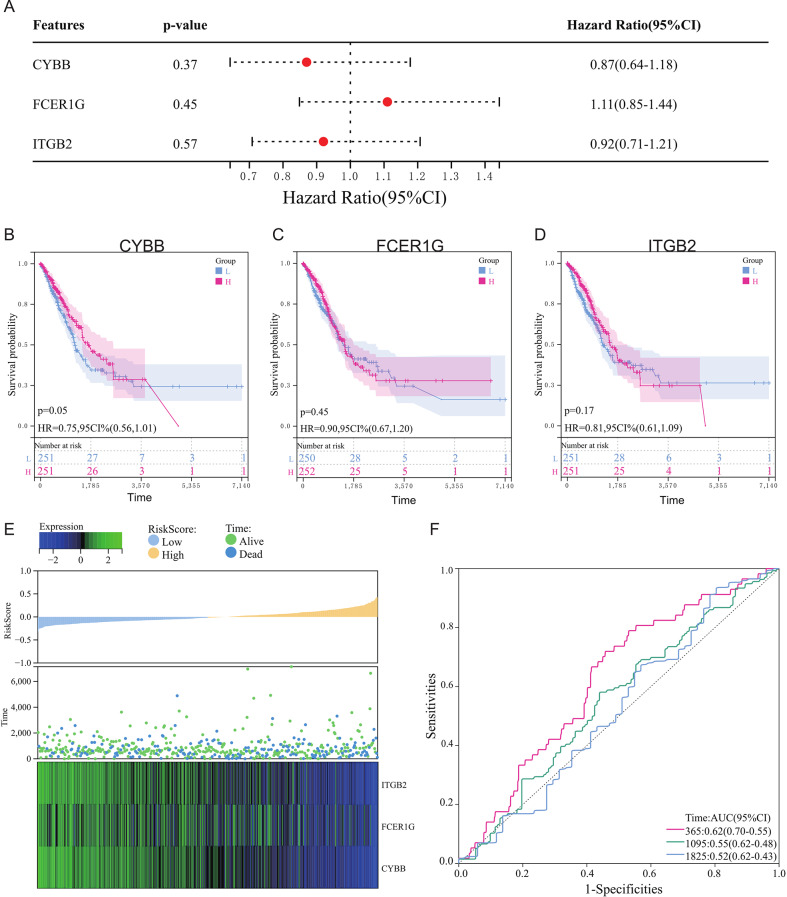
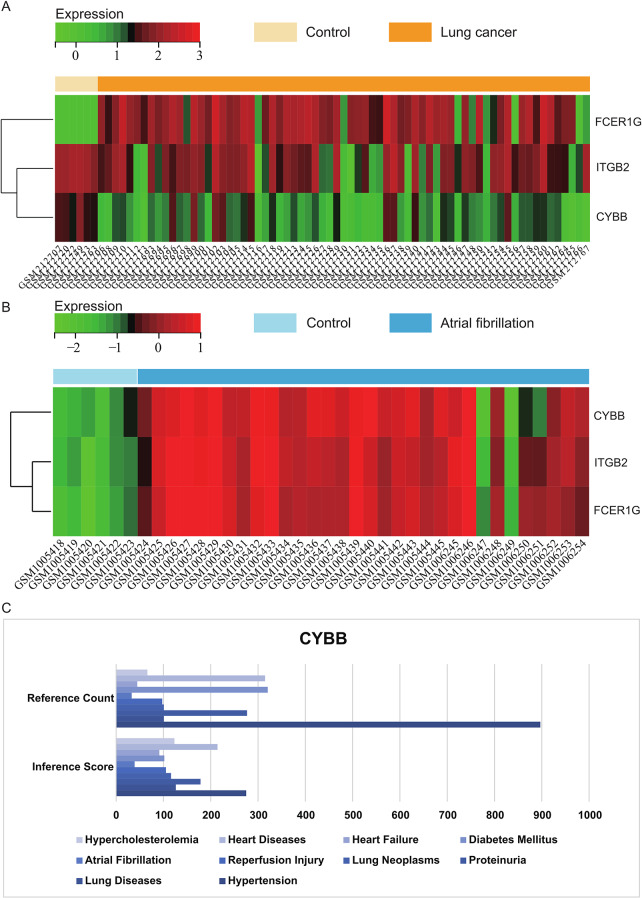
A total of 598 differentially expressed genes (DEGs) were identified. These DEGs were primarily enriched in cell proliferation, inflammatory responses, non-small cell lung cancer, the p53 signaling pathway, and the cell cycle. Three core genes (CYBB, ITGB2, FCER1G) were identified. Notably, CYBB was downregulated in lung cancer compared to normal tissue. Patients in the low-risk group had significantly better survival outcomes. Heatmap visualization showed that expression of CYBB decreased with increasing risk scores, suggesting a protective role.
CYBB expression may influence lung cancer prognosis and contribute to the pathogenesis of AF. Further research is needed to clarify CYBB's role in patients with both conditions.
肺癌合并心房颤动(AF)的患者比例正在增加。确定这两种疾病之间共享的分子靶点可能为合并症患者提供重要的预后见解。
从基因表达综合数据库(GEO)下载GSE8569和GSE41177数据集。使用R语言中的limma包进行差异表达分析。进行加权基因共表达网络分析(WGCNA)以识别重要的基因模块。使用基因本体(GO)和京都基因与基因组百科全书(KEGG)分析以及基因集富集分析(GSEA)来探索生物学功能。从癌症基因组图谱(TCGA)获得肺癌的临床生存数据,并使用R包ROC(版本1.17.0.1)进行受试者工作特征(ROC)分析。
共鉴定出598个差异表达基因(DEG)。这些DEG主要富集于细胞增殖、炎症反应、非小细胞肺癌、p53信号通路和细胞周期。鉴定出三个核心基因(CYBB、ITGB2、FCER1G)。值得注意的是,与正常组织相比,CYBB在肺癌中表达下调。低风险组患者的生存结局明显更好。热图可视化显示CYBB的表达随着风险评分的增加而降低,表明其具有保护作用。
CYBB表达可能影响肺癌预后并促进心房颤动的发病机制。需要进一步研究以阐明CYBB在这两种疾病患者中的作用。