Dupuy Montana, Bondonno Nicola P, Pokharel Pratik, Linneberg Allan, Levinger Itamar, Schultz Carl, Hodgson Jonathan M, Sim Marc
Nutrition & Health Innovation Research Institute, School of Medical and Health Sciences Edith Cowan University Perth Western Australia Australia.
The Danish Cancer Institute Copenhagen Denmark.
Food Sci Nutr. 2025 Jun 17;13(6):e70431. doi: 10.1002/fsn3.70431. eCollection 2025 Jun.
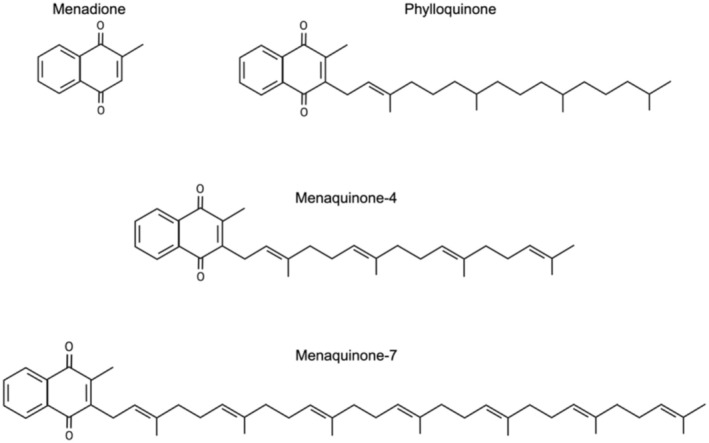
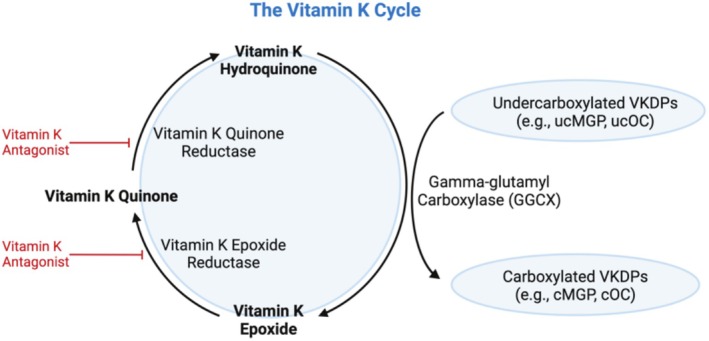
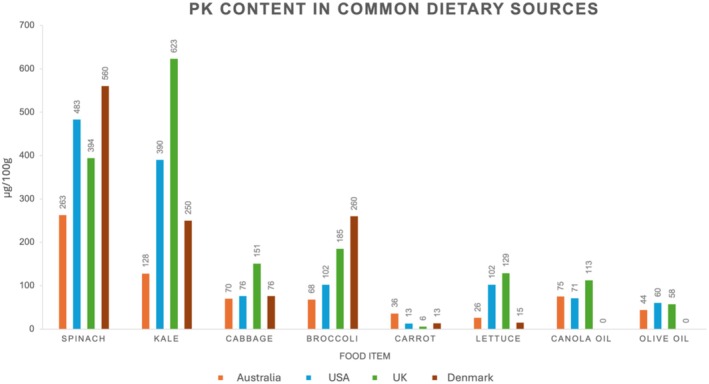
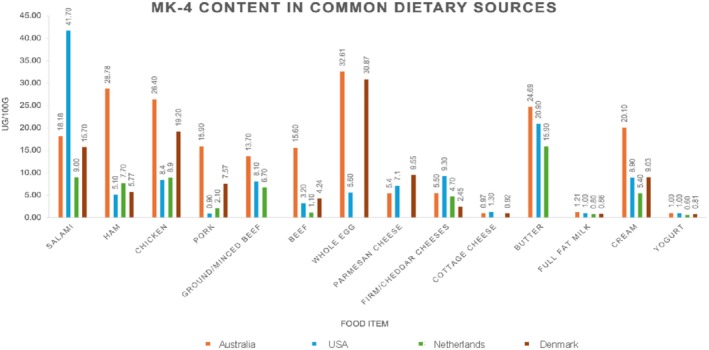
Vitamin K refers to a group of lipid-soluble vitamins that exist in two natural isoforms; phylloquinone (PK, vitamin K1) and menaquinones (MKs, vitamin K2). Phylloquinone, the primary dietary source, is found abundantly in green vegetables and plant oils. Menaquinones (MK-4 through MK-13) are synthesized by anaerobic bacteria and may be obtained through the diet from fermented foods and animal products (e.g., meats, dairy and eggs). Originally recognized for its role in blood coagulation, vitamin K is an essential cofactor for the posttranslational carboxylation of vitamin K-dependent proteins (VKDPs), which are implicated in various physiological processes including; blood coagulation, calcium homeostasis, as well as metabolic and inflammatory pathways. Therefore, vitamin K has attracted considerable research interest for its potential implications in several diseases. While promising, the specific roles of vitamin K in various health conditions, the quantity of vitamin K (both PK and MKs) required for the function of various VKDPs, and the influence of genetics on vitamin K metabolism, remain unclear. This review aims to (i) provide an overview of the structure, dietary sources, metabolism, and physiological roles of vitamin K, including those relating to; cardiovascular diseases, type 2 diabetes, respiratory conditions, musculoskeletal health and cancer; (ii) discuss the impact of genetic factors on vitamin K status and how such factors modulate the role of vitamin K in the aforementioned chronic diseases; and (iii) outline key directions for future research.
维生素K是指一组脂溶性维生素,存在两种天然异构体:叶绿醌(PK,维生素K1)和甲萘醌(MKs,维生素K2)。叶绿醌是主要的膳食来源,大量存在于绿色蔬菜和植物油中。甲萘醌(MK-4至MK-13)由厌氧细菌合成,可通过饮食从发酵食品和动物产品(如肉类、奶制品和蛋类)中获取。维生素K最初因其在血液凝固中的作用而被认识,它是维生素K依赖蛋白(VKDPs)翻译后羧化的必需辅助因子,这些蛋白参与包括血液凝固、钙稳态以及代谢和炎症途径等各种生理过程。因此,维生素K因其在多种疾病中的潜在影响而引起了相当多的研究关注。尽管前景广阔,但维生素K在各种健康状况下的具体作用、各种VKDPs发挥功能所需的维生素K(PK和MKs)量以及基因对维生素K代谢的影响仍不清楚。本综述旨在:(i)概述维生素K的结构、膳食来源、代谢和生理作用,包括与心血管疾病、2型糖尿病、呼吸系统疾病、肌肉骨骼健康和癌症相关 的作用;(ii)讨论遗传因素对维生素K状态的影响以及这些因素如何调节维生素K在上述慢性疾病中的作用;(iii)概述未来研究的关键方向。