Veilleux Carolane, Roy Marie-Ève, Zgheib Alain, Desjarlais Michel, Annabi Borhane
Laboratoire d'Oncologie Moléculaire, Département de Chimie and CERMO- FC, Université du Québec à Montréal, C.P. 8888, Succ. Centreville, Montreal, QC, H3C 3P8, Canada.
Department of Ophthalmology, Maisonneuve-Rosemont Hospital Research Center, Université de Montréal, Montreal, QC, H3T 1J4, Canada.
Cell Commun Signal. 2025 Jun 19;23(1):291. doi: 10.1186/s12964-025-02298-6.
During obesity, the excessive accumulation of fat in tissue promotes dysregulated hormonal and cytokine homeostasis that triggers chronic inflammation, which is, in part, associated with an increased incidence of some cancers. This protumoral inflammatory environment is further exacerbated through the secretome of mature adipocytes, which promotes tumor angiogenesis. Emerging studies suggest that human adipocyte-derived mesenchymal stromal/stem cells (ADMSCs) may contribute to a complementary process supporting local angiogenesis termed vasculogenic mimicry (VM). The molecular mechanisms linking ADMSCs to VM and inflammation remain poorly understood.
ADMSC 3D capillary-like structures were generated upon seeding on Cultrex. Structure analysis was performed using WIMASIS. Total RNA was extracted using TRIzol and RT-qPCR was performed to assess gene expression or screen RT PCR arrays. Transient gene silencing was performed by transfecting cells with a specific siRNA against STAT3. Protein lysates were harvested and used for Western blotting. Realtime cell migration was performed with the xCELLigence system.
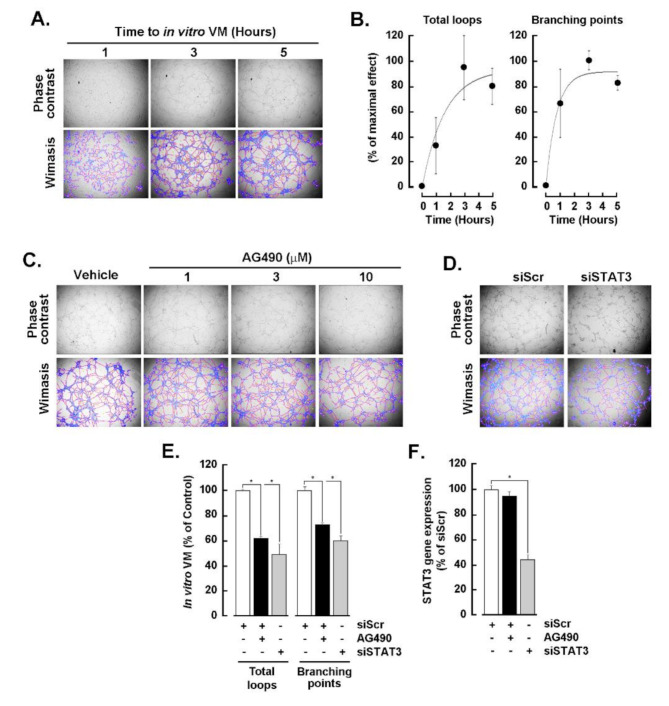
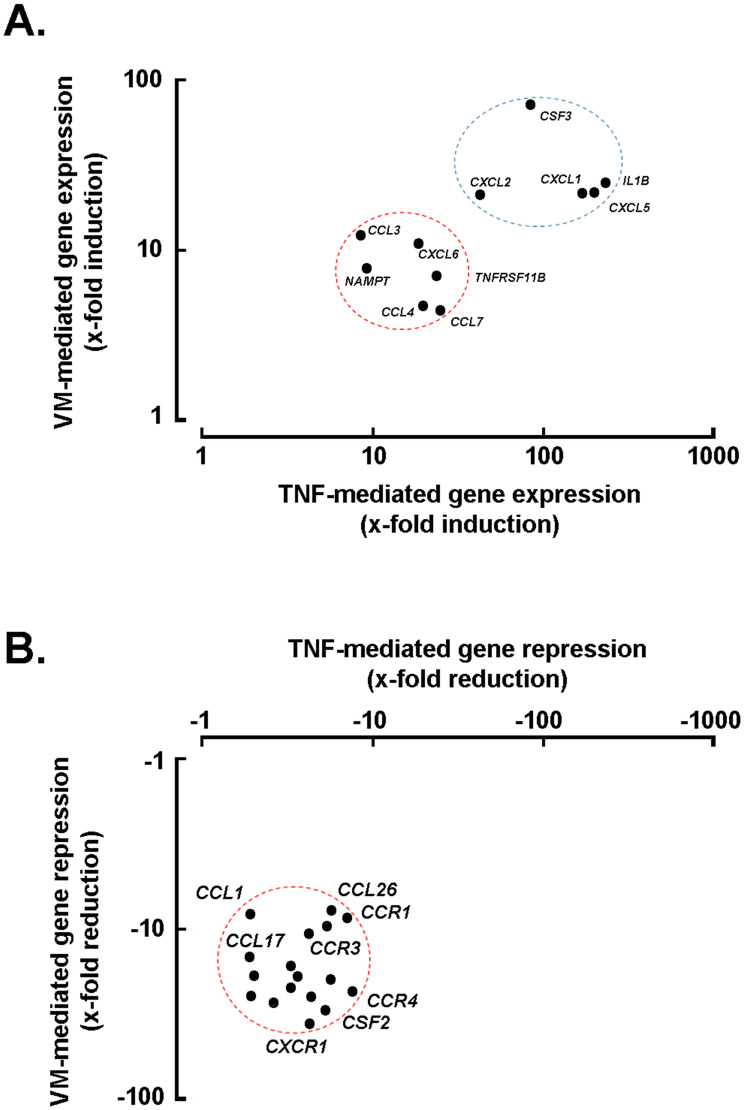
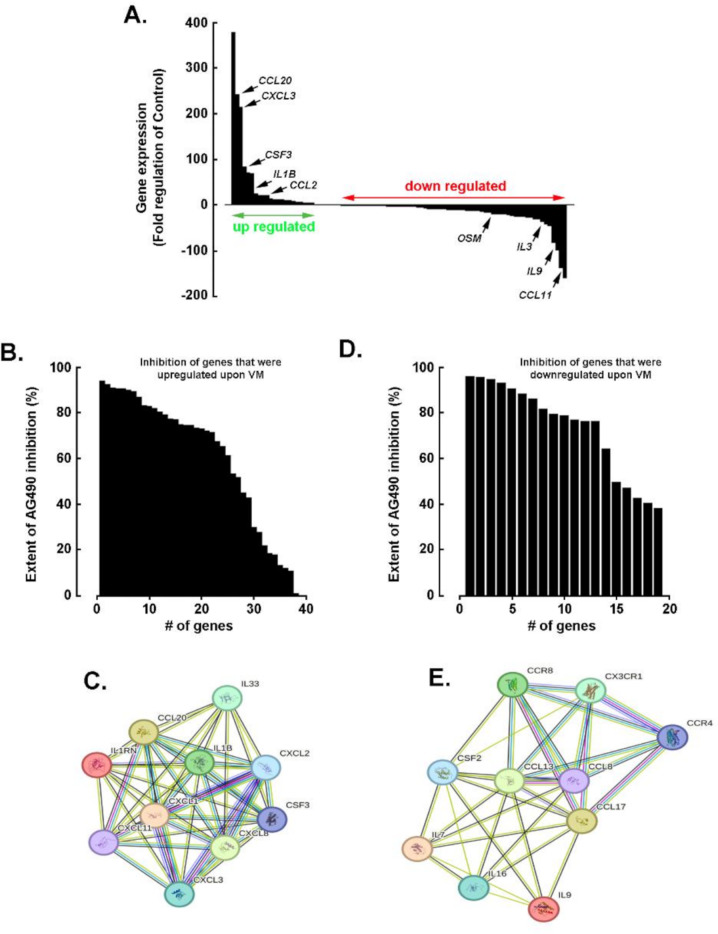
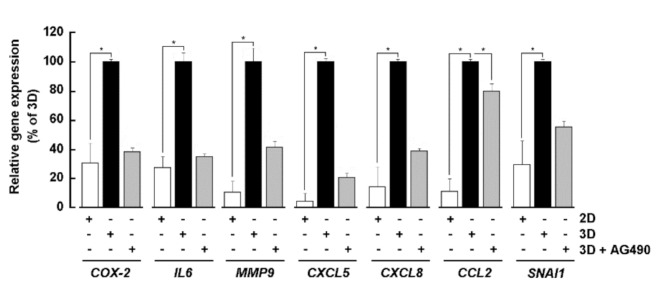
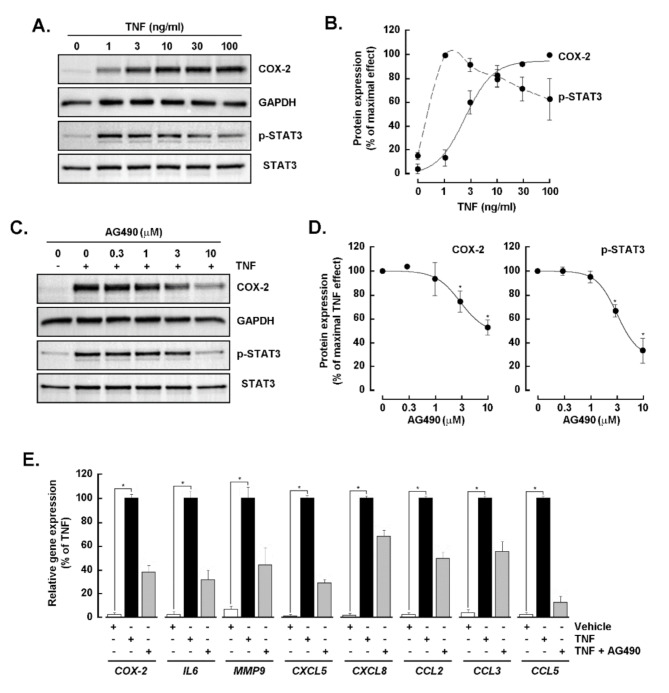
Our findings revealed that in vitro priming of ADMSCs with Cultrex led to the formation of 3D capillary-like structures and the acquisition of an inflammatory molecular signature. VM-derived ADMSCs share a common proinflammatory molecular signature similar to that induced in 2D ADMSC monolayers by tumor necrosis factor (TNF)-alpha and are characterized by upregulated expression of COX2, CCL2, CCL5, CXCL5, CXCL8, IL-6, SNAI1, and MMP9. Interestingly, pharmacological inhibition or gene silencing of the JAK2/STAT3 signaling pathway reduced chemotactic cell migration, in vitro VM and the expression of proinflammatory and invasive biomarkers.
Overall, we provide novel evidence that inhibiting JAK2/STAT3-regulated VM can also alter the acquisition of a proinflammatory signature and prevent the contribution of ADMSCs to alternative tumor neovascularization processes.
在肥胖期间,组织中脂肪的过度积累会促进激素和细胞因子稳态失调,从而引发慢性炎症,这在一定程度上与某些癌症发病率的增加有关。这种促肿瘤炎症环境会通过成熟脂肪细胞的分泌组进一步加剧,后者会促进肿瘤血管生成。新兴研究表明,人脂肪来源的间充质基质/干细胞(ADMSC)可能有助于一个支持局部血管生成的互补过程,即血管生成拟态(VM)。将ADMSC与VM及炎症联系起来的分子机制仍知之甚少。
将ADMSC接种到Cultrex上后生成3D毛细血管样结构。使用WIMASIS进行结构分析。使用TRIzol提取总RNA,并进行RT-qPCR以评估基因表达或筛选RT PCR阵列。通过用针对STAT3的特异性siRNA转染细胞来进行瞬时基因沉默。收获蛋白质裂解物并用于蛋白质印迹分析。使用xCELLigence系统进行实时细胞迁移分析。
我们的研究结果显示,用Cultrex对ADMSC进行体外预处理会导致3D毛细血管样结构的形成,并获得炎症分子特征。源自VM的ADMSC具有与肿瘤坏死因子(TNF)-α在二维ADMSC单层中诱导的相似的共同促炎分子特征,其特征在于COX2、CCL2、CCL5、CXCL5、CXCL8、IL-6、SNAI1和MMP9的表达上调。有趣的是,JAK2/STAT3信号通路的药理学抑制或基因沉默会降低趋化性细胞迁移、体外VM以及促炎和侵袭性生物标志物的表达。
总体而言,我们提供了新的证据,即抑制JAK2/STAT3调节的VM也可以改变促炎特征的获得,并阻止ADMSC对替代性肿瘤新生血管形成过程的作用。