Chen Lingling, Yin Lixue
Ultrasound in Cardiac Electrophysiology and Biomechanics Key Laboratory of Sichuan Province, Sichuan Provincial People's Hospital, University of Electronic Science and Technology of China, Chengdu, China.
Department of Cardiovascular Ultrasound & Noninvasive Cardiology, Sichuan Provincial People's Hospital, University of Electronic Science and Technology of China, Chengdu, China.
Front Endocrinol (Lausanne). 2025 Jun 5;16:1560738. doi: 10.3389/fendo.2025.1560738. eCollection 2025.
Blood urea nitrogen (BUN), one of the recognized indicators of renal function, is a key marker of metabolic diseases, but there are few data on the association of BUN levels with hyperuricemia (HUA) in the general adult population. The aim of the study is to explore the relationship between BUN and HUA in the general population and the potential impact of gender on this relationship.
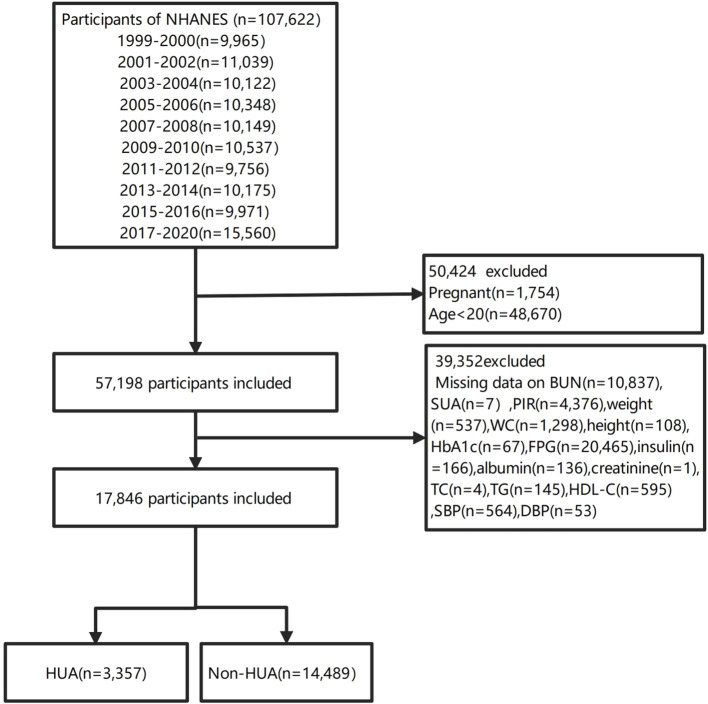
This study was conducted involving 17,846 adults from the National Health and Nutrition Examination Survey (NHANES) between 1999-2020. Data on age, gender, race, marital status, education level, height, weight, body mass index (BMI), waist circumference (WC), systolic blood pressure (SBP), diastolic blood pressure (DBP), triglyceride (TG), total cholesterol (TC), high-density lipoprotein cholesterol (HDL-C), low-density lipoprotein cholesterol (LDL-C), fasting plasma glucose (FPG), hemoglobin A1c (HbA1C), serum uric acid (SUA), BUN, creatinine, and albumin were collected from all participants. Multivariate logistic regression, curve fitting and subgroup analyses were employed to investigate the associations between BUN and HUA stratified by sex.
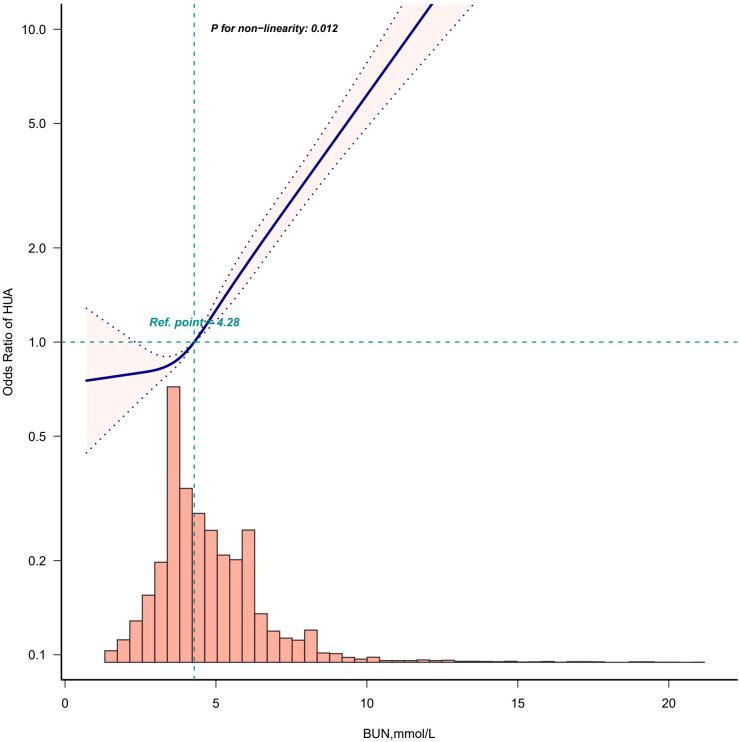
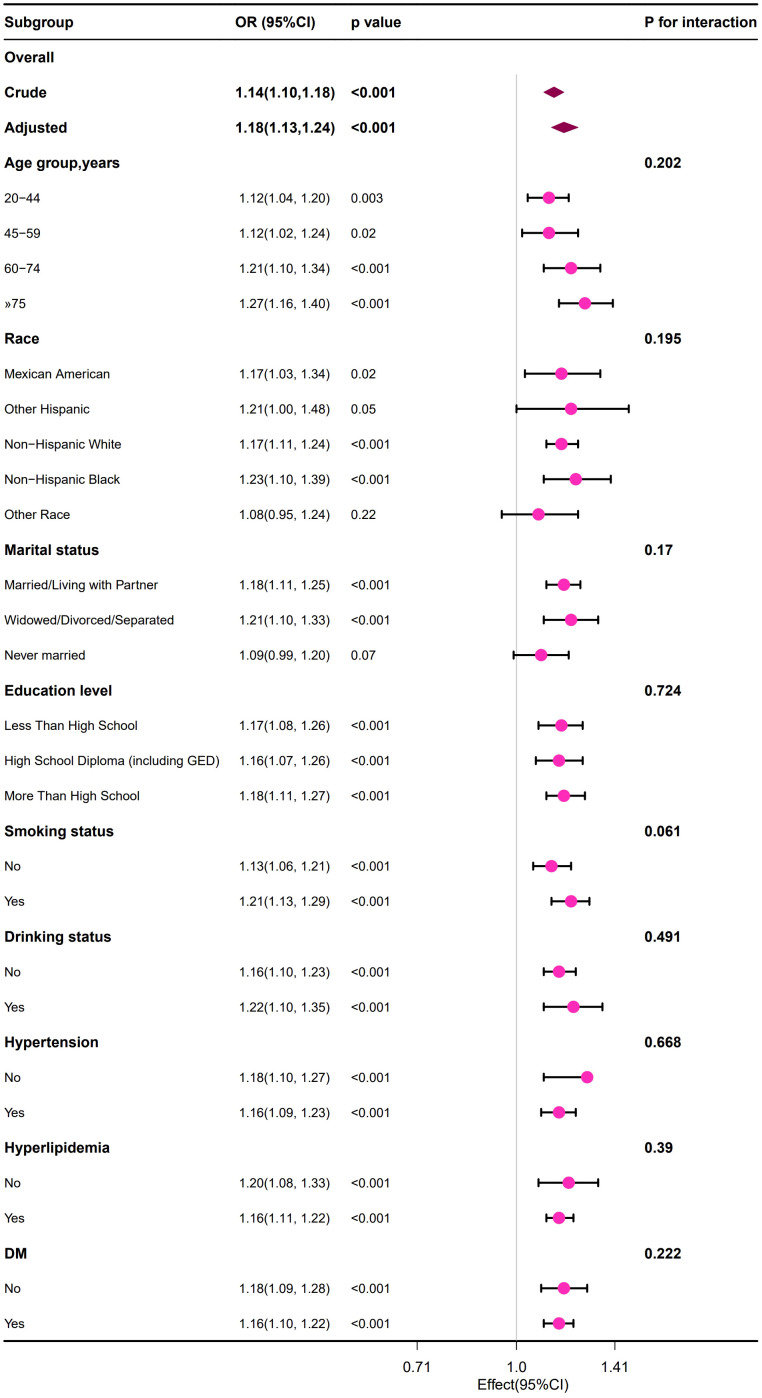
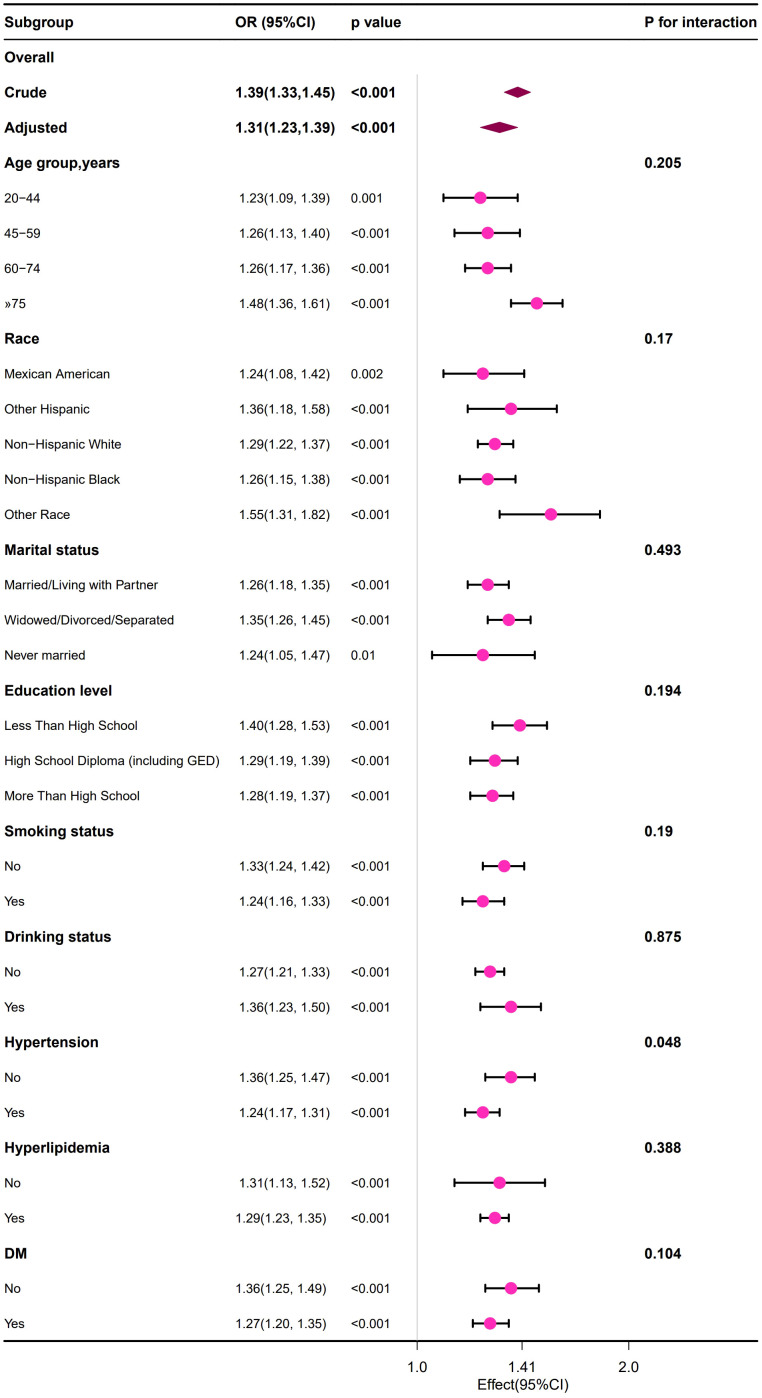
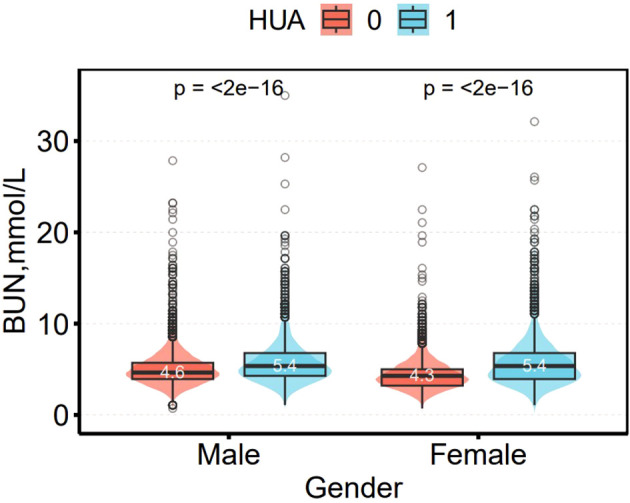
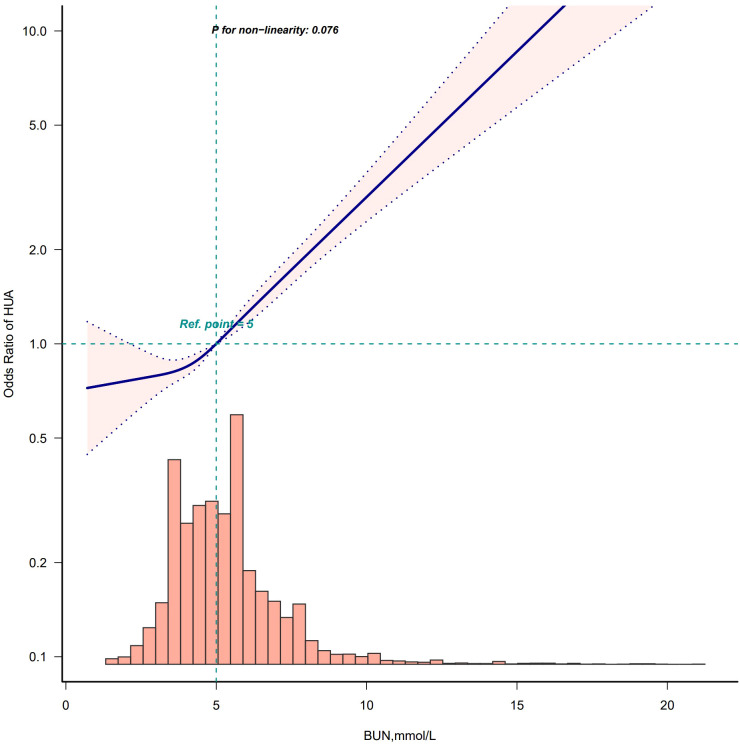
After weighted analysis, the results of this study represented approximately 164.42 million U.S. adults. The overall prevalence of HUA was 18.22%, and 20.72% in males and 15.82% in females. In the fully adjusted model, there was a positive association between BUN and HUA and this positive association remained significantly stratified by sex. Smoothed curve-fitting analysis revealed that the dose-response relationship between BUN and the risk of developing HUA was linear in men and nonlinear in women. There was evidence of an interaction between BUN levels and gender status that increased the risk of HUA and the OR for the association between BUN and HUA was higher in females than in males. Subgroup analyses showed that the association between BUN and the risk of developing HUA remained consistently positive across all subgroups in both male and female participants.
This study confirmed that BUN were positively associated with HUA among U.S. adults that remained significant when stratified by sex, but there were gender differences in the form and extent of this positive correlation.
血尿素氮(BUN)是公认的肾功能指标之一,是代谢性疾病的关键标志物,但在一般成年人群中,关于BUN水平与高尿酸血症(HUA)之间关联的数据较少。本研究的目的是探讨一般人群中BUN与HUA之间的关系以及性别对这种关系的潜在影响。
本研究纳入了1999年至2020年期间美国国家健康与营养检查调查(NHANES)中的17846名成年人。收集了所有参与者的年龄、性别、种族、婚姻状况、教育水平、身高、体重、体重指数(BMI)、腰围(WC)、收缩压(SBP)、舒张压(DBP)、甘油三酯(TG)、总胆固醇(TC)、高密度脂蛋白胆固醇(HDL-C)、低密度脂蛋白胆固醇(LDL-C)、空腹血糖(FPG)、糖化血红蛋白(HbA1C)、血清尿酸(SUA)、BUN、肌酐和白蛋白数据。采用多因素逻辑回归、曲线拟合和亚组分析来研究按性别分层的BUN与HUA之间的关联。
加权分析后,本研究结果代表了约1.6442亿美国成年人。HUA的总体患病率为18.22%,男性为20.72%,女性为15.82%。在完全调整模型中,BUN与HUA之间存在正相关,且这种正相关在按性别分层时仍然显著。平滑曲线拟合分析显示,BUN与发生HUA风险之间的剂量反应关系在男性中呈线性,在女性中呈非线性。有证据表明BUN水平与性别状态之间存在相互作用,增加了HUA的风险,且BUN与HUA之间关联的比值比在女性中高于男性。亚组分析表明,在男性和女性参与者的所有亚组中,BUN与发生HUA风险之间的关联始终呈正相关。
本研究证实,在美国成年人中,BUN与HUA呈正相关,按性别分层时这种相关性仍然显著,但这种正相关的形式和程度存在性别差异。