Gao Zhen, Zhang Xin, He Hua
Department of General Surgery, Qingpu Branch of Zhongshan Hospital, Fudan University, Shanghai 201700, China.
Department of Hepatobiliary Surgery, Pudong Hospital, Fudan University, Shanghai 200433, China.
World J Gastrointest Oncol. 2025 Jun 15;17(6):105016. doi: 10.4251/wjgo.v17.i6.105016.
Sarcosine dehydrogenase () and motif chemokine ligand 1 () have been identified as potential tumor regulators, with growing evidence linking them to cancer progression. However, their specific roles, regulatory mechanisms, and influence on key signaling pathways remain unclear.
To investigate the regulatory mechanisms of and in cancer cells and their impact on key signaling pathways.
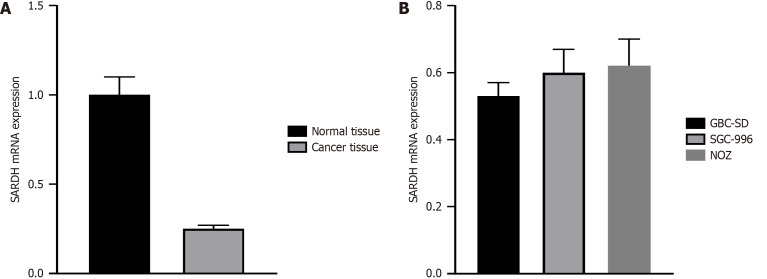
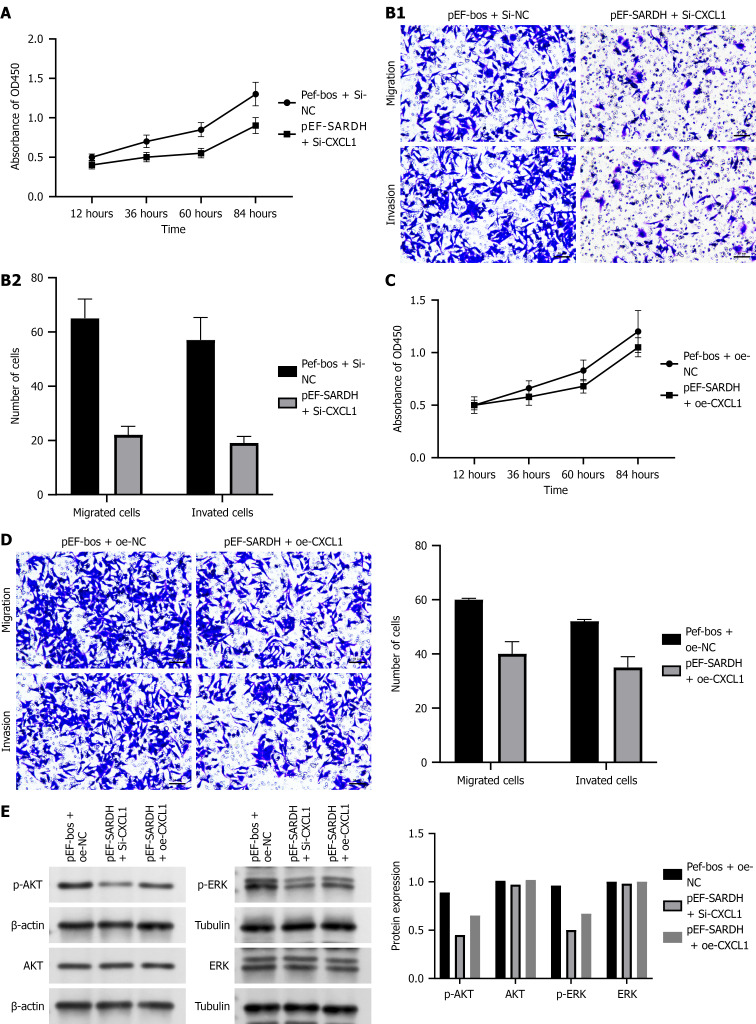
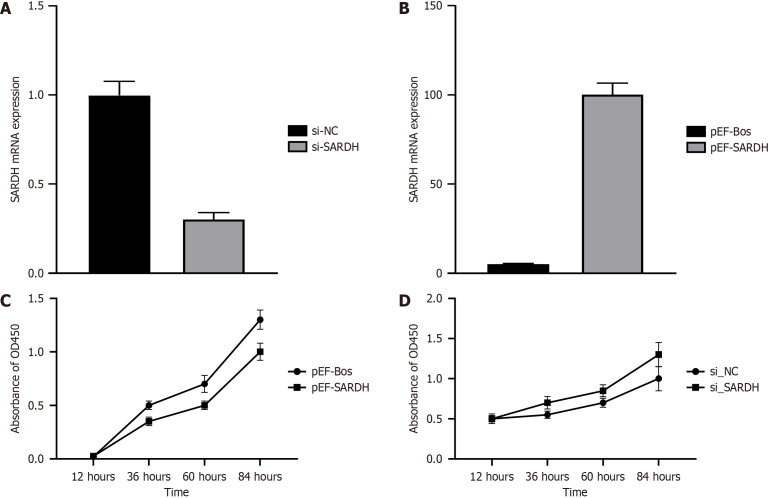
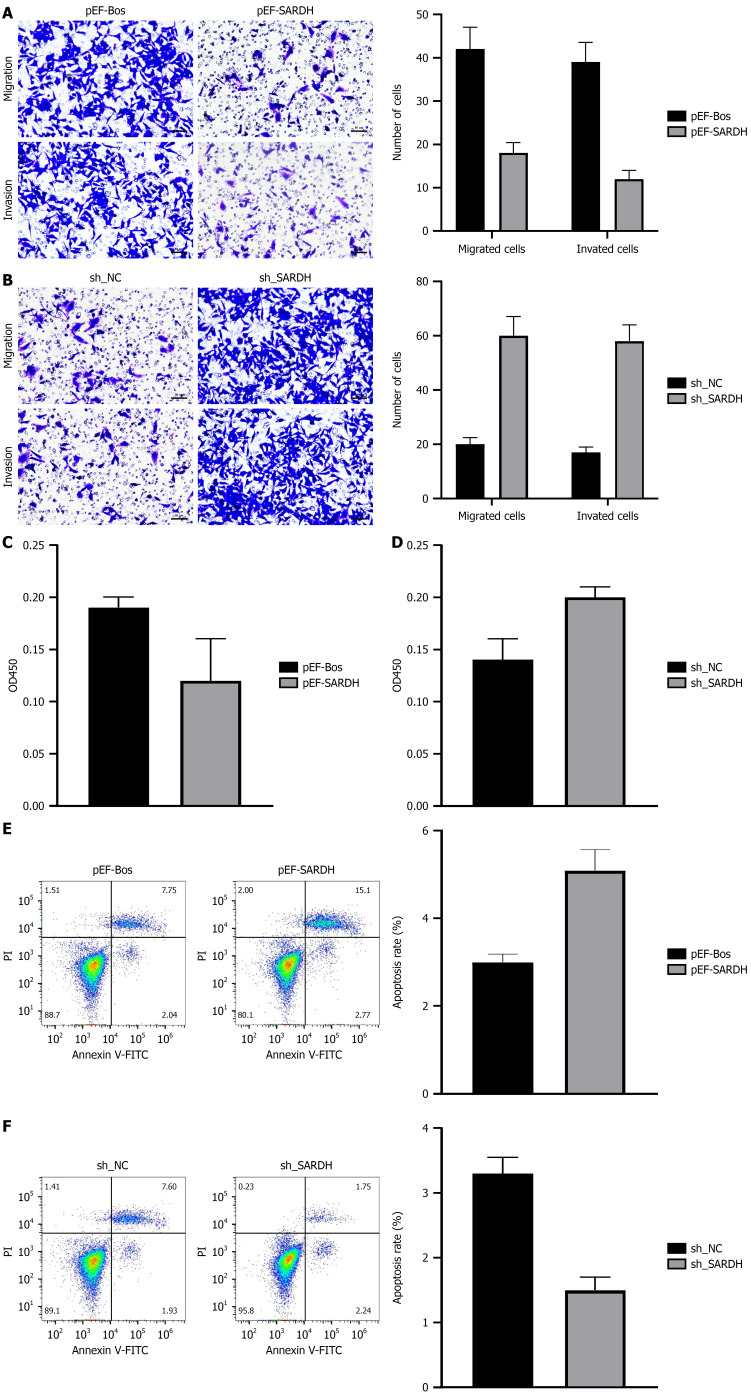
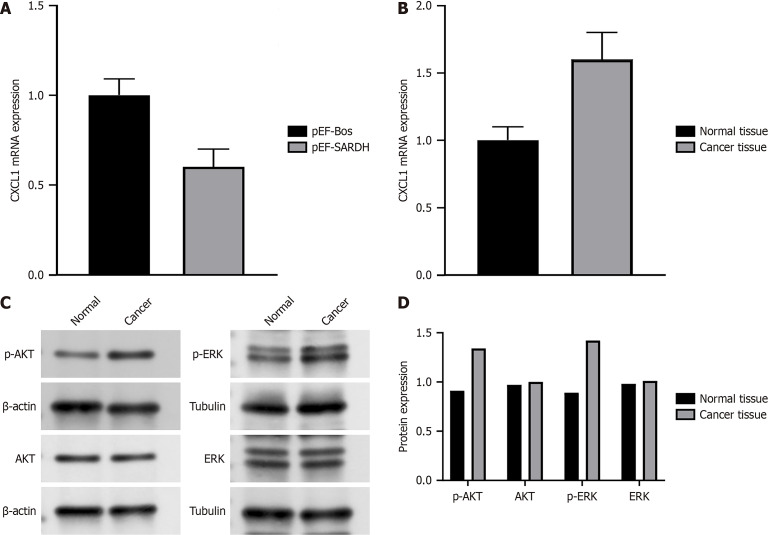
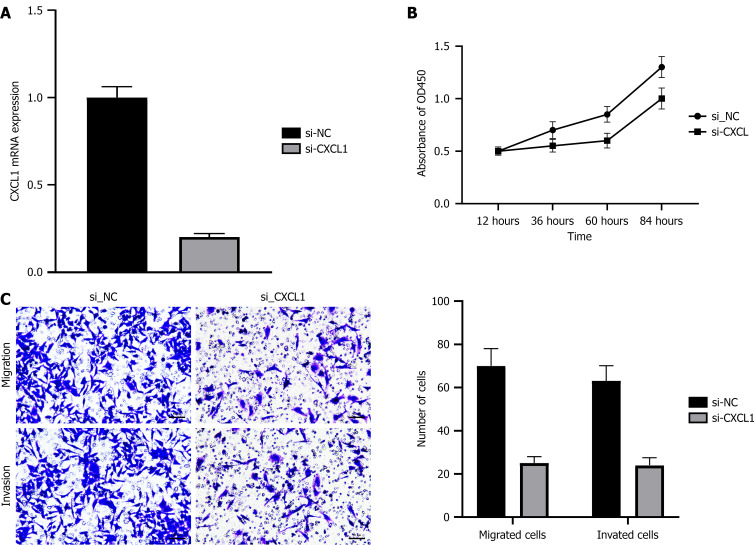
Real-time quantitative polymerase chain reaction and western blot analyses were used to assess the expression levels of and and their effects on protein kinase B (Akt) and extracellular signal-regulated kinase (ERK) signaling pathways. Gene overexpression was induced using an expression vector, while gene silencing was achieved using short hairpin RNA and small interfering RNA. CCK-8, migration, and invasion assays were used to evaluate the impact of gene suppression and overexpression on cancer cell proliferation, migration, and invasion.
silencing significantly enhanced cancer cell proliferation, whereas its overexpression suppressed proliferation in the early stages of the experiment. silencing reduced cancer cell migration and invasion. overexpression inhibited cell migration, invasion, and adhesion while increasing apoptosis. Conversely, silencing reversed these effects. Furthermore, simultaneous silencing of and strongly activated the Akt and ERK signaling pathways, indicating the potential role of these pathways in regulating cellular functions influenced by these genes.
This study revealed that and regulate cancer cell growth, migration, and invasion through Akt and ERK signaling pathways, highlighting their potential as therapeutic targets for cancer treatment.
肌氨酸脱氢酶()和基序趋化因子配体1()已被确定为潜在的肿瘤调节因子,越来越多的证据表明它们与癌症进展有关。然而,它们的具体作用、调节机制以及对关键信号通路的影响仍不清楚。
研究和在癌细胞中的调节机制及其对关键信号通路的影响。
采用实时定量聚合酶链反应和蛋白质免疫印迹分析来评估和的表达水平及其对蛋白激酶B(Akt)和细胞外信号调节激酶(ERK)信号通路的影响。使用表达载体诱导基因过表达,同时使用短发夹RNA和小干扰RNA实现基因沉默。采用CCK-8、迁移和侵袭试验来评估基因抑制和过表达对癌细胞增殖、迁移和侵袭的影响。
沉默显著增强癌细胞增殖,而其过表达在实验早期抑制增殖。沉默减少癌细胞迁移和侵袭。过表达抑制细胞迁移、侵袭和黏附,同时增加细胞凋亡。相反,沉默逆转了这些效应。此外,同时沉默和强烈激活Akt和ERK信号通路,表明这些信号通路在调节受这些基因影响的细胞功能中具有潜在作用。
本研究表明和通过Akt和ERK信号通路调节癌细胞的生长、迁移和侵袭,突出了它们作为癌症治疗靶点的潜力。