Jiang Hongyu, Liu Wei, Chen Jiajie, Tian Yue, Jia Zhibo, Wu Yanbin, Guan Yanjun, Chen Leijia, Xu Wenjing, Meng Haoye, Xiong Yingjie, Ye Jianting, Huang Cheng, He Ruichao, Wang Sice, Ding Yufei, Fan Wei, Yang Yunkang, Peng Jiang, Wang Aiyuan
Institute of Orthopedics, The Fourth Medical Center of Chinese PLA General Hospital, Beijing Key Lab of Regenerative Medicine in Orthopedics, Key Laboratory of Musculoskeletal Trauma & War Injuries PLA, No. 51 Fucheng Road, Beijing, 100048, PR China.
Department of Orthopedic, The Affiliated Hospital, Southwest Medical University, Luzhou, PR China.
J Orthop Translat. 2025 Jun 9;53:82-98. doi: 10.1016/j.jot.2025.05.005. eCollection 2025 Jul.
To investigate the feasibility of constructing cartilaginous organoids (CORGs) using cartilage extracellular matrix microcarriers (CEMMs), evaluate their ectopic chondrogenic potential, and analyze their impact on repair and regeneration of knee cartilage in SD rats.
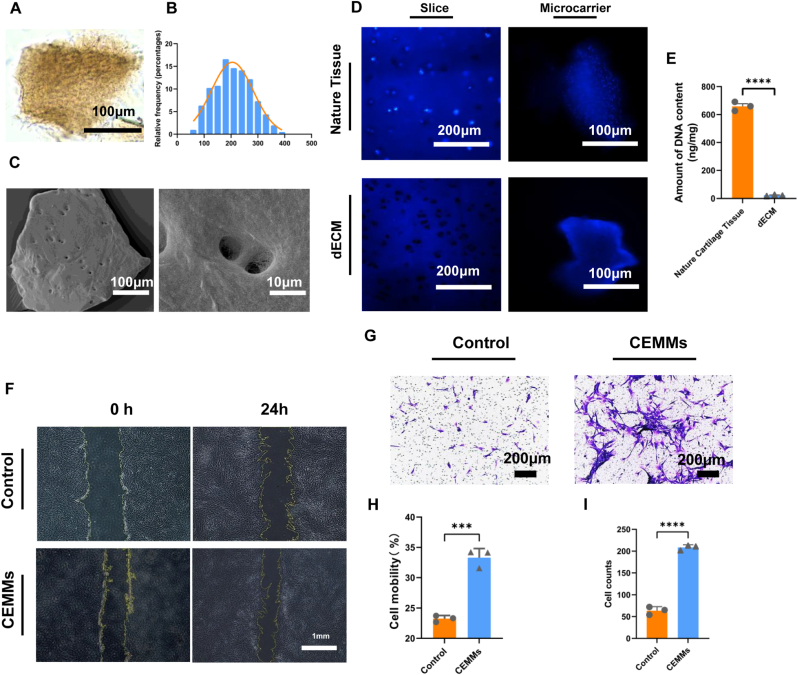
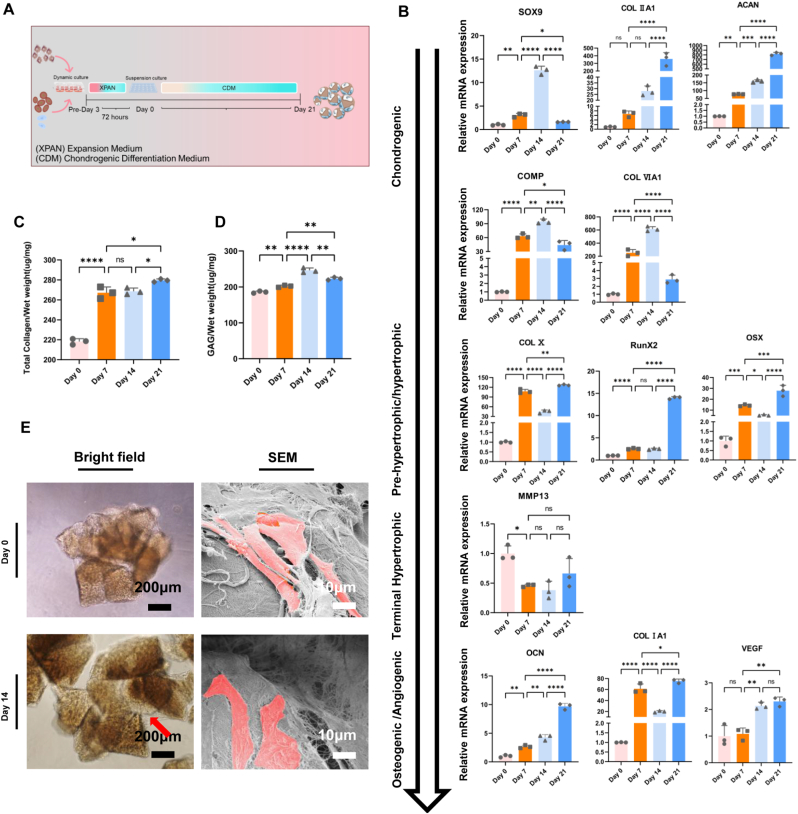
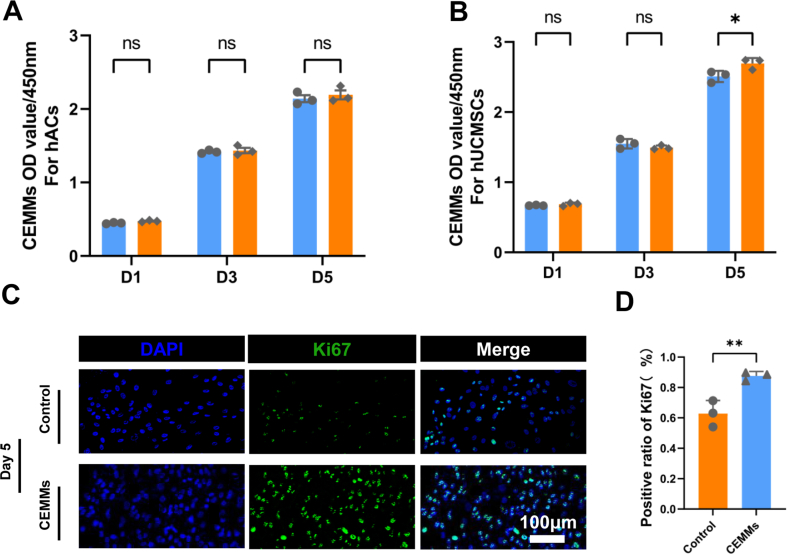
Cartilage extracellular matrix microcarriers (CEMMs) were created through a combination of decellularization, wet milling, and layered sieving methods. The evaluation of their biological function was conducted through live/dead staining, CCK-8 assay, scratch assay, and Transwell assay in a laboratory setting. The immune microenvironment was confirmed to be influenced by CEMMs through a conditioned culture involving rat macrophages. qRT-PCR and secretory function assays was conducted to evaluate the chondrogenic activity of CORGs. Gene expression profiles throughout the development of CORGs were analyzed using transcriptome sequencing. Immunodeficient mouse subcutaneous model to assess the ectopic chondrogenic capacity of CORGs. CORGs were implanted into the knee joint cartilage defects of SD rats to evaluate their effects on cartilage regeneration.
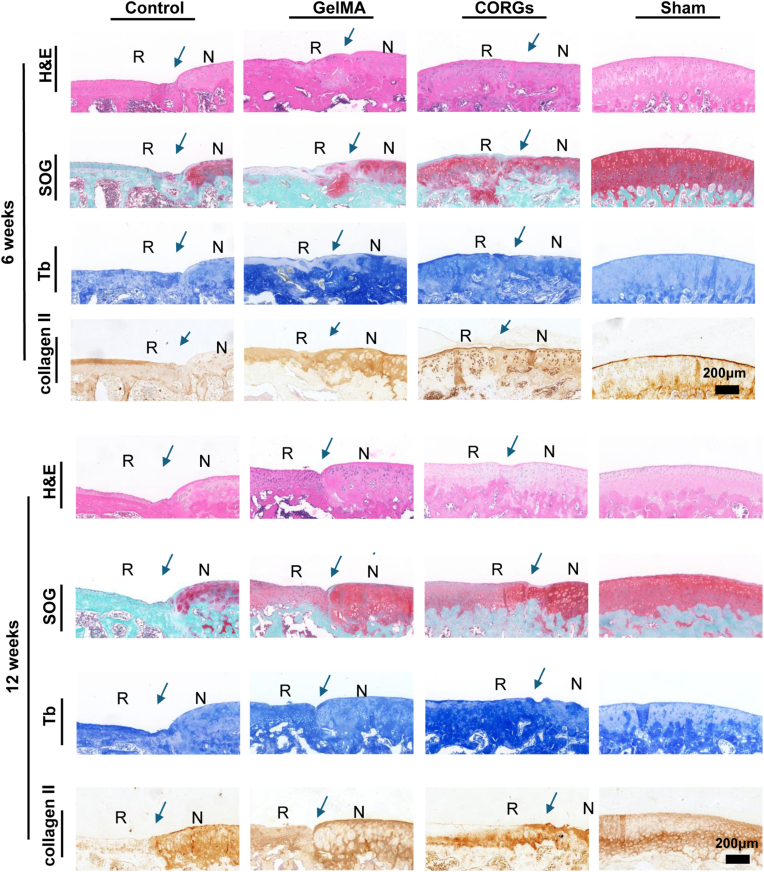
Successfully developed CEMMs with dimensions of 210.4 ± 56.89 um exhibited strong biocompatibility, the capacity to draw in stem cells, stimulate their growth and migration, and encourage macrophages to shift to the M2 type. Functionalized CORGs were successfully constructed based on CEMMs. Transcriptomics showed that CORGs had a gene expression pattern similar to mesodermal to chondrogenic development. CORGs successfully generated cartilaginous tissue subcutaneously in immunodeficient mice. Specifically, at 1 week postoperatively, CORGs were observed to promote M2 polarization of periarticular macrophages. At 6 and 12 weeks post-surgery, gross observation, micro-CT scanning, and histological analyses collectively revealed that CORGs promoted cartilage regeneration.
The functionalized CORGs was successfully constructed based on CEMMs, exhibiting robust expression of chondrogenic-related genes and demonstrating the ability to secrete collagen and GAGs. Transcriptomic analysis revealed that CORGs exhibited a gene expression trajectory consistent with the transition from mesodermal to chondrogenic genes, resulting in the successful development of cartilaginous tissues rich in cartilage-specific matrix when implanted subcutaneously in immunodeficient mice. Furthermore, CORGs demonstrated the ability to modulate the immune microenvironment surrounding the knee joint. In SD rat models of knee cartilage defects, CORGs exhibited robust regenerative and repair capacity.
This research involved the creation of CORGs utilizing natural biomaterials (ECM) and MSCs, demonstrating significant promise for treating cartilage injuries, thereby paving the way for innovative strategies in cartilage tissue regeneration engineering.
探讨使用软骨细胞外基质微载体(CEMMs)构建软骨类器官(CORGs)的可行性,评估其异位软骨生成潜力,并分析其对SD大鼠膝关节软骨修复和再生的影响。
通过去细胞化、湿磨和分层筛分方法相结合制备软骨细胞外基质微载体(CEMMs)。在实验室环境中,通过活/死染色、CCK-8检测、划痕试验和Transwell试验对其生物学功能进行评估。通过大鼠巨噬细胞条件培养证实CEMMs对免疫微环境有影响。进行qRT-PCR和分泌功能检测以评估CORGs的软骨生成活性。使用转录组测序分析CORGs整个发育过程中的基因表达谱。采用免疫缺陷小鼠皮下模型评估CORGs的异位软骨生成能力。将CORGs植入SD大鼠膝关节软骨缺损处,评估其对软骨再生的影响。
成功制备出尺寸为210.4±56.89μm的CEMMs,其具有很强的生物相容性,能够吸引干细胞,刺激其生长和迁移,并促使巨噬细胞向M2型转变。基于CEMMs成功构建了功能化的CORGs。转录组学表明,CORGs具有与中胚层向软骨生成发育相似的基因表达模式。CORGs在免疫缺陷小鼠皮下成功生成软骨组织。具体而言,术后1周,观察到CORGs促进关节周围巨噬细胞的M2极化。术后6周和12周,大体观察、显微CT扫描和组织学分析共同显示CORGs促进了软骨再生。
基于CEMMs成功构建了功能化的CORGs,其软骨生成相关基因表达强劲,并具有分泌胶原蛋白和糖胺聚糖的能力。转录组分析显示,CORGs呈现出与从中胚层基因向软骨生成基因转变一致的基因表达轨迹,当植入免疫缺陷小鼠皮下时,成功发育出富含软骨特异性基质的软骨组织。此外,CORGs还表现出调节膝关节周围免疫微环境的能力。在SD大鼠膝关节软骨缺损模型中,CORGs表现出强大的再生和修复能力。
本研究利用天然生物材料(ECM)和间充质干细胞创建了CORGs,在治疗软骨损伤方面显示出巨大潜力,从而为软骨组织再生工程的创新策略铺平了道路。