Zhi Fang, Fan Tianle, Li Jia, Zhang Shuo, Qian Qian, Khalil Arij, Niu Chundong, Wang Kun, Ma Fengwang, Li Xuewei, Guan Qingmei
State Key Laboratory for Crop Stress Resistance and High-Efficiency Production /Shaanxi Key Laboratory of Apple, College of Horticulture, Northwest A&F University, Yangling, Shaanxi, 712100, China.
Stress Biol. 2025 Jun 23;5(1):44. doi: 10.1007/s44154-025-00236-7.
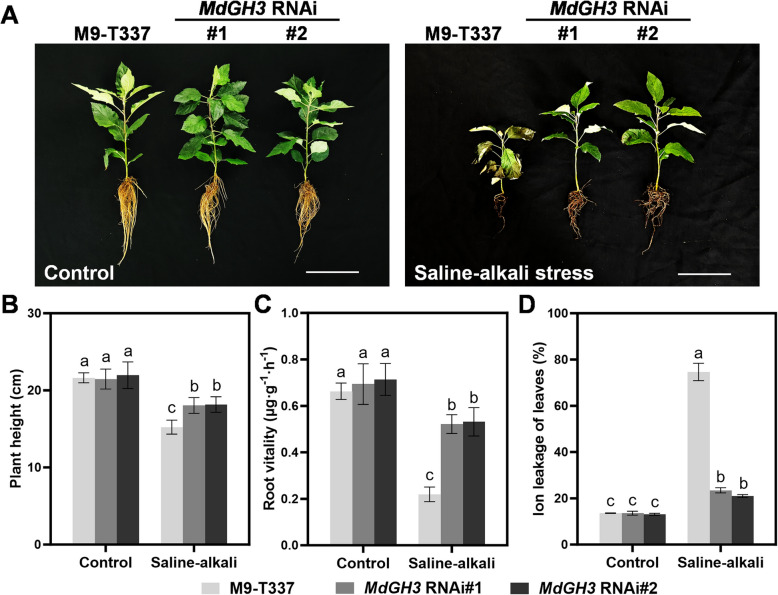
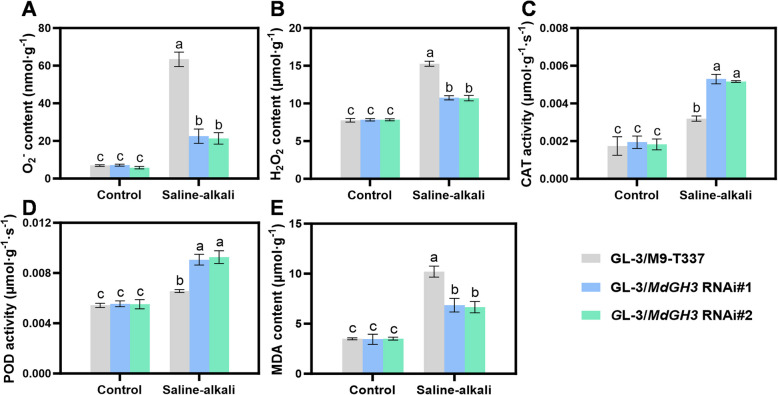
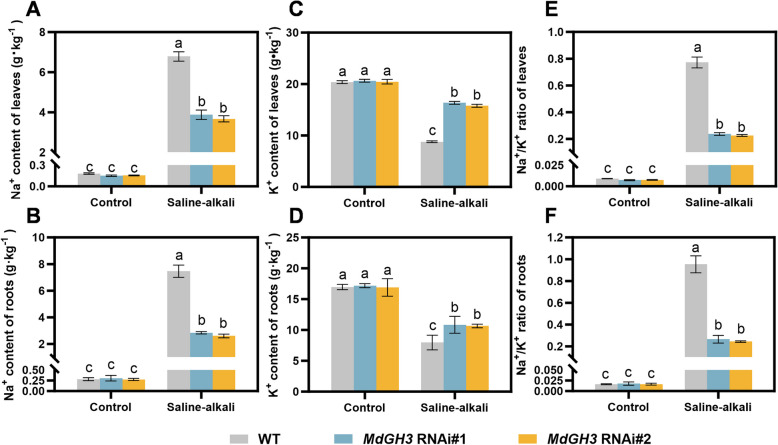
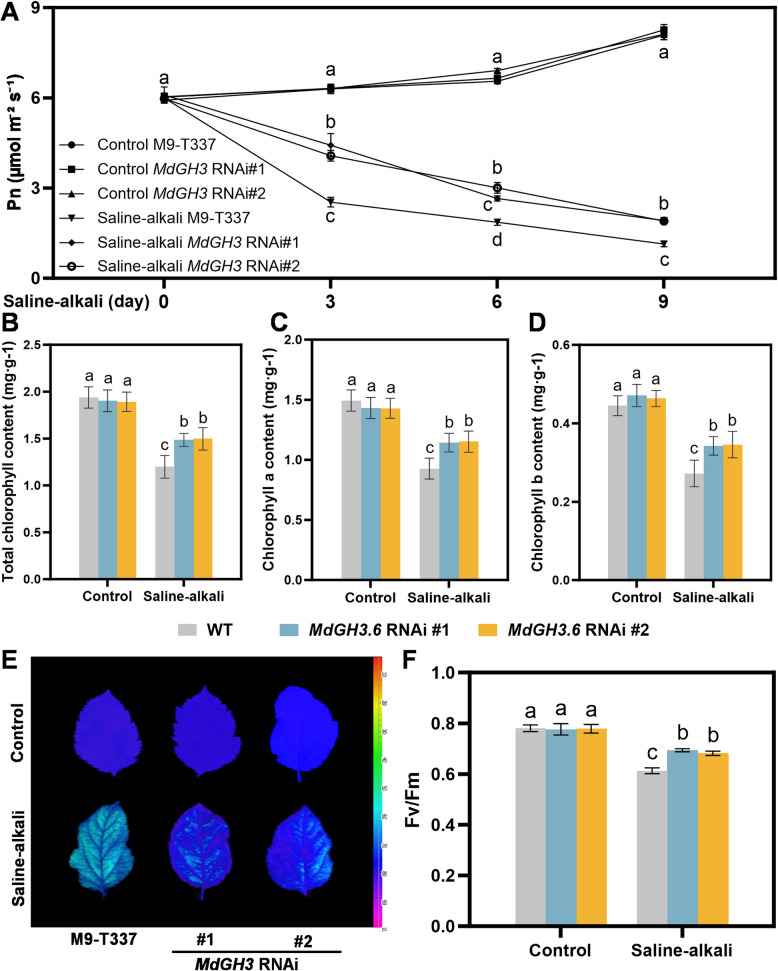
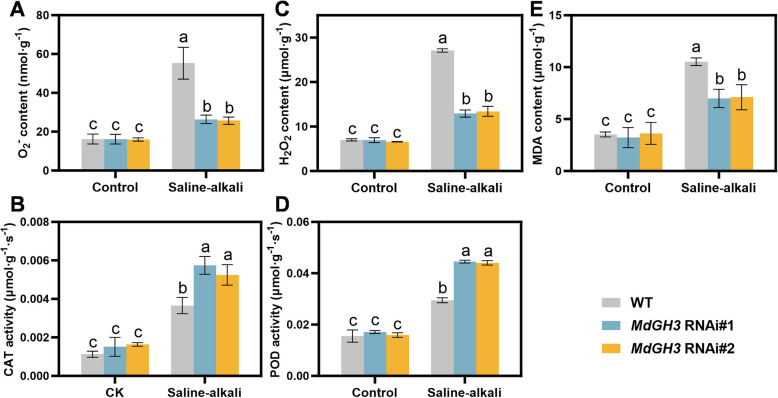
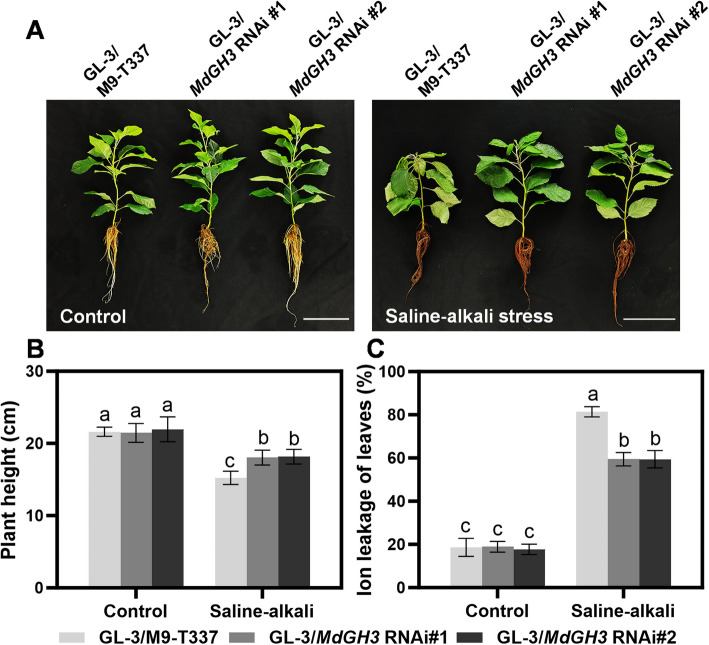
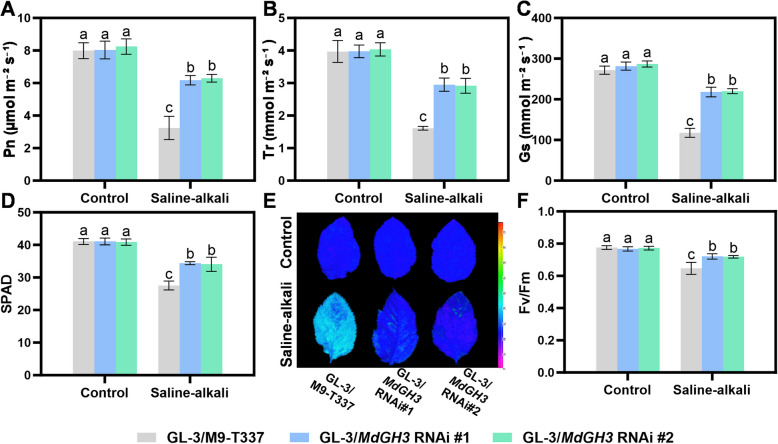
Soil salinization and alkalization have become an increasingly severe global issues, significantly limiting both the yield and quality of apples (Malus × domestica). M9-T337 is a widely used apple dwarfing rootstock; however, it is sensitive to saline-alkali stress. Therefore, developing saline-alkali tolerant apple rootstocks is essential. In this study, we utilized RNAi (RNA interference) technology to knock down GH3 genes in the M9-T337 background, aiming to engineer a dwarfing and stress-tolerant apple rootstock. We found that MdGH3 RNAi plants exhibited superior morphology compared to M9-T337 under saline-alkali stress conditions, characterized by more robust root systems, increased plant height, a lower Na/K ratio, and enhanced photosynthetic and antioxidant capacities. Moreover, when MdGH3 RNAi plants were used as rootstocks, the GL-3/MdGH3 RNAi plants also displayed greater plant height, root vitality, photosynthetic ability, and antioxidant capacity compared to GL-3 grafted onto M9-T337 rootstock. Taken together, our study constructed a saline-alkali-tolerant apple rootstock by knocking down MdGH3 genes.
土壤盐碱化已成为日益严峻的全球性问题,严重限制了苹果(Malus × domestica)的产量和品质。M9-T337是一种广泛使用的苹果矮化砧木;然而,它对盐碱胁迫敏感。因此,培育耐盐碱苹果砧木至关重要。在本研究中,我们利用RNA干扰(RNAi)技术在M9-T337背景下敲除GH3基因,旨在培育一种矮化且耐胁迫的苹果砧木。我们发现,在盐碱胁迫条件下,MdGH3 RNAi植株与M9-T337相比表现出更优的形态,其特征为根系更健壮、株高增加、钠钾比降低以及光合和抗氧化能力增强。此外,当将MdGH3 RNAi植株用作砧木时,与嫁接在M9-T337砧木上的GL-3相比,GL-3/MdGH3 RNAi植株也表现出更高的株高、根系活力、光合能力和抗氧化能力。综上所述,我们的研究通过敲除MdGH3基因构建了一种耐盐碱的苹果砧木。