• 文献检索
  • 文档翻译
  • 深度研究
  • 学术资讯
  • Suppr Zotero 插件Zotero 插件
  • 邀请有礼
  • 套餐&价格
  • 历史记录
应用&插件
Suppr Zotero 插件Zotero 插件浏览器插件Mac 客户端Windows 客户端微信小程序
定价
高级版会员购买积分包购买API积分包
服务
文献检索文档翻译深度研究API 文档MCP 服务
关于我们
关于 Suppr公司介绍联系我们用户协议隐私条款
关注我们

Suppr 超能文献

核心技术专利:CN118964589B侵权必究
粤ICP备2023148730 号-1Suppr @ 2026

文献检索

告别复杂PubMed语法,用中文像聊天一样搜索,搜遍4000万医学文献。AI智能推荐,让科研检索更轻松。

立即免费搜索

文件翻译

保留排版,准确专业,支持PDF/Word/PPT等文件格式,支持 12+语言互译。

免费翻译文档

深度研究

AI帮你快速写综述,25分钟生成高质量综述,智能提取关键信息,辅助科研写作。

立即免费体验

人工智能在喉癌检测中的应用:一项系统综述与荟萃分析

Artificial Intelligence in Laryngeal Cancer Detection: A Systematic Review and Meta-Analysis.

作者信息

Alabdalhussein Ali, Al-Khafaji Mohammed Hasan, Al-Busairi Rusul, Al-Dabbagh Shahad, Khan Waleed, Anwar Fahid, Raheem Taghreed Sami, Elkrim Mohammed, Sahota Raguwinder Bindy, Mair Manish

机构信息

Department of Otolaryngology, University Hospitals of Leicester, Leicester LE1 5WW, UK.

Independent Researcher, Leicester LE2 2AD, UK.

出版信息

Curr Oncol. 2025 Jun 9;32(6):338. doi: 10.3390/curroncol32060338.

DOI:10.3390/curroncol32060338
PMID:40558281
原文链接:https://pmc.ncbi.nlm.nih.gov/articles/PMC12191837/
Abstract

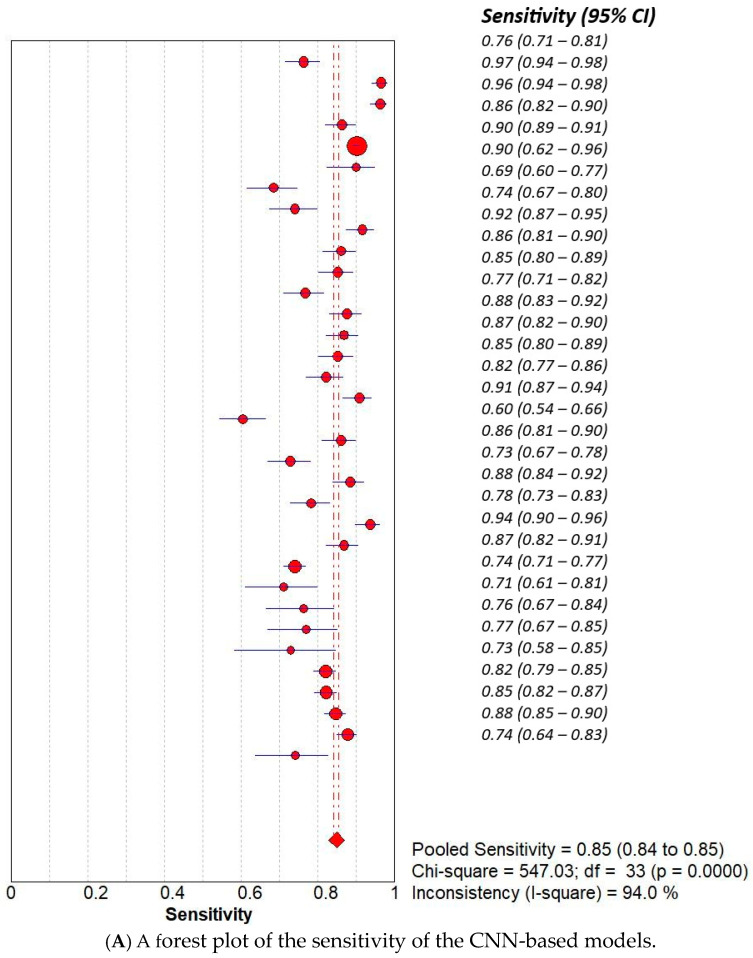
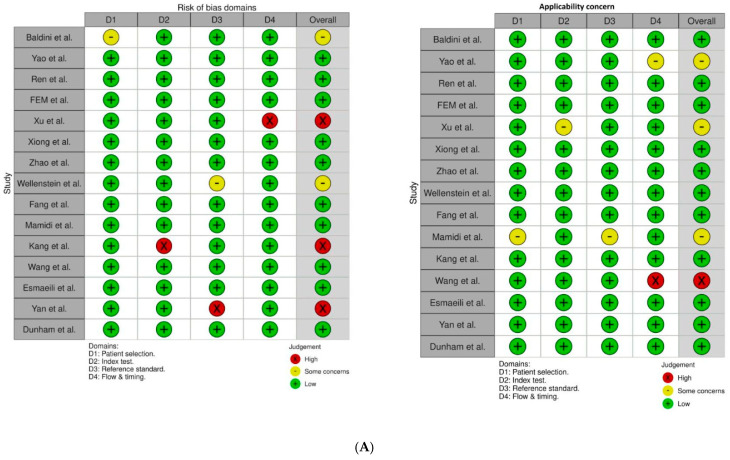
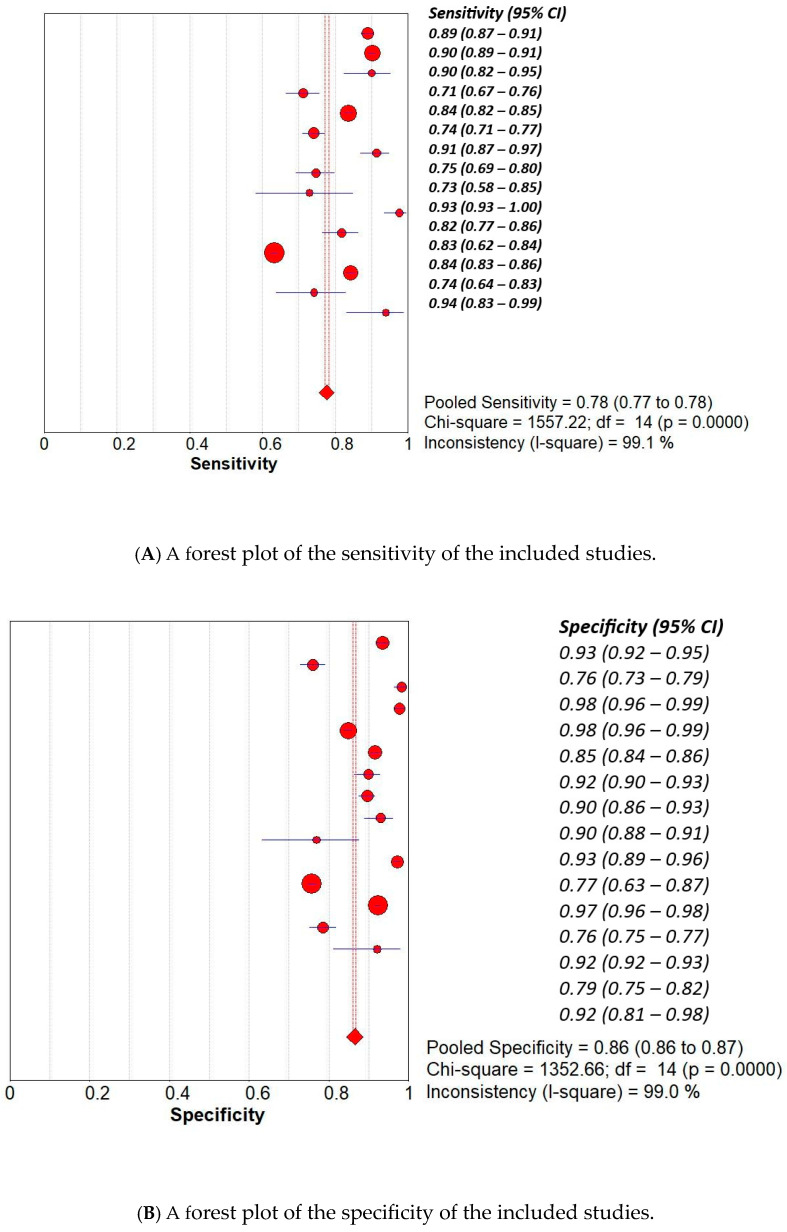
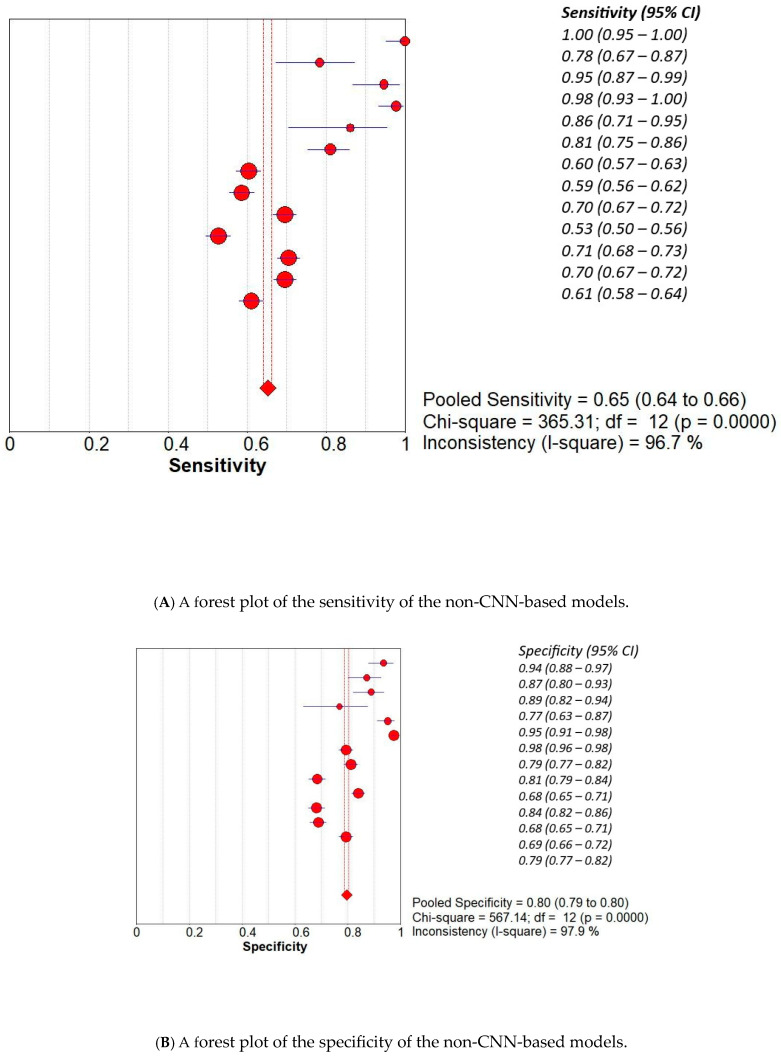
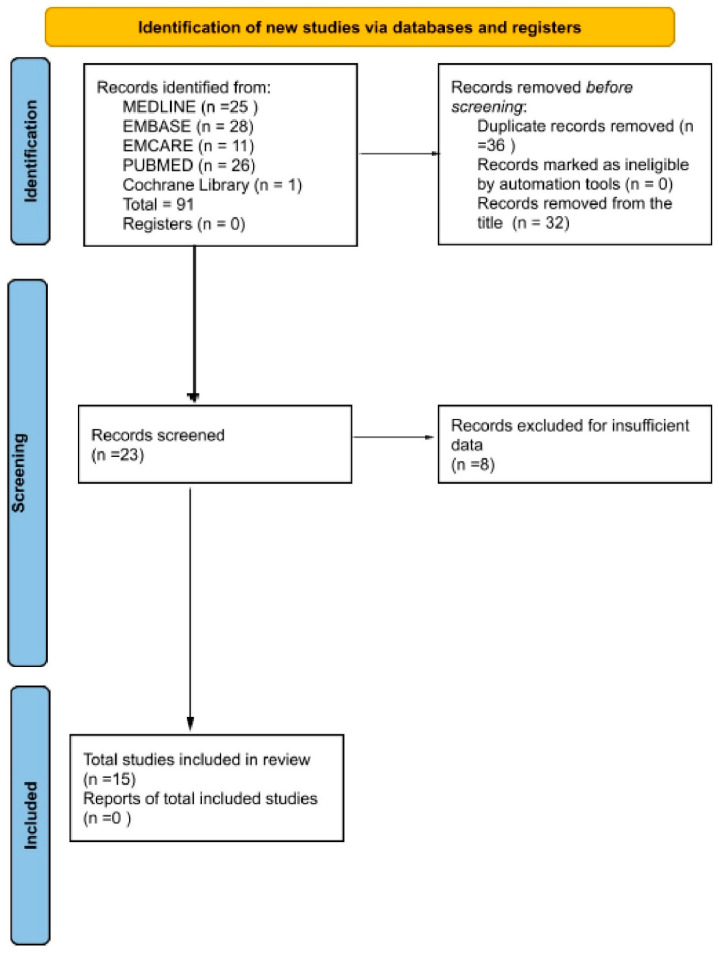
(1) Background: The early detection of laryngeal cancer is crucial for achieving superior patient outcomes and preserving laryngeal function. Artificial intelligence (AI) methodologies can expedite the triage of suspicious laryngeal lesions, thereby diminishing the critical timeframe required for clinical intervention. (2) Methods: We included all studies published up to February 2025. We conducted a systematic search across five major databases: MEDLINE, EMCARE, EMBASE, PubMed, and the Cochrane Library. We included 15 studies, with a total of 17,559 patients. A risk of bias assessment was performed using the QUADAS-2 tool. We conducted data synthesis using the Meta Disc 1.4 program. (3) Results: A meta-analysis revealed that AI demonstrated high sensitivity (78%) and specificity (86%), with a Pooled Diagnostic Odds Ratio of 53.77 (95% CI: 27.38 to 105.62) in detecting laryngeal cancer. The subset analysis revealed that CNN-based AI models are superior to non-CNN-based models in image analysis and lesion detection. (4) Conclusions: AI can be used in real-world settings due to its diagnostic accuracy, high sensitivity, and specificity.

摘要

(1)背景:喉癌的早期检测对于实现更好的患者预后和保留喉功能至关重要。人工智能(AI)方法可以加快可疑喉部病变的分诊,从而缩短临床干预所需的关键时间框架。(2)方法:我们纳入了截至2025年2月发表的所有研究。我们在五个主要数据库中进行了系统检索:MEDLINE、EMCARE、EMBASE、PubMed和Cochrane图书馆。我们纳入了15项研究,共17559名患者。使用QUADAS - 2工具进行偏倚风险评估。我们使用Meta Disc 1.4程序进行数据合成。(3)结果:一项荟萃分析显示,AI在检测喉癌方面表现出高敏感性(78%)和特异性(86%),合并诊断比值比为53.77(95%CI:27.38至105.62)。亚组分析显示,基于卷积神经网络(CNN)的AI模型在图像分析和病变检测方面优于非基于CNN的模型。(4)结论:由于其诊断准确性、高敏感性和特异性,AI可用于实际临床环境。
https://cdn.ncbi.nlm.nih.gov/pmc/blobs/e496/12191837/667f4da4bc92/curroncol-32-00338-g005a.jpg
https://cdn.ncbi.nlm.nih.gov/pmc/blobs/e496/12191837/3004d919fa5f/curroncol-32-00338-g001.jpg
https://cdn.ncbi.nlm.nih.gov/pmc/blobs/e496/12191837/3bbab307cecc/curroncol-32-00338-g002a.jpg
https://cdn.ncbi.nlm.nih.gov/pmc/blobs/e496/12191837/0986c407b578/curroncol-32-00338-g003a.jpg
https://cdn.ncbi.nlm.nih.gov/pmc/blobs/e496/12191837/88246a8f9149/curroncol-32-00338-g004a.jpg
https://cdn.ncbi.nlm.nih.gov/pmc/blobs/e496/12191837/667f4da4bc92/curroncol-32-00338-g005a.jpg
https://cdn.ncbi.nlm.nih.gov/pmc/blobs/e496/12191837/3004d919fa5f/curroncol-32-00338-g001.jpg
https://cdn.ncbi.nlm.nih.gov/pmc/blobs/e496/12191837/3bbab307cecc/curroncol-32-00338-g002a.jpg
https://cdn.ncbi.nlm.nih.gov/pmc/blobs/e496/12191837/0986c407b578/curroncol-32-00338-g003a.jpg
https://cdn.ncbi.nlm.nih.gov/pmc/blobs/e496/12191837/88246a8f9149/curroncol-32-00338-g004a.jpg
https://cdn.ncbi.nlm.nih.gov/pmc/blobs/e496/12191837/667f4da4bc92/curroncol-32-00338-g005a.jpg

相似文献

1
Artificial Intelligence in Laryngeal Cancer Detection: A Systematic Review and Meta-Analysis.人工智能在喉癌检测中的应用:一项系统综述与荟萃分析
Curr Oncol. 2025 Jun 9;32(6):338. doi: 10.3390/curroncol32060338.
2
Artificial intelligence for detecting keratoconus.人工智能在圆锥角膜检测中的应用。
Cochrane Database Syst Rev. 2023 Nov 15;11(11):CD014911. doi: 10.1002/14651858.CD014911.pub2.
3
Signs and symptoms to determine if a patient presenting in primary care or hospital outpatient settings has COVID-19.在基层医疗机构或医院门诊环境中,如果患者出现以下症状和体征,可判断其是否患有 COVID-19。
Cochrane Database Syst Rev. 2022 May 20;5(5):CD013665. doi: 10.1002/14651858.CD013665.pub3.
4
Confusion Assessment Method for the Intensive Care Unit (CAM-ICU) for the diagnosis of delirium in adults in critical care settings.**用于** ICU 成人患者的意识模糊评估方法(CAM-ICU)**用于** 诊断重症监护环境下成人的意识障碍。
Cochrane Database Syst Rev. 2023 Nov 21;11(11):CD013126. doi: 10.1002/14651858.CD013126.pub2.
5
Artificial intelligence for X-ray scaphoid fracture detection: a systematic review and diagnostic test accuracy meta-analysis.人工智能在 X 射线舟状骨骨折检测中的应用:系统评价和诊断试验准确性的荟萃分析。
Eur Radiol. 2024 Jul;34(7):4341-4351. doi: 10.1007/s00330-023-10473-x. Epub 2023 Dec 15.
6
Performance of artificial intelligence on cervical vertebral maturation assessment: a systematic review and meta-analysis.人工智能在颈椎成熟度评估中的表现:一项系统评价和荟萃分析。
BMC Oral Health. 2025 Feb 5;25(1):187. doi: 10.1186/s12903-025-05482-9.
7
Performance of Artificial Intelligence-Based Models for Epiretinal Membrane Diagnosis: A Systematic Review and Meta-Analysis.基于人工智能的视网膜前膜诊断模型的性能:一项系统评价和荟萃分析。
Am J Ophthalmol. 2025 Sep;277:420-432. doi: 10.1016/j.ajo.2025.05.041. Epub 2025 May 31.
8
Triage tools for detecting cervical spine injury in pediatric trauma patients.用于检测小儿创伤患者颈椎损伤的分诊工具。
Cochrane Database Syst Rev. 2017 Dec 7;12(12):CD011686. doi: 10.1002/14651858.CD011686.pub2.
9
Magnetic resonance perfusion for differentiating low-grade from high-grade gliomas at first presentation.首次就诊时磁共振灌注成像用于鉴别低级别与高级别胶质瘤
Cochrane Database Syst Rev. 2018 Jan 22;1(1):CD011551. doi: 10.1002/14651858.CD011551.pub2.
10
MRI software and cognitive fusion biopsies in people with suspected prostate cancer: a systematic review, network meta-analysis and cost-effectiveness analysis.磁共振成像软件联合认知融合活检用于疑似前列腺癌患者:系统评价、网络荟萃分析和成本效果分析。
Health Technol Assess. 2024 Oct;28(61):1-310. doi: 10.3310/PLFG4210.

本文引用的文献

1
Construction of prediction model of early glottic cancer based on machine learning.基于机器学习的早期声门癌预测模型构建
Acta Otolaryngol. 2025 Jan;145(1):72-80. doi: 10.1080/00016489.2024.2430613. Epub 2024 Dec 30.
2
Improving real-time detection of laryngeal lesions in endoscopic images using a decoupled super-resolution enhanced YOLO.使用解耦超分辨率增强YOLO改进内镜图像中喉部病变的实时检测。
Comput Methods Programs Biomed. 2025 Mar;260:108539. doi: 10.1016/j.cmpb.2024.108539. Epub 2024 Dec 13.
3
Self-Attention Mechanisms-Based Laryngoscopy Image Classification Technique for Laryngeal Cancer Detection.
基于自注意力机制的喉镜图像分类技术用于喉癌检测
Head Neck. 2025 Mar;47(3):944-955. doi: 10.1002/hed.27999. Epub 2024 Nov 11.
4
Artificial Intelligence and medical specialties: support or substitution?人工智能与医学专业:支持还是替代?
Med Pharm Rep. 2024 Oct;97(4):409-418. doi: 10.15386/mpr-2696. Epub 2024 Oct 30.
5
Clinical Applications of Artificial Intelligence in Medical Imaging and Image Processing-A Review.人工智能在医学成像与图像处理中的临床应用——综述
Cancers (Basel). 2024 May 14;16(10):1870. doi: 10.3390/cancers16101870.
6
Laryngeal Cancer Screening During Flexible Video Laryngoscopy Using Large Computer Vision Models.使用大型计算机视觉模型进行软性喉镜检查中的喉癌筛查。
Ann Otol Rhinol Laryngol. 2024 Aug;133(8):720-728. doi: 10.1177/00034894241253376. Epub 2024 May 16.
7
Multi-instance learning based artificial intelligence model to assist vocal fold leukoplakia diagnosis: A multicentre diagnostic study.基于多实例学习的人工智能模型辅助声带白斑诊断:一项多中心诊断研究。
Am J Otolaryngol. 2024 Jul-Aug;45(4):104342. doi: 10.1016/j.amjoto.2024.104342. Epub 2024 Apr 30.
8
An automated approach for real-time informative frames classification in laryngeal endoscopy using deep learning.基于深度学习的实时喉部内窥镜信息帧分类自动化方法。
Eur Arch Otorhinolaryngol. 2024 Aug;281(8):4255-4264. doi: 10.1007/s00405-024-08676-z. Epub 2024 May 2.
9
How Artificial Intelligence Is Shaping Medical Imaging Technology: A Survey of Innovations and Applications.人工智能如何塑造医学成像技术:创新与应用综述
Bioengineering (Basel). 2023 Dec 18;10(12):1435. doi: 10.3390/bioengineering10121435.
10
Computer-Aided Diagnosis of Laryngeal Cancer Based on Deep Learning with Laryngoscopic Images.基于深度学习与喉镜图像的喉癌计算机辅助诊断
Diagnostics (Basel). 2023 Dec 14;13(24):3669. doi: 10.3390/diagnostics13243669.