Senarat Sinlapachai, Bunsap Peerasak, Poolprasert Pisit, Inchan Anjaree, Charoenphon Natthawut, Sornying Peerapon, Thaochan Narit
Division of Biological Science, Faculty of Science, Prince of Songkla University, Songkhla 90110, Thailand.
Agricultural Innovation and Management Division (Pest Management), Faculty of Natural Resources, Prince of Songkla University, Songkhla 90110, Thailand.
J Fungi (Basel). 2025 May 30;11(6):423. doi: 10.3390/jof11060423.
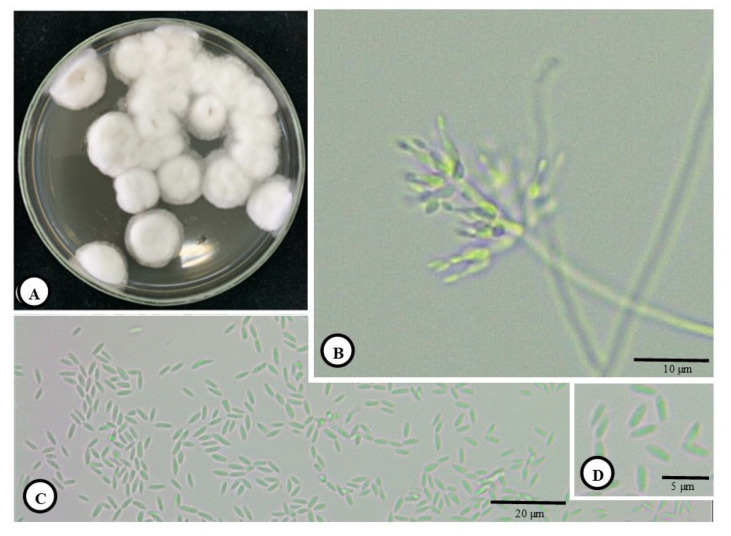
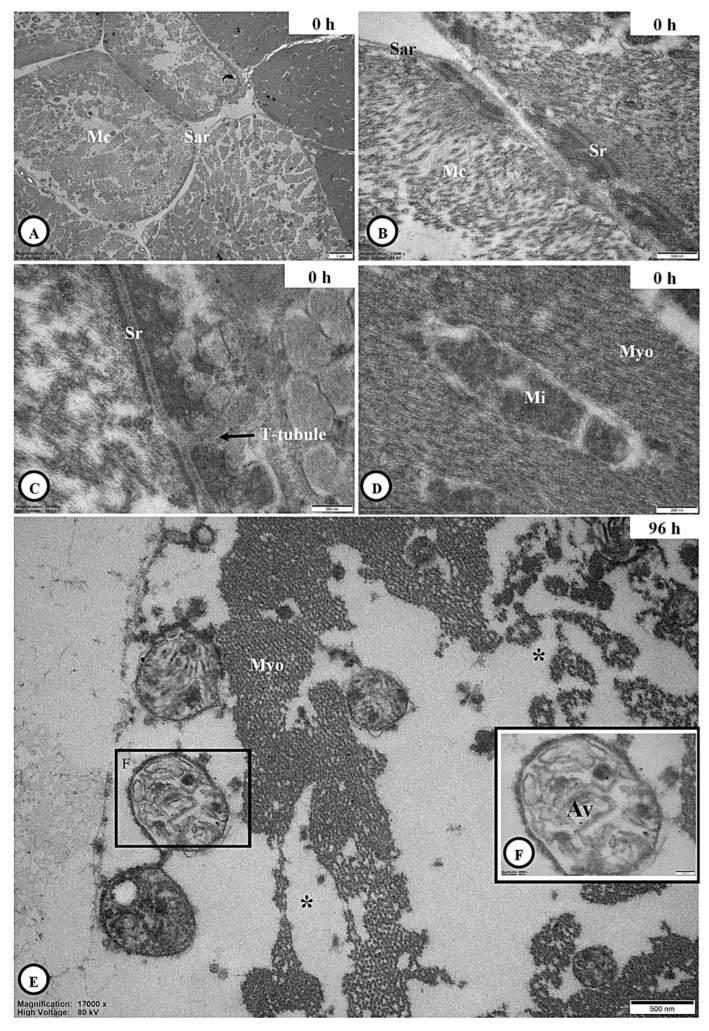
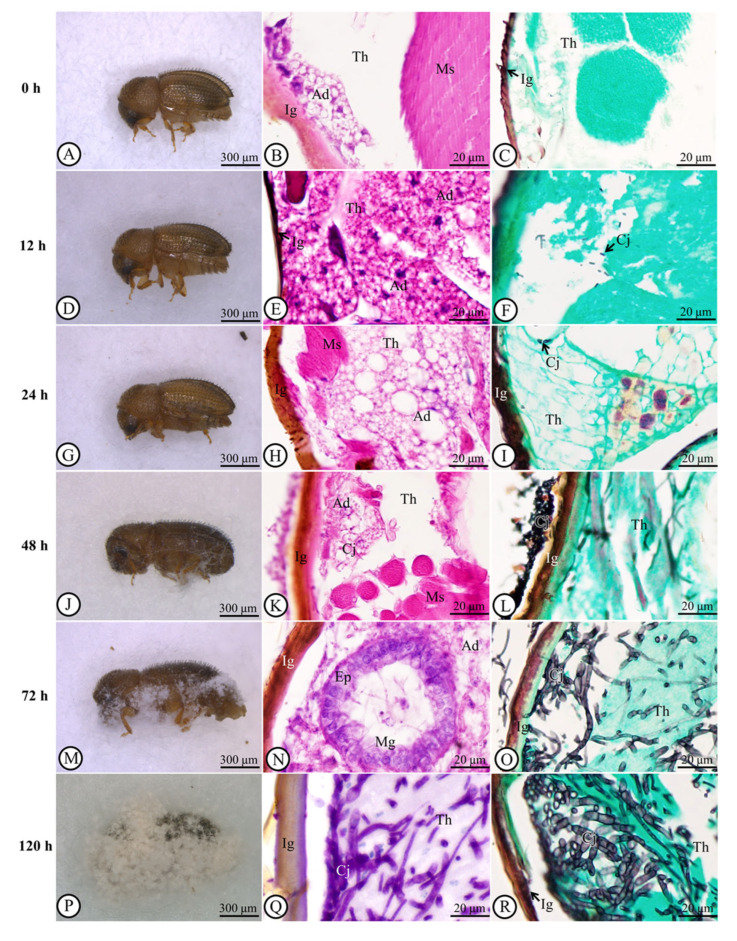
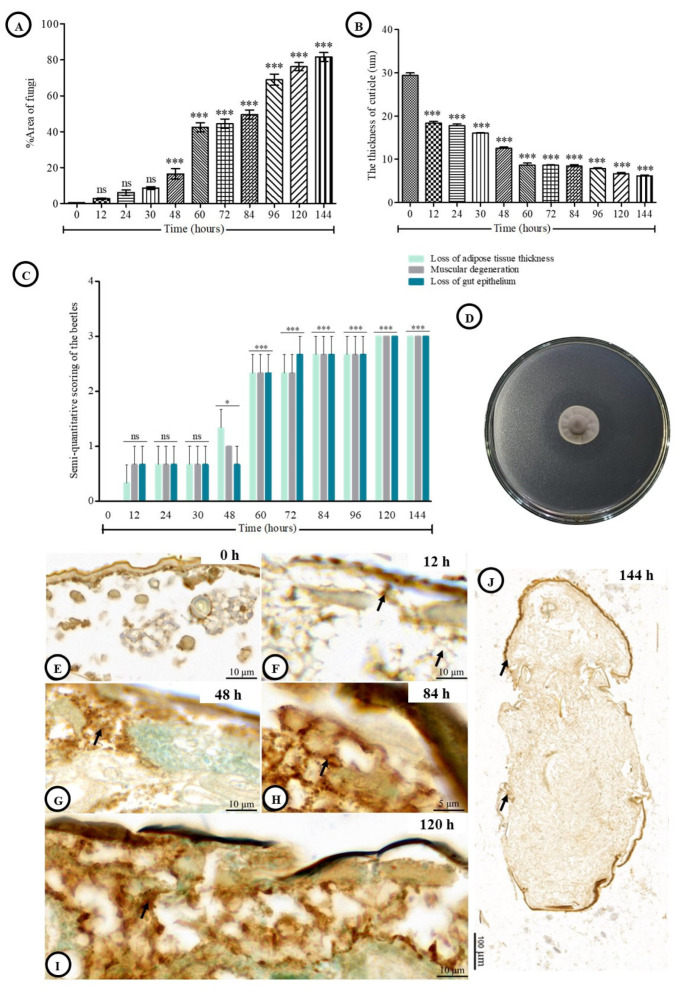
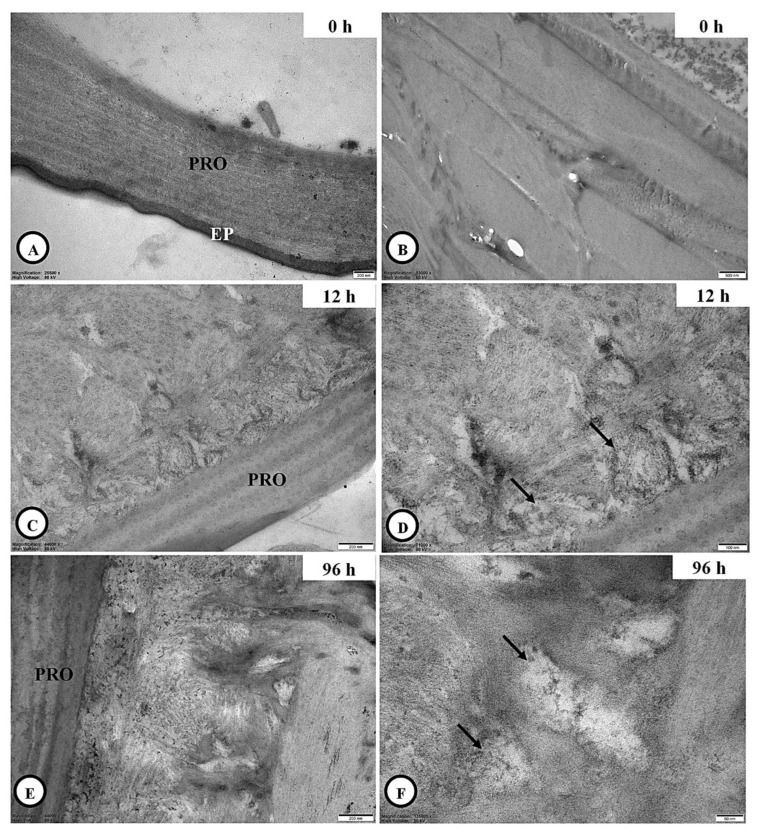
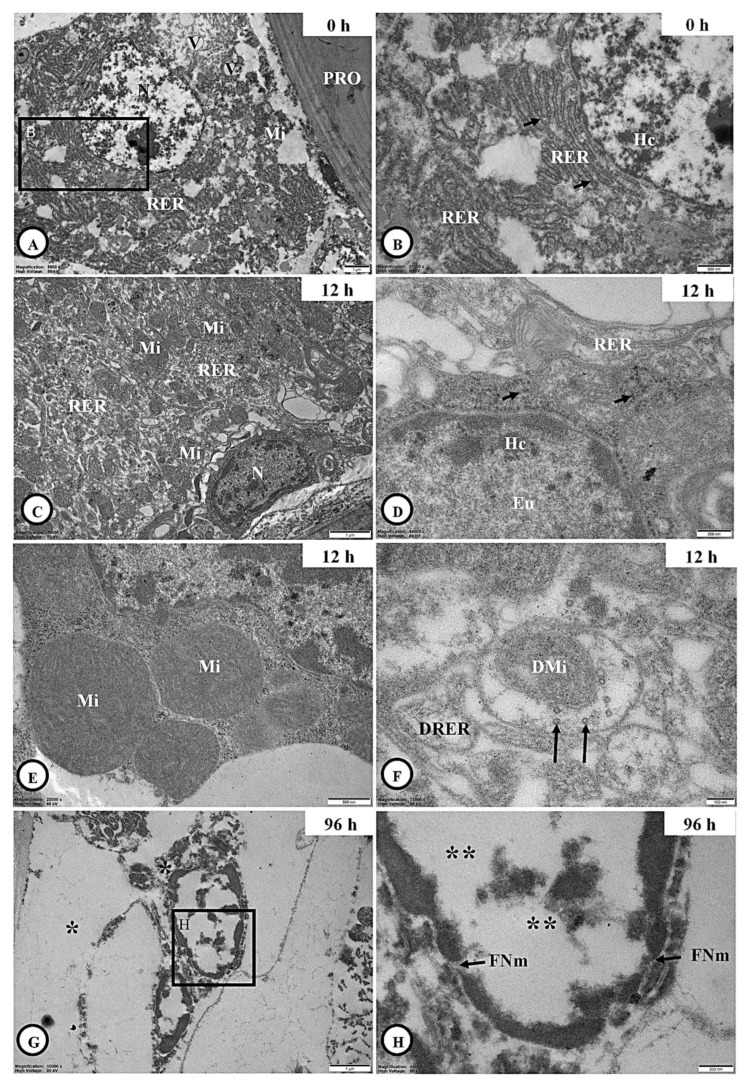
The use of entomopathogenic fungi (EPF), such as , to reduce insect pest populations is gaining traction since it is an environmentally safe approach that can control many pests at different life stages. Here, we focus on the histopathology of the coffee berry borer, , infected by Morphological observation revealed that . conidia germinated within 12 h following inoculation according to light microscopic and ultrastructural levels. The fungus thoroughly penetrated the fat body and muscular tissue between 84 and 120 h post-inoculation. Transmission electron microscopy (TEM) confirmed the hyphal invasion of the cuticle at 12 h post-inoculation, with progressive tissue disruption and organelle degeneration, especially mitochondria and rough endoplasmic reticulum in adipocytes. All organelles were completely degenerated at 96 h post-inoculation. There was evidence of a connection between . activity and the coffee berry borer that might cause histopathological changes in the host defense against the pathogen, pointing to increased mortality and potential control of coffee berry borer in natural populations. Additionally, terminal deoxynucleotidyl transferase dUTP nick end labeling (TUNEL) confirmed that apoptotic cells were slightly increased in the adipose tissue and integument of the coffee berry borer. The ability of . to fatally infect the coffee berry borer suggests that it could be deployed as a biological control agent in the field.
使用昆虫病原真菌(EPF),如 ,来减少害虫种群数量正越来越受到关注,因为这是一种环境安全的方法,可以在不同生命阶段控制多种害虫。在此,我们聚焦于受 感染的咖啡果小蠹的组织病理学。形态学观察表明,根据光学显微镜和超微结构水平,接种后12小时内 分生孢子开始萌发。接种后84至120小时,真菌彻底穿透脂肪体和肌肉组织。透射电子显微镜(TEM)证实接种后12小时菌丝侵入表皮,随后组织逐渐破坏,细胞器退化,尤其是脂肪细胞中的线粒体和粗面内质网。接种后96小时所有细胞器完全退化。有证据表明 活性与咖啡果小蠹之间存在关联,这可能会导致宿主防御病原体时出现组织病理学变化,表明自然种群中咖啡果小蠹的死亡率增加及潜在的防治效果。此外,末端脱氧核苷酸转移酶dUTP缺口末端标记(TUNEL)证实咖啡果小蠹脂肪组织和体表的凋亡细胞略有增加。 致命感染咖啡果小蠹的能力表明它可以作为一种生物防治剂应用于田间。