Zhu Cui, Huang Kaiyong, Wen Xiaolu, Gao Kaiguo, Yang Xuefen, Jiang Zongyong, Cao Shuting, Wang Li
School of Animal Science and Technology, Foshan University, Foshan 528225, China.
State Key Laboratory of Livestock and Poultry Breeding, Key Laboratory of Animal Nutrition and Feed Science in South China, Ministry of Agriculture and Rural Affairs, Guangdong Provincial Key Laboratory of Animal Breeding and Nutrition, Institute of Animal Science, Guangdong Academy of Agricultural Sciences, Guangzhou 510640, China.
Animals (Basel). 2025 Jun 13;15(12):1751. doi: 10.3390/ani15121751.
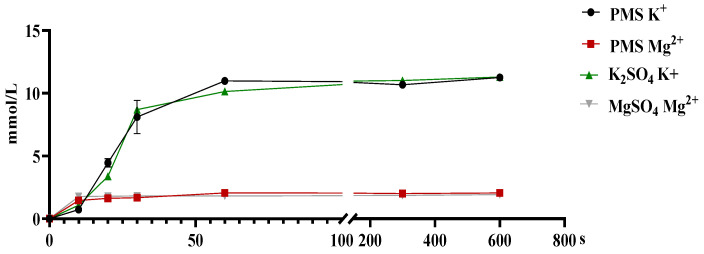
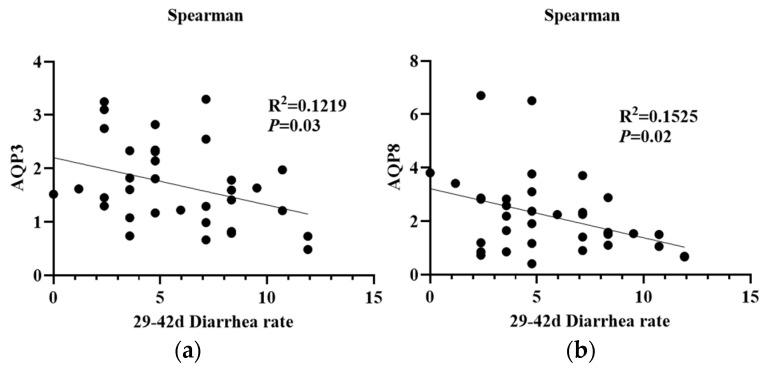
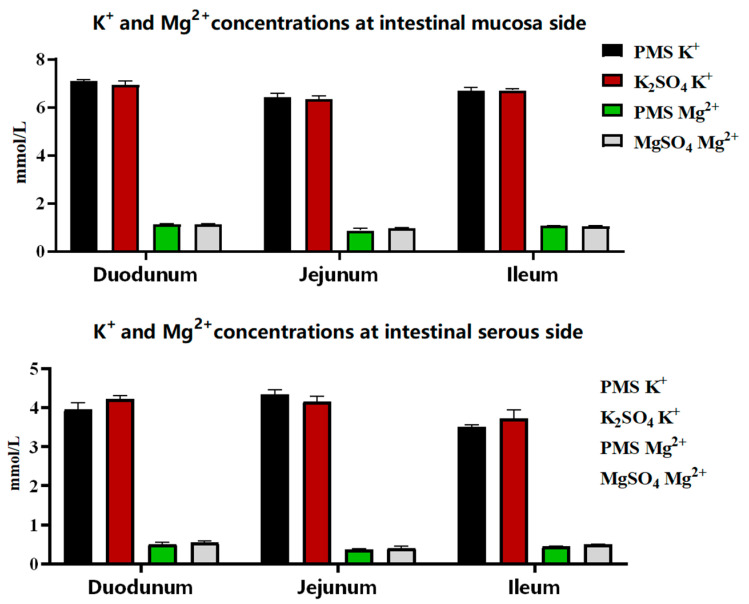
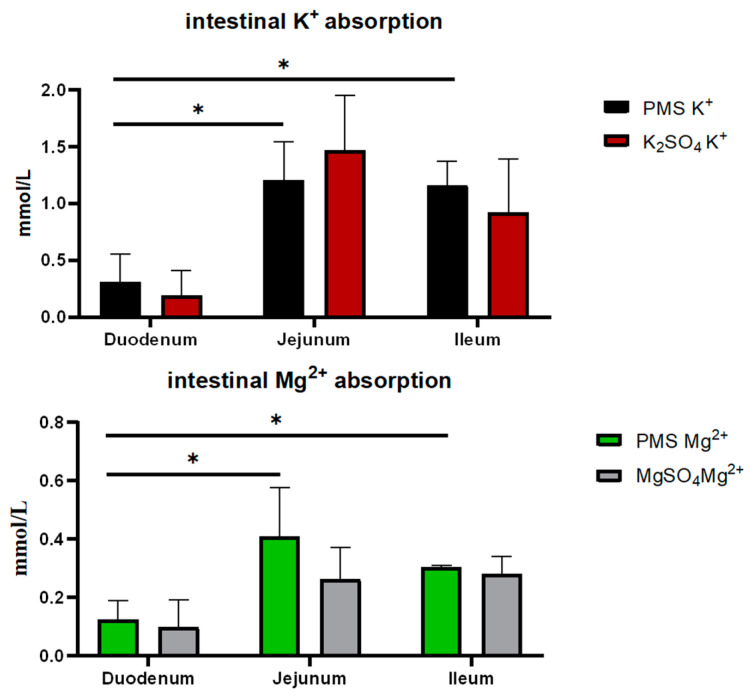
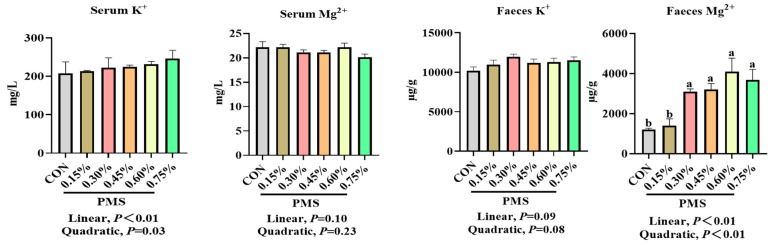
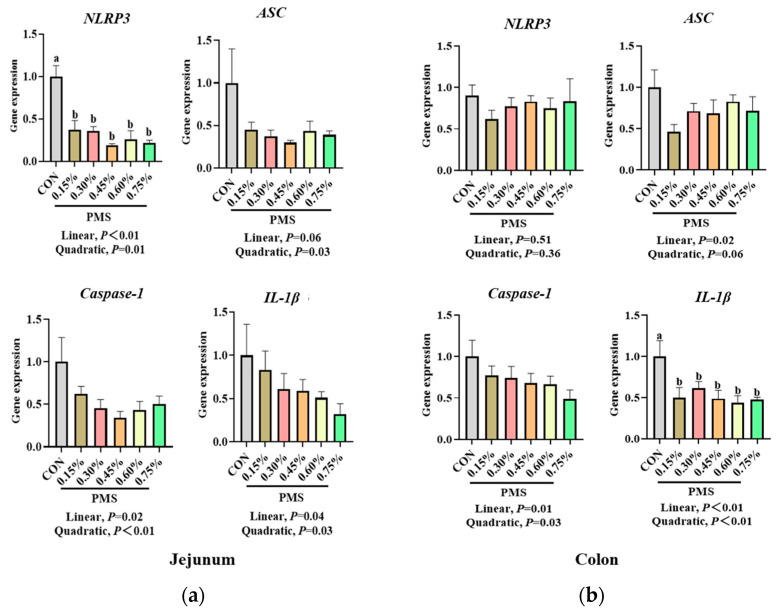
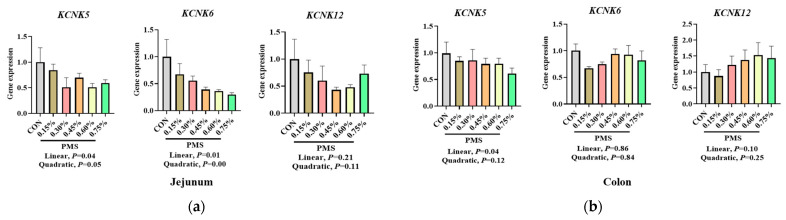
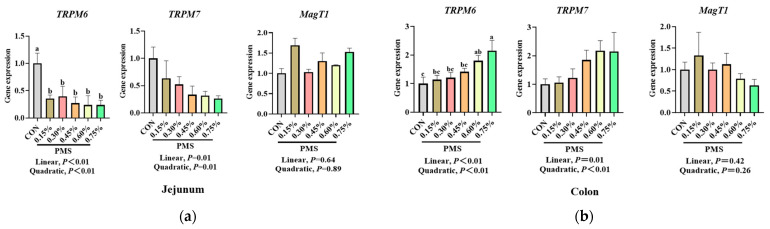
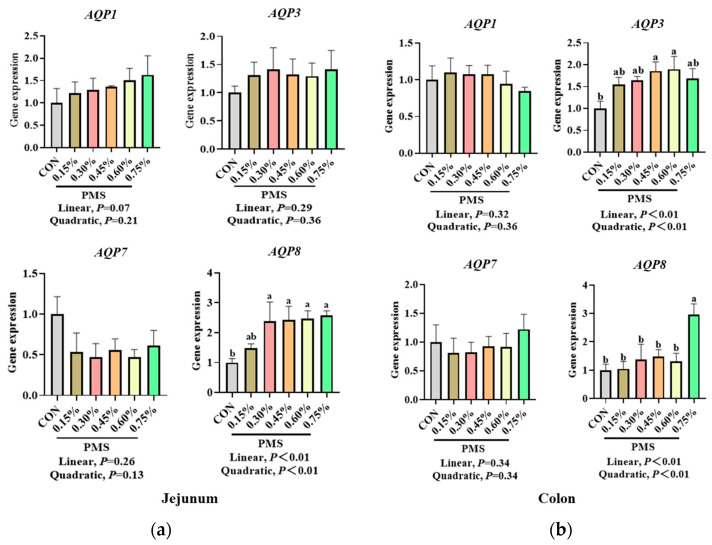
This study investigated the effects of potassium magnesium sulfate (PMS) on intestinal dissociation and absorption rate, immune function, and expression of the NOD-like receptor thermal domain-associated protein 3 (NLRP3) inflammasome, aquaporins (AQPs), and potassium and magnesium ion channels in weaned piglets. Experiment 1 involved the assessment of the dissociation rate of PMS in pig digestive fluid and the absorption rate of PMS in the small intestine using an Ussing chamber in vitro. In Experiment 2, 216 healthy 21-day-old weaned piglets were selected and randomly assigned to six groups (0%, 0.15%, 0.30%, 0.45%, 0.60%, and 0.75% PMS), with each group 6 replicates of six piglets per replicate. The in vitro Ussing chamber results indicated that the absorption of K and Mg in the jejunum and ileum was significantly higher than that in the duodenum ( < 0.05). The in vivo study demonstrated that the addition of PMS resulted in a linear increase in serum K, IgG, and interleukin (IL)-2 levels while simultaneously reducing serum IL-1β levels ( < 0.05). Dietary PMS significantly elevated serum IL-10 and Mg levels in feces ( < 0.05). Furthermore, supplementation with 0.60% or 0.75% PMS significantly downregulated the mRNA expression of in the jejunum ( < 0.05). Dietary PMS supplementation linearly reduced the mRNA expression levels of cysteine protease 1 () and in both the jejunum and colon as well as the mRNA expression levels of two-pore domain channel subfamily K member 5 () in these regions ( < 0.05). Notably, supplementation with 0.15% PMS significantly decreased the mRNA expression of transient receptor potential channel 6 () in the jejunum and significantly increased the expression of in the colon ( < 0.05). Dietary addition of 0.45% and 0.60% PMS significantly increased the mRNA expression of aquaporin 3 () in the colon ( < 0.05), whereas 0.75% PMS significantly increased the mRNA expression of aquaporin 8 () in both the jejunum and colon. Moreover, the expression levels of and were significantly negatively correlated with the diarrhea rate observed between days 29 and 42. In conclusion, dietary PMS supplementation improved immune function, inhibited the activation of intestinal NLRP3, and modulated the expression of water and ion channels in weaned piglets, thereby contributing to the maintenance of intestinal water and ion homeostasis, which could potentially alleviate post-weaning diarrhea in piglets. The recommended supplemental level of PMS in the corn-soybean basal diet for weaned piglets is 0.30%.
本研究调查了硫酸钾镁(PMS)对断奶仔猪肠道解离与吸收率、免疫功能以及NOD样受体热结构域相关蛋白3(NLRP3)炎性小体、水通道蛋白(AQP)和钾镁离子通道表达的影响。实验1使用体外Ussing小室评估了PMS在猪消化液中的解离率以及在小肠中的吸收率。在实验2中,选取216头健康的21日龄断奶仔猪,随机分为六组(0%、0.15%、0.30%、0.45%、0.60%和0.75% PMS),每组6个重复,每个重复6头仔猪。体外Ussing小室结果表明,空肠和回肠中钾和镁的吸收显著高于十二指肠(<0.05)。体内研究表明,添加PMS导致血清钾、免疫球蛋白G(IgG)和白细胞介素(IL)-2水平呈线性增加,同时降低血清IL-1β水平(<0.05)。日粮中添加PMS显著提高了血清IL-10水平和粪便中镁的含量(<0.05)。此外,添加0.60%或0.75% PMS显著下调空肠中NLRP3的mRNA表达(<0.05)。日粮中添加PMS可使空肠和结肠中半胱氨酸蛋白酶1(caspase-1)和NLRP3的mRNA表达水平以及这些区域中两孔结构域通道亚家族K成员5(KCNK5)的mRNA表达水平呈线性降低(<0.05)。值得注意的是,添加0.15% PMS显著降低空肠中瞬时受体电位通道6(TRPC6)的mRNA表达,并显著增加结肠中AQP3的表达(<0.05)。日粮中添加0.45%和0.60% PMS显著增加结肠中AQP3的mRNA表达(<0.05),而0.75% PMS显著增加空肠和结肠中AQP8的mRNA表达。此外,NLRP3和caspase-1的表达水平与29至42日龄期间观察到的腹泻率显著负相关。总之,日粮中添加PMS可改善断奶仔猪的免疫功能,抑制肠道NLRP3的激活,并调节水和离子通道的表达,从而有助于维持肠道水和离子稳态,这可能有助于缓解仔猪断奶后腹泻。断奶仔猪玉米-豆粕基础日粮中PMS的推荐添加水平为0.30%。