Hélage Siegfried, Laponche Claudia, Homps Margaux, Dong Jonathan, Rivière Lucas, Préaux Frédéric, Just Pierre-Alexandre, Aflak Nizar, Buy Jean-Noël, Dion Élisabeth
Department of Radiology, Hôtel-Dieu de Paris (AP-HP), 1 place du Parvis Notre-Dame, 75004 Paris, France.
Biomedical Imaging Group, École Polytechnique Fédérale de Lausanne (EPFL), 1015 Lausanne, Switzerland.
Diagnostics (Basel). 2025 Jun 13;15(12):1508. doi: 10.3390/diagnostics15121508.
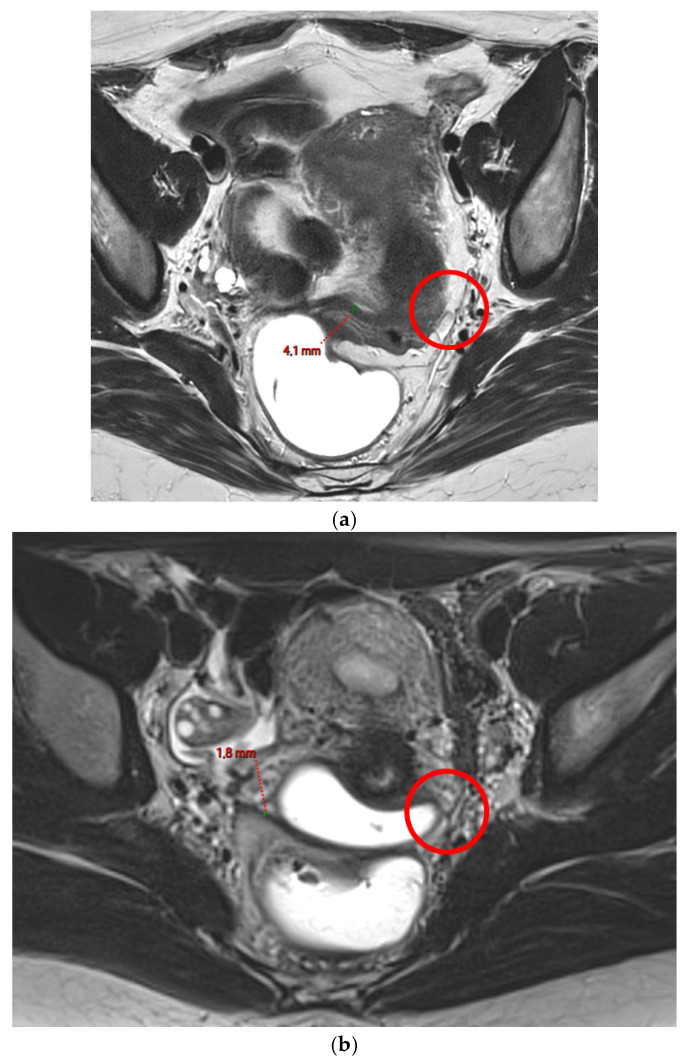
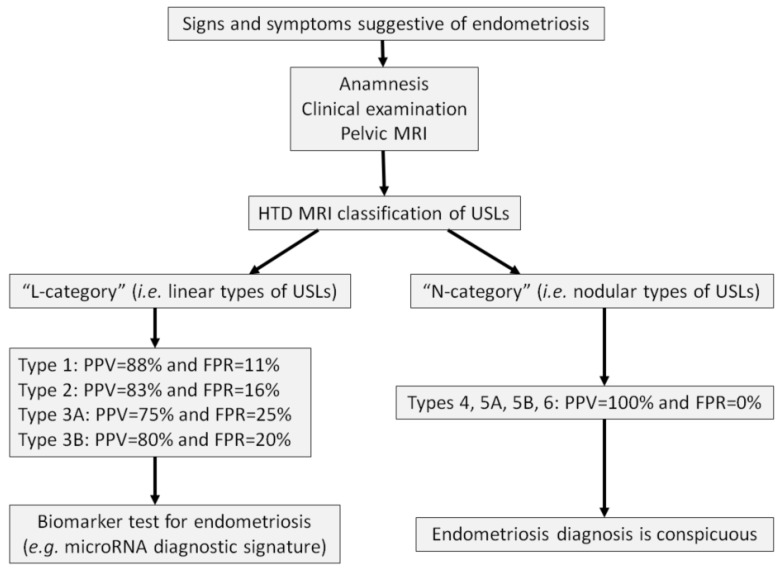
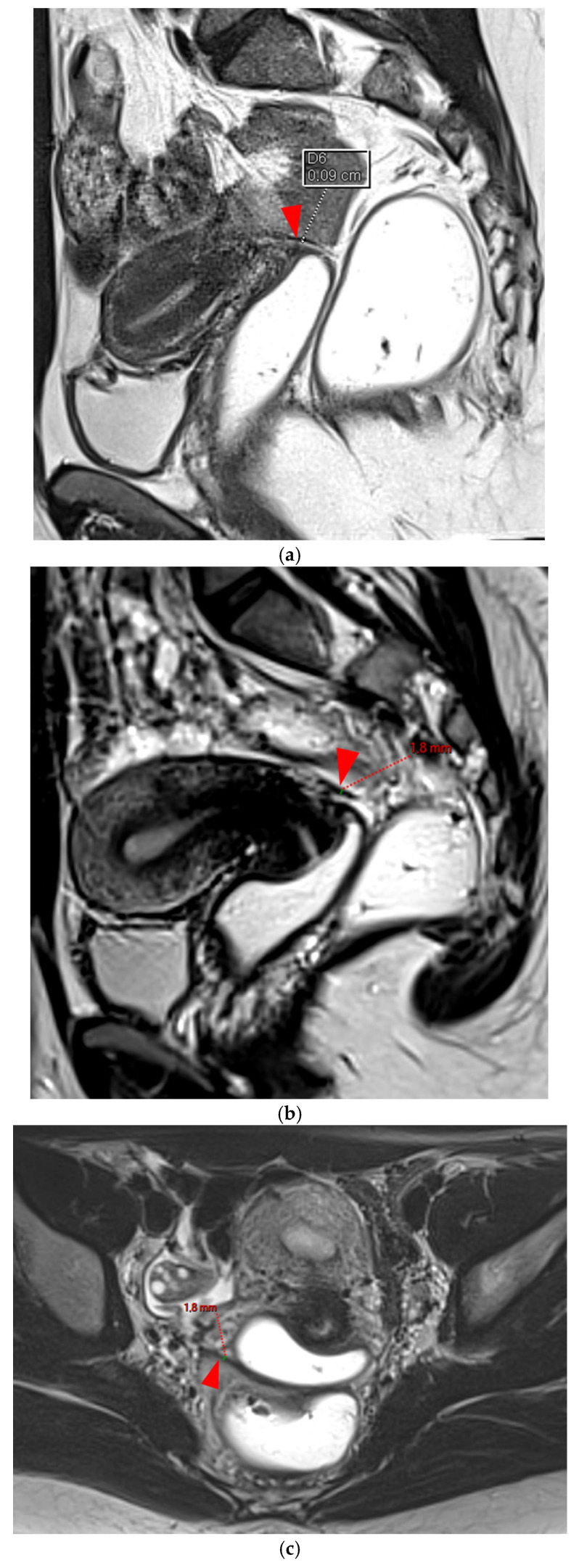
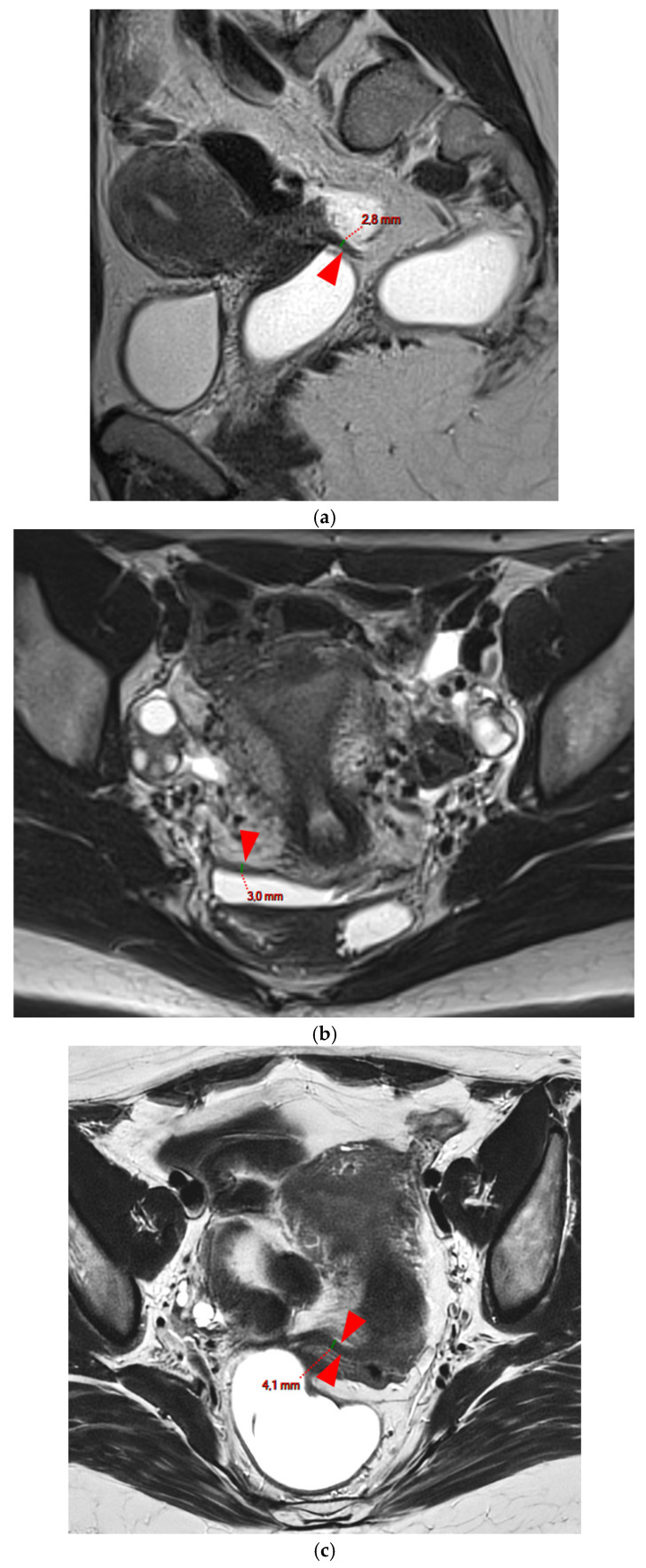
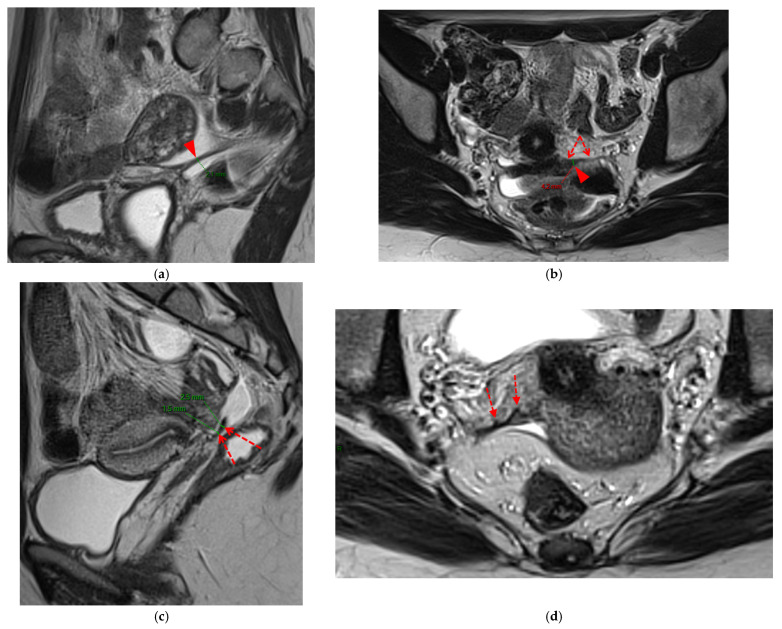
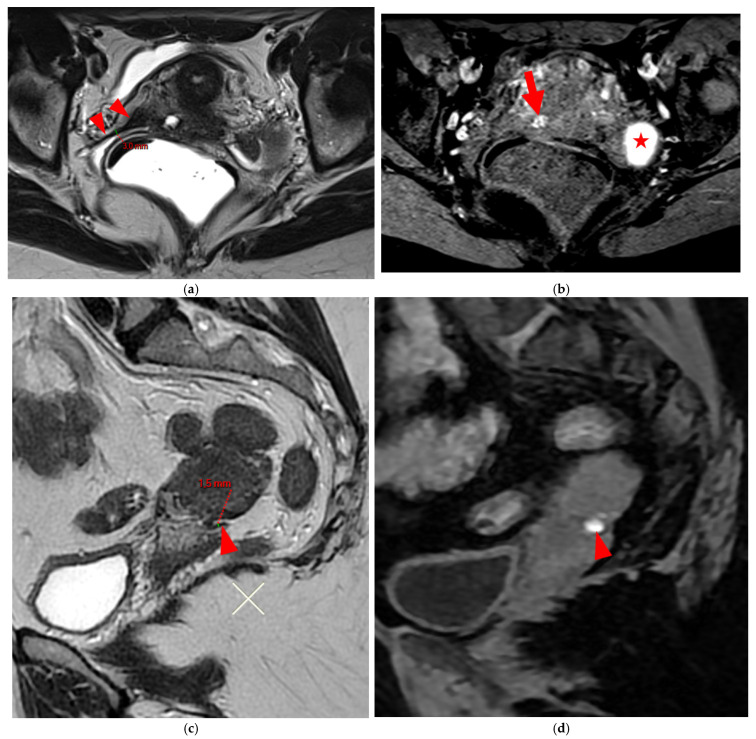
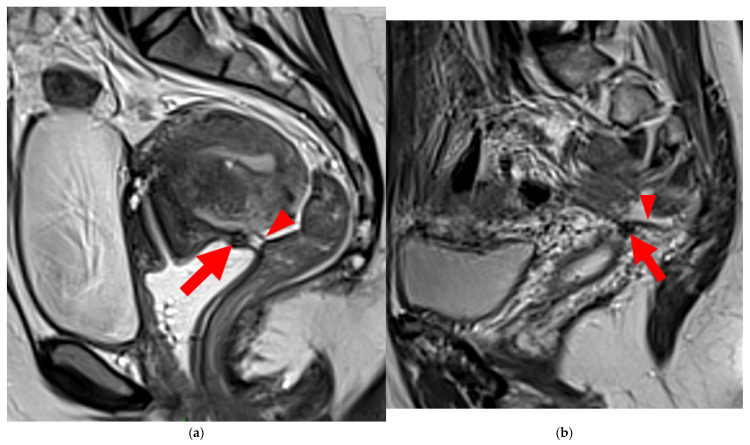
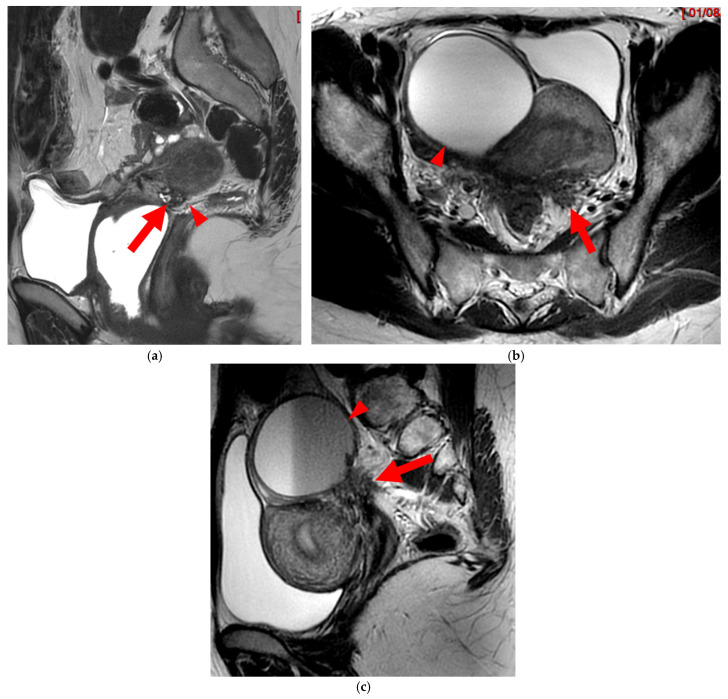
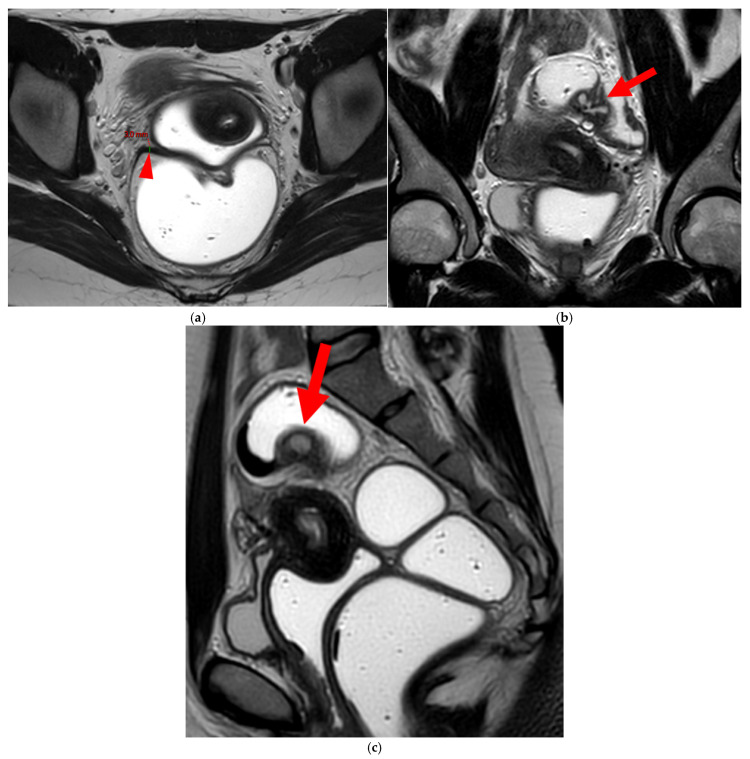
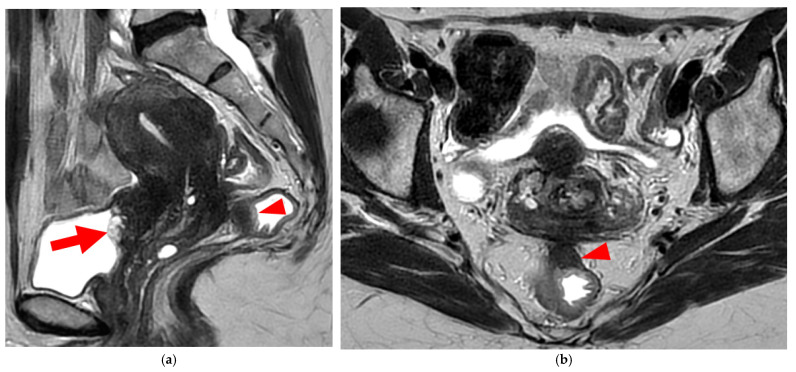
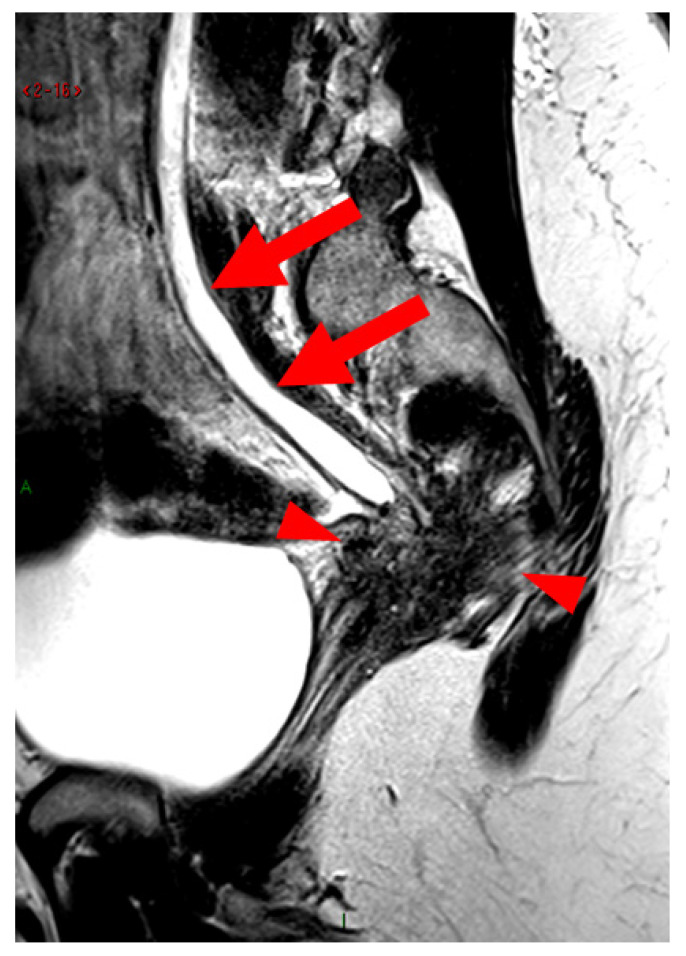
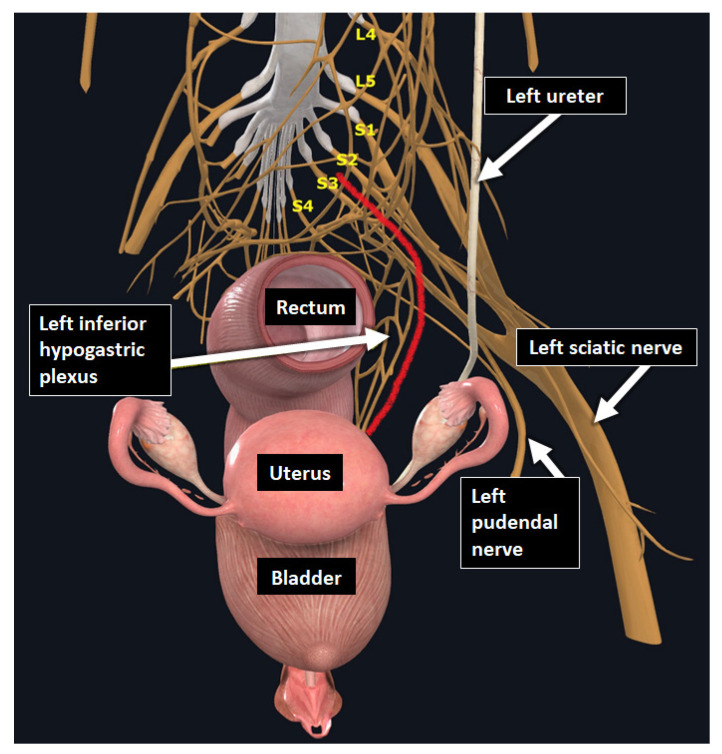
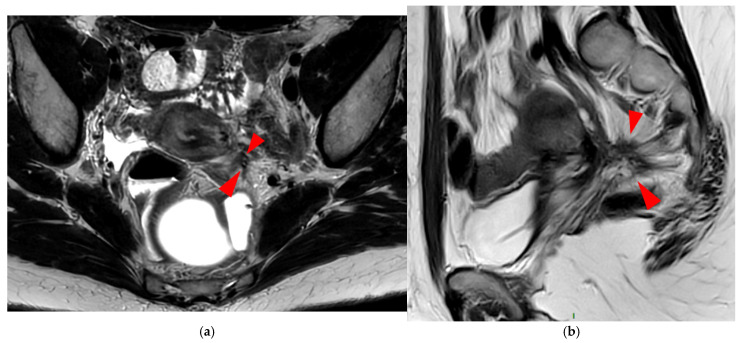
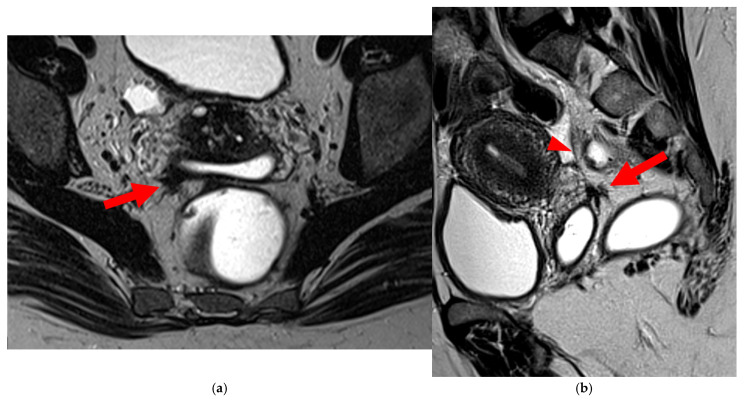
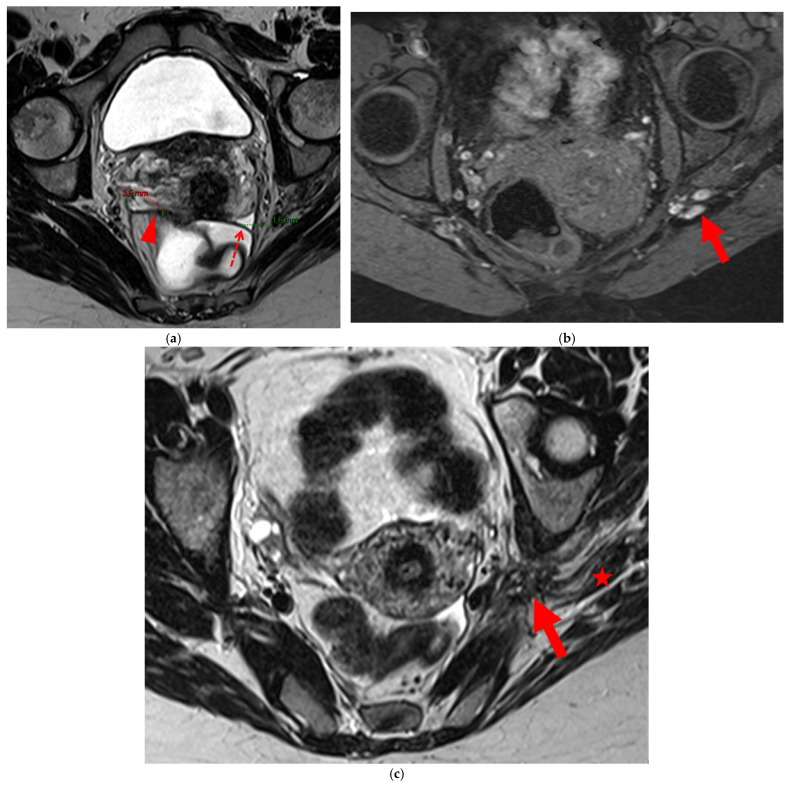
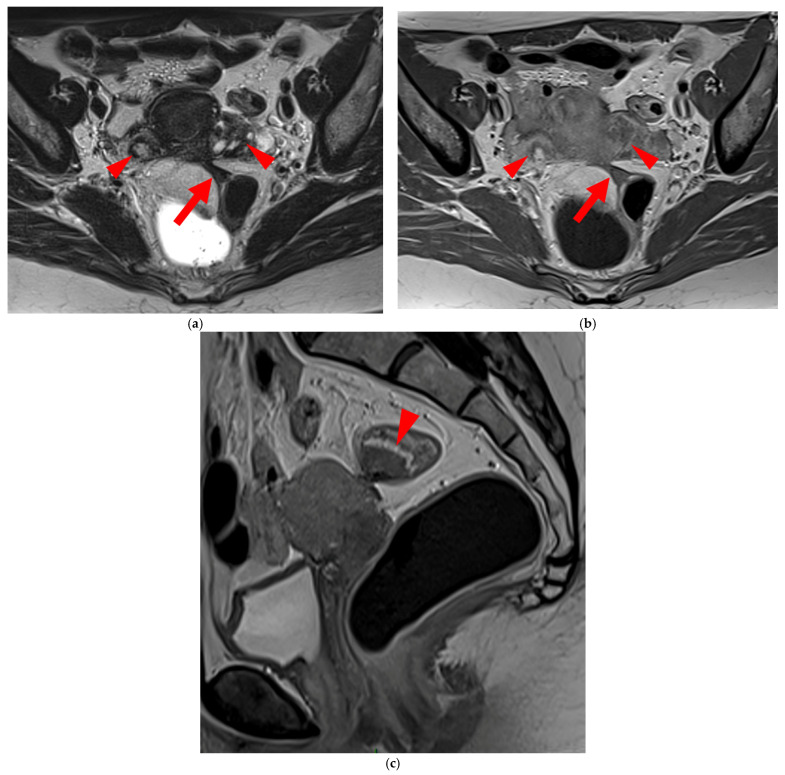
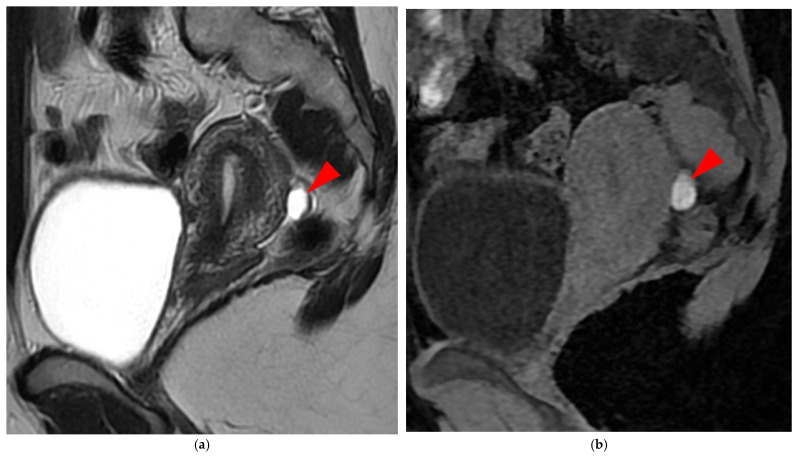
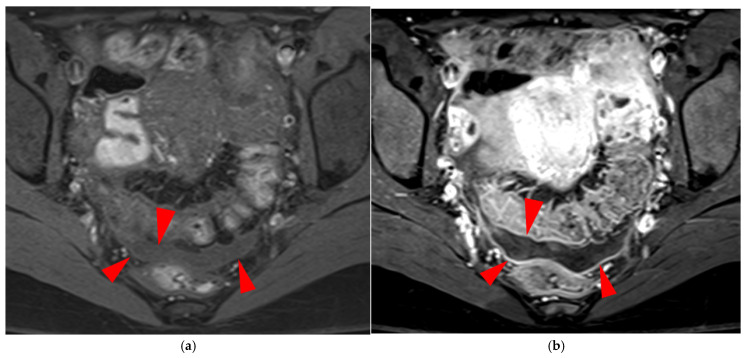
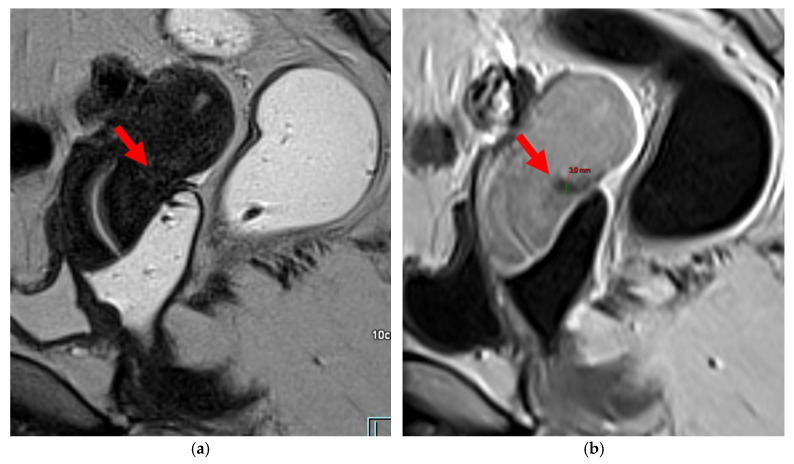
Endometriosis is a common gynecologic condition characterized by the presence of endometrial-like tissue outside the uterus, often leading to pelvic pain and infertility. Diagnosis is frequently delayed, with prolonged diagnostic wandering that could be improved through enhanced first-line radiologic assessment. The uterosacral ligament (USL) is the most frequent site of deep infiltrating endometriosis (DIE). The Hôtel-Dieu (HTD) MRI classification, published in 2024, offers a structured framework for evaluating USL involvement by correlating MRI findings with the diagnostic certainty of endometriosis. This pictorial essay provides a practical guide for applying the HTD MRI classification, presenting key imaging criteria with illustrative examples for each USL type. The classification distinguishes between "linear" and "nodular" USL lesions, with implications for diagnostic confidence. "Nodular" types demonstrate a 100% positive predictive value (PPV), while "linear" types may yield higher false positive rates (FPR). The HTD MRI classification may also be complemented by innovative biomarker testing, such as microRNA signatures, especially in cases with "linear" USL involvement. By standardizing the assessment of USL lesions, the HTD MRI classification enhances diagnostic accuracy, improves MRI reproducibility, and supports earlier identification of endometriosis in first-line settings. Its integration into radiologic workflows can contribute to reduced diagnostic delays. The HTD MRI classification is a valuable screening tool for first-line radiologists and clinicians. Incorporating it into routine pelvic MRI interpretations may streamline diagnostic pathways, promote consistency across readers, and guide additional testing strategies, such as microRNA assays, for cases where MRI alone is less definitive.
子宫内膜异位症是一种常见的妇科疾病,其特征是子宫外存在类似子宫内膜的组织,常导致盆腔疼痛和不孕。诊断常常延迟,存在长时间的诊断徘徊,而通过加强一线放射学评估可以改善这种情况。子宫骶韧带(USL)是深部浸润性子宫内膜异位症(DIE)最常见的部位。2024年发布的迪厄医院(HTD)MRI分类为评估USL受累情况提供了一个结构化框架,将MRI表现与子宫内膜异位症的诊断确定性相关联。这篇图文并茂的文章为应用HTD MRI分类提供了实用指南,展示了每种USL类型的关键影像标准及示例。该分类区分了“线性”和“结节状”USL病变,这对诊断信心有影响。“结节状”类型显示出100%的阳性预测值(PPV),而“线性”类型可能产生更高的假阳性率(FPR)。HTD MRI分类也可通过创新的生物标志物检测(如微小RNA特征)得到补充,特别是在“线性”USL受累的病例中。通过标准化USL病变的评估,HTD MRI分类提高了诊断准确性,改善了MRI的可重复性,并支持在一线环境中更早地识别子宫内膜异位症。将其纳入放射学工作流程有助于减少诊断延迟。HTD MRI分类是一线放射科医生和临床医生的宝贵筛查工具。将其纳入常规盆腔MRI解读可能会简化诊断路径,促进不同读者之间的一致性,并指导针对MRI单独诊断不太明确的病例的额外检测策略,如微小RNA检测。