Li Na, Li Hu, Feng Duo, Li Mengjie, Han Di, Liu Tianxin, Wang Jing
Institute of Food and Nutrition Development, Ministry of Agriculture and Rural Affairs, Beijing 100081, China.
Foods. 2025 Jun 16;14(12):2115. doi: 10.3390/foods14122115.
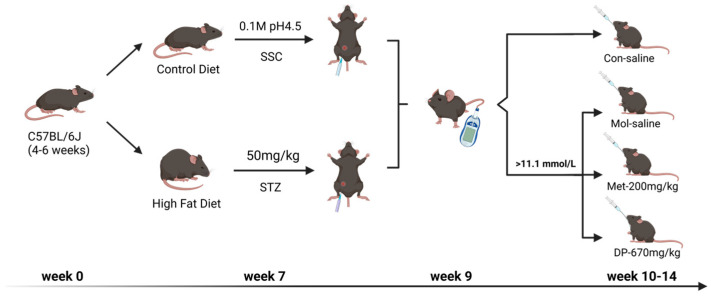
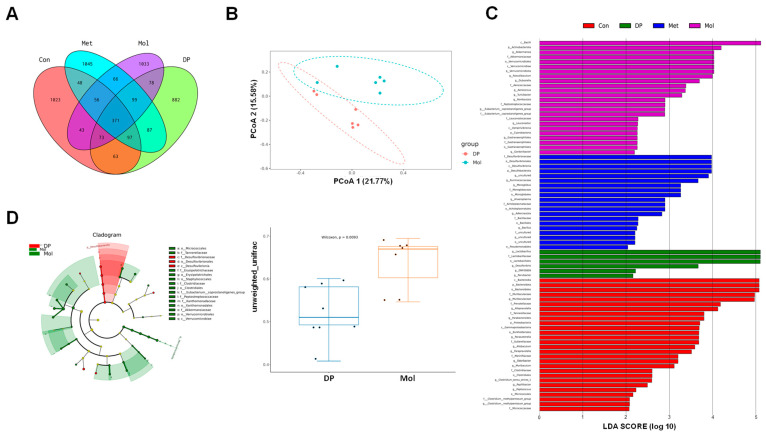
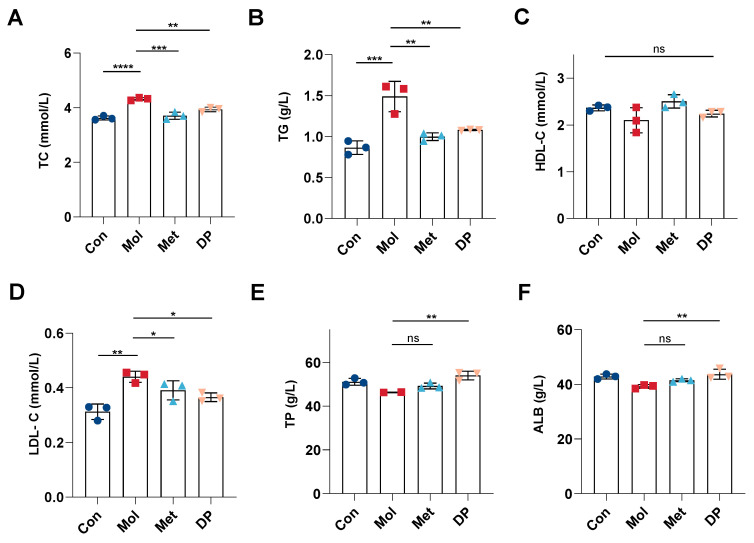
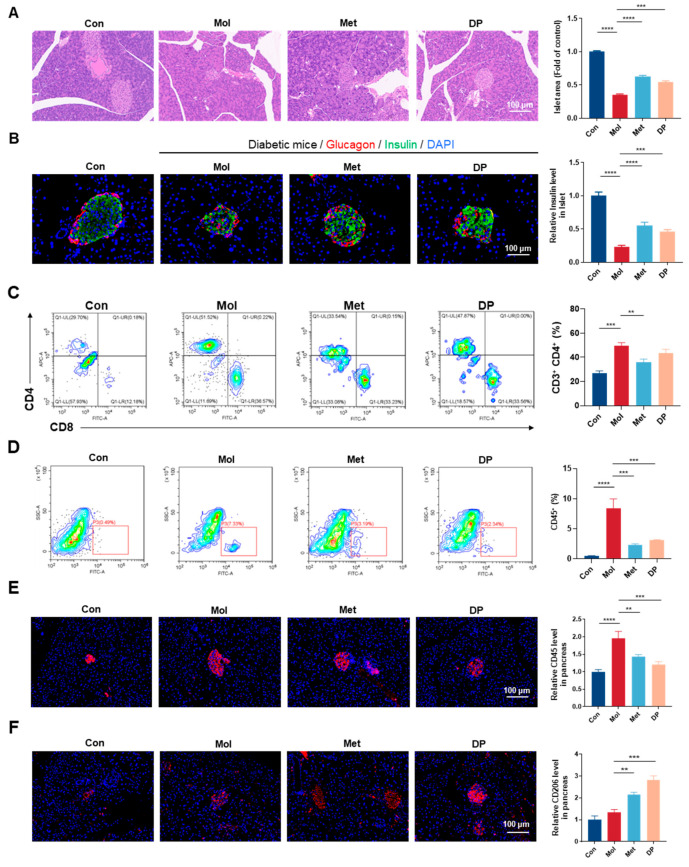
The effects of soy protein and whey protein supplementation on glycemic control show inconsistency, and the mechanisms underlying the impact of a high-protein diet on blood glucose regulation remain unclear. This study aimed to explore the impact of a dual-protein (DP) blend comprising soy protein isolate (SPI) and whey protein concentrate (WPC), processed through high-pressure homogenization, on mice with Type 2 diabetes mellitus (T2DM) and its potential mechanisms. In the in vitro experiments, an insulin-resistant (IR) HepG2 cell model was treated with DP, resulting in a significant enhancement of glucose uptake and upregulation of IRS1 and GLUT4 expression. For the in vivo experiments, male C57BL/6J mice were randomly assigned into four groups (n = 6) based on body weight: normal control, T2DM model group, Metformin-treated group, and DP-treated group. Following a 5-week feeding period, Metformin and DP significantly reduced levels of blood sugar, AUC, TC, TG, and LDL-C in T2DM mice. Additionally, TP and ALB levels in the DP group were notably higher in the model group. In the liver and pancreas, DP alleviated histopathological changes and promoted liver glycogen synthesis in T2DM mice. Moreover, the levels of IRS1 and PI3K in the livers of mice in the DP group were significantly higher than those in the model group. Compared with the model groups, DP significantly reduced the expression of CD45 and increased the expression of CD206 in the pancreas of mice. Furthermore, 16S rRNA analysis revealed that DP altered the composition of the gut microbiota in diabetic mice, increasing the relative abundance of , , and . This suggested that DP could alleviate functional metabolic disorders in the gut and potentially reverse the risk of related complications. In conclusion, soy whey dual-protein may have an effective nutritional therapeutic effect on T2DM mice by regulating lipid metabolism, the INS/IRS1/PI3K signaling pathway, and gut microbiota.
大豆蛋白和乳清蛋白补充剂对血糖控制的影响存在不一致性,高蛋白饮食对血糖调节影响的潜在机制仍不清楚。本研究旨在探讨经高压均质处理的由大豆分离蛋白(SPI)和乳清浓缩蛋白(WPC)组成的双蛋白(DP)混合物对2型糖尿病(T2DM)小鼠的影响及其潜在机制。在体外实验中,用DP处理胰岛素抵抗(IR)的HepG2细胞模型,导致葡萄糖摄取显著增加以及IRS1和GLUT4表达上调。在体内实验中,将雄性C57BL/6J小鼠按体重随机分为四组(n = 6):正常对照组、T2DM模型组、二甲双胍治疗组和DP治疗组。经过5周的喂养期后,二甲双胍和DP显著降低了T2DM小鼠的血糖水平、AUC、总胆固醇(TC)、甘油三酯(TG)和低密度脂蛋白胆固醇(LDL-C)。此外,DP组的总蛋白(TP)和白蛋白(ALB)水平明显高于模型组。在肝脏和胰腺中,DP减轻了T2DM小鼠的组织病理学变化并促进了肝糖原合成。此外,DP组小鼠肝脏中IRS1和磷脂酰肌醇-3-激酶(PI3K)的水平显著高于模型组。与模型组相比,DP显著降低了小鼠胰腺中CD45的表达并增加了CD206的表达。此外,16S核糖体RNA(rRNA)分析显示,DP改变了糖尿病小鼠肠道微生物群的组成,增加了 、 和 的相对丰度。这表明DP可以减轻肠道功能代谢紊乱并可能逆转相关并发症的风险。总之,大豆乳清双蛋白可能通过调节脂质代谢、胰岛素/胰岛素受体底物1(INS/IRS1)/PI3K信号通路和肠道微生物群对T2DM小鼠产生有效的营养治疗作用。