Department of Musculoskeletal Biology, Institute of Life Course and Medical Sciences, University of Liverpool, Liverpool, UK.
Nuffield Department of Population Health, Medical Sciences Division, University of Oxford, Oxford, UK.
Br J Nutr. 2023 Mar 14;129(5):759-770. doi: 10.1017/S0007114522001787. Epub 2022 Jun 16.
Low-grade inflammation is a mediator of muscle proteostasis. This study aimed to investigate the effects of isolated whey and soy proteins on inflammatory markers.
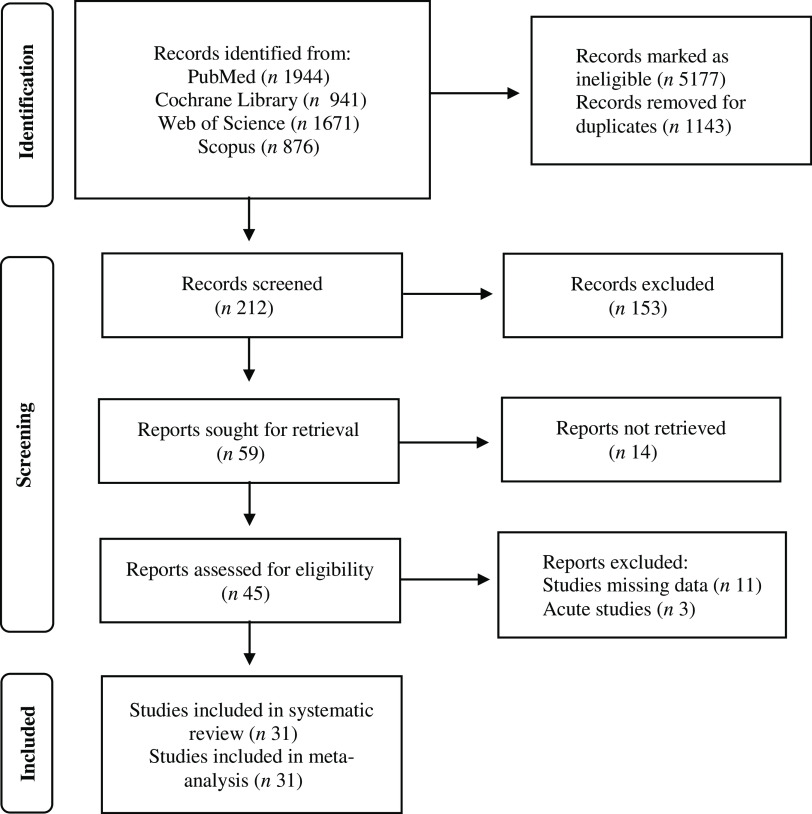
We conducted a systematic literature search of randomised controlled trials (RCT) through MEDLINE, Web of Science, Scopus and Cochrane Library databases from inception until September 2021. To determine the effectiveness of isolated proteins on circulating levels of C-reactive protein (CRP), IL-6 and TNF-α, a meta-analysis using a random-effects model was used to calculate the pooled effects (CRD42021252603).
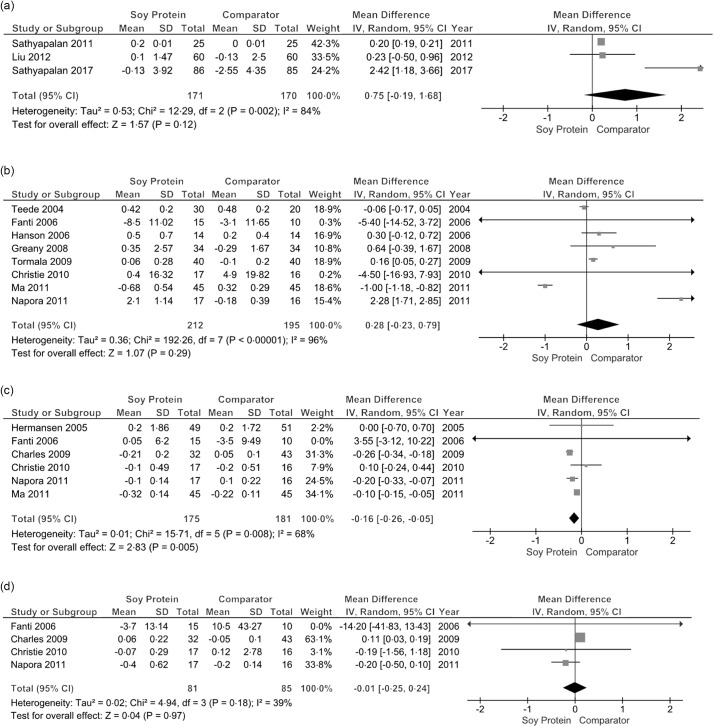
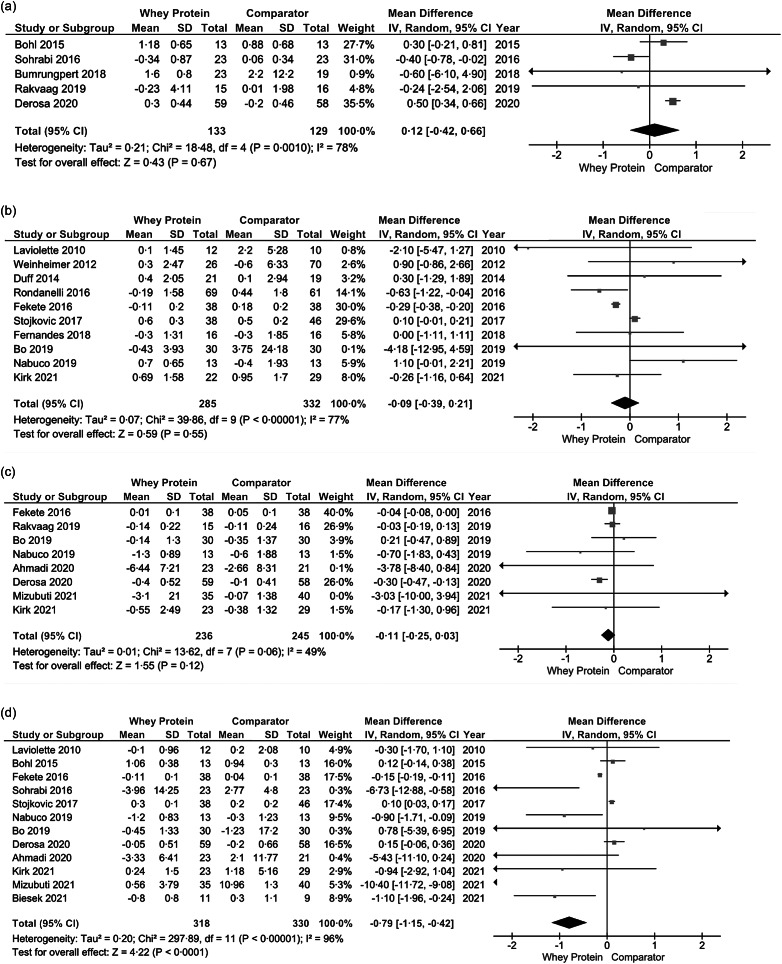
Thirty-one RCT met the inclusion criteria and were included in the systematic review and meta-analysis. A significant reduction of circulating IL-6 levels following whey protein [Mean Difference (MD): -0·79, 95 % CI: -1·15, -0·42, I = 96 %] and TNF-α levels following soy protein supplementation (MD: -0·16, 95 % CI: -0·26, -0·05, I = 68 %) was observed. The addition of soy isoflavones exerted a further decline in circulating TNF-α levels (MD: -0·20, 95 % CI: -0·31, -0·08, I = 34 %). According to subgroup analysis, whey protein led to a statistically significant decrease in circulating IL-6 levels in individuals with sarcopenia and pre-frailty (MD: -0·98, 95 % CI: -1·56, -0·39, I = 0 %). These findings may be dependent on participant characteristics and treatment duration.
These data support that whey and soy protein supplementation elicit anti-inflammatory effects by reducing circulating IL-6 and TNF-α levels, respectively. This effect may be enhanced by soy isoflavones and may be more prominent in individuals with sarcopenia.
低度炎症是肌肉蛋白稳定的介质。本研究旨在研究分离乳清蛋白和大豆蛋白对炎症标志物的影响。
我们通过 MEDLINE、Web of Science、Scopus 和 Cochrane Library 数据库进行了系统的文献检索,检索时间从建库至 2021 年 9 月。为了确定分离蛋白对循环 C 反应蛋白(CRP)、IL-6 和 TNF-α 水平的有效性,我们使用随机效应模型进行了 meta 分析,以计算汇总效应(CRD42021252603)。
31 项 RCT 符合纳入标准,并纳入了系统评价和 meta 分析。乳清蛋白补充后,循环 IL-6 水平显著降低[平均差值(MD):-0.79,95%置信区间(CI):-1.15,-0.42,I = 96%],大豆蛋白补充后,TNF-α 水平也显著降低(MD:-0.16,95%CI:-0.26,-0.05,I = 68%)。添加大豆异黄酮可进一步降低循环 TNF-α 水平(MD:-0.20,95%CI:-0.31,-0.08,I = 34%)。根据亚组分析,乳清蛋白可使肌少症和衰弱前期个体的循环 IL-6 水平显著降低(MD:-0.98,95%CI:-1.56,-0.39,I = 0%)。这些发现可能取决于参与者的特征和治疗持续时间。
这些数据支持乳清蛋白和大豆蛋白补充分别通过降低循环 IL-6 和 TNF-α 水平产生抗炎作用。这种作用可能会被大豆异黄酮增强,并且在肌少症患者中更为明显。