Meto Aida, Shpati Adora, Alushi Adela, Filippini Tommaso, Kamberi Alba, Meto Agron, Alushi Adem
Department of Dentistry, Faculty of Dental Sciences, University of Aldent, 1007 Tirana, Albania.
Department of Surgery, Medicine, Dentistry and Morphological Sciences with Interest in Transplant, Oncology and Regenerative Medicine, University of Modena and Reggio Emilia, 41125 Modena, Italy.
J Clin Med. 2025 Jun 13;14(12):4201. doi: 10.3390/jcm14124201.
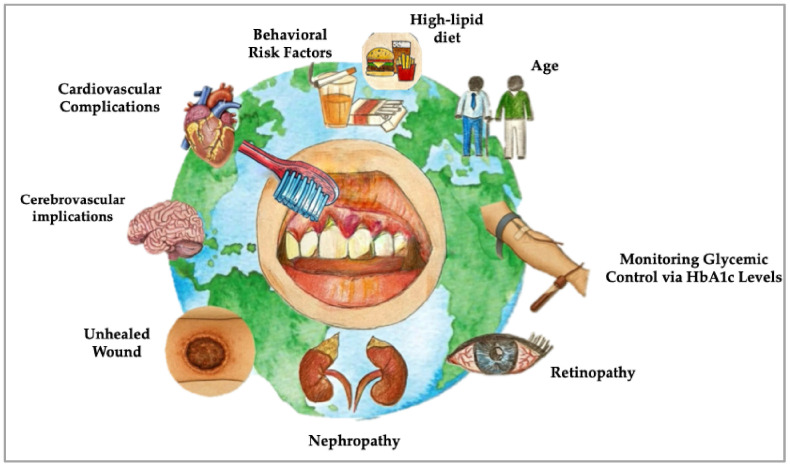
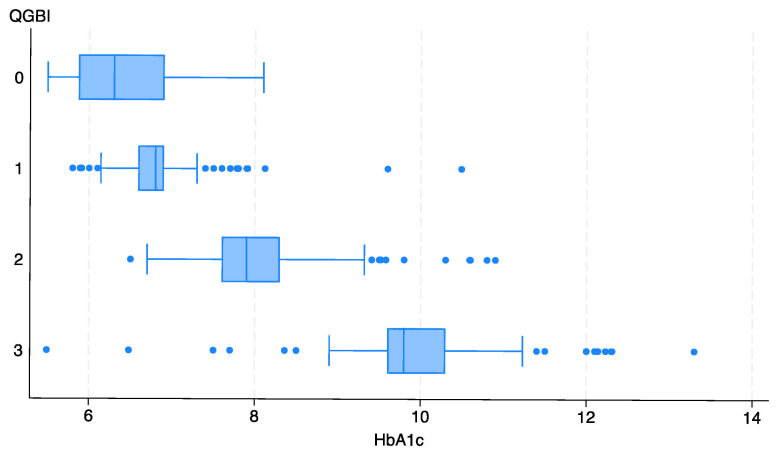
Diabetes mellitus is associated with significant health complications, including challenges in periodontal health. Gingival inflammation is especially common among diabetic patients and can significantly impact overall diabetes management. This study aims to investigate the correlation between glycosylated hemoglobin (HbA1c) levels, an established marker of glycemic control, and gingival inflammation using the Quantitative Gingival Bleeding Index (QGBI) among hospitalized diabetic patients, thereby placing the question within a broader clinical context. : The study enrolled 671 hospitalized patients with diabetes complications at "Mother Theresa University Hospital" in Tirana, AL, USA. Glycemic control was assessed through glycosylated hemoglobin (HbA1c) levels, and gingival health was evaluated using the Quantitative Gingival Bleeding Index (QGBI). Behavioral variables were also documented, including smoking habits and routine oral care practices. Spearman's correlation coefficient (r) was applied to determine the relationship between HbA1c levels and QGBI scores. : Our findings revealed a strong positive correlation between glycemic control (HbA1c) and gingival inflammation (QGBI) among the participants (Spearman's coefficient r = 0.868, < 0.001). Additionally, significant positive associations were observed between behavioral factors, such as smoking habits and regular oral care practices, further underscoring their role in periodontal health in diabetic patients. : The study highlights a significant positive relationship between poor glycemic control and increased gingival inflammation, emphasizing the importance of periodontal health in the comprehensive management of diabetes mellitus. Our results support integrating periodontal evaluation and management into standard diabetes care, which could improve patient outcomes and overall well-being.
糖尿病与严重的健康并发症相关,包括牙周健康方面的挑战。牙龈炎症在糖尿病患者中尤为常见,并且会对整体糖尿病管理产生重大影响。本研究旨在使用定量牙龈出血指数(QGBI),调查住院糖尿病患者中糖化血红蛋白(HbA1c)水平(一种已确立的血糖控制指标)与牙龈炎症之间的相关性,从而将该问题置于更广泛的临床背景中。:该研究纳入了美国阿拉巴马州地拉那市“特蕾莎修女大学医院”的671名患有糖尿病并发症的住院患者。通过糖化血红蛋白(HbA1c)水平评估血糖控制情况,并使用定量牙龈出血指数(QGBI)评估牙龈健康状况。还记录了行为变量,包括吸烟习惯和日常口腔护理习惯。应用斯皮尔曼相关系数(r)来确定HbA1c水平与QGBI评分之间的关系。:我们的研究结果显示,参与者的血糖控制(HbA1c)与牙龈炎症(QGBI)之间存在强烈的正相关(斯皮尔曼系数r = 0.868,<0.001)。此外,在行为因素之间观察到显著的正相关,如吸烟习惯和定期口腔护理习惯,进一步强调了它们在糖尿病患者牙周健康中的作用。:该研究突出了血糖控制不佳与牙龈炎症增加之间的显著正相关关系,强调了牙周健康在糖尿病综合管理中的重要性。我们的结果支持将牙周评估和管理纳入标准糖尿病护理中,这可能会改善患者的治疗效果和整体健康状况。