Choi Young Un, Hyun Ji Young, Kim Seongyup, Bae Keum Seok, Chung Jae Sik, Park Il Hwan, Kang Chan Young, Kim Tae Hui, Byun Chun Sung
Department of Surgery, Yonsei University Wonju College of Medicine, Wonju 26426, Republic of Korea.
Trauma Center, Wonju Severance Christian Hospital, Wonju 26426, Republic of Korea.
J Clin Med. 2025 Jun 13;14(12):4218. doi: 10.3390/jcm14124218.
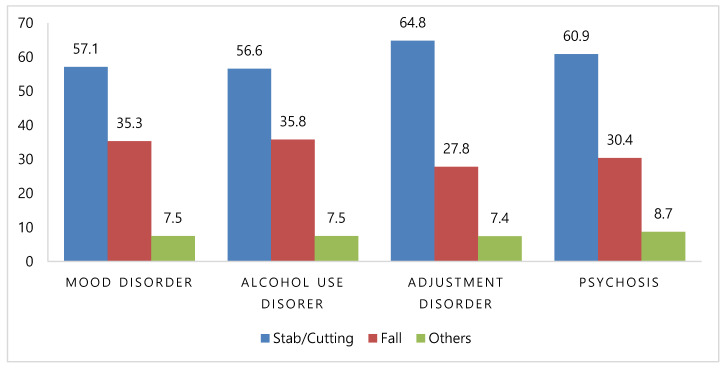
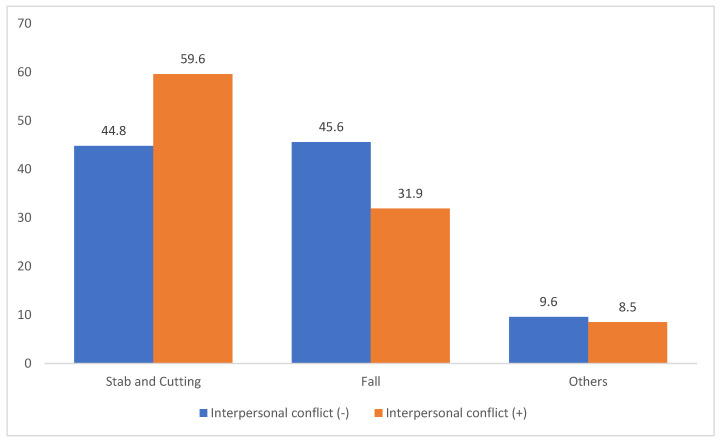
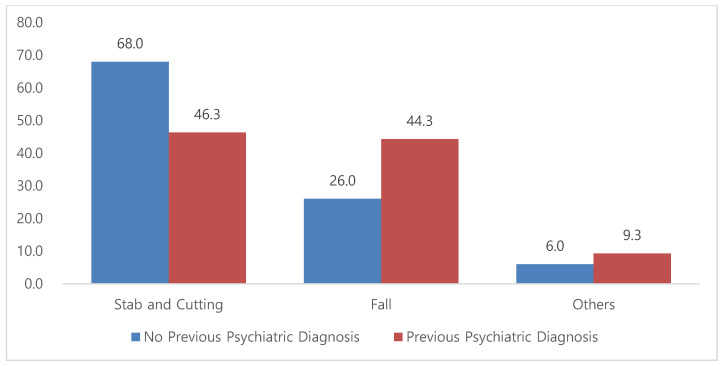
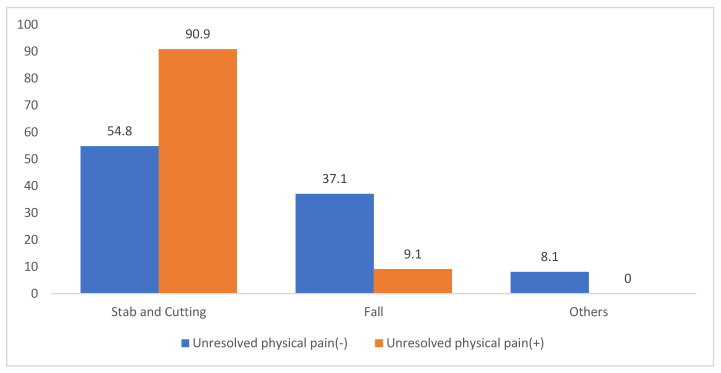
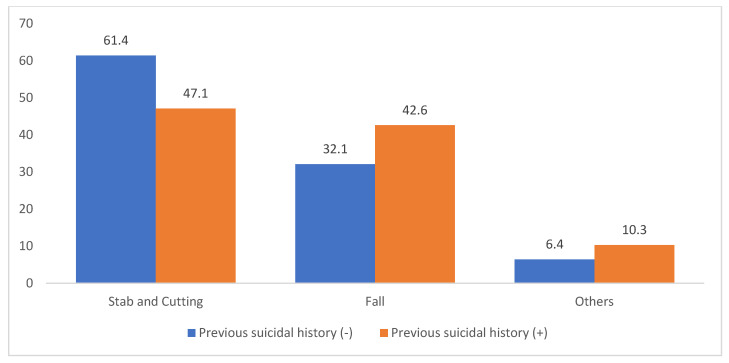
/: South Korea continues to have the highest suicide rate among the Organization for Economic Co-operation and Development (OECD) countries, with a growing number of emergency department (ED) admissions related to self-harm and suicide attempts. However, trauma-focused analyses that integrate psychiatric profiles and suicide mechanisms remain limited, hindering effective clinical care and preventive strategies. : This retrospective study analyzed trauma patients who presented to the ED of Wonju Severance Christian Hospital following suicide attempts between October 2015 and December 2023. Of 305 self-harm cases, 208 survivors who underwent psychiatric evaluation were included. The variables analyzed included the mechanism, site, and severity of injury (ISS and AIS); psychiatric diagnosis and prior psychiatric history; repeated suicide attempts; alcohol use; physical pain; interpersonal conflict; and economic vulnerability. Chi-square, Fisher's exact, and Kruskal-Wallis' tests were used for statistical comparisons. : Stabbing/cutting (56.7%) and falling (35.6%) were the most common attempts. Mood disorders were the predominant psychiatric diagnosis (63.9%), followed by adjustment disorders (26.0%), alcohol use (25.5%), and psychotic disorders (22.1%). Among the fall-related cases, patients were typically younger and predominantly women. The median ISS was highest in fall-related cases (17) compared with stabbing/cutting (4), with 25.96% of patients with an ISS ≥16, indicating severe trauma. A psychiatric history was associated with a higher incidence of falls (44.3%), and previous suicide attempts correlated with the use of high-lethality attempts. Severe physical pain was linked to stabbing/cutting in 10 of 11 cases. Interpersonal conflict was more frequently associated with stabbing/cutting (59.6%) than with falls (31.9%). No significant association was found between alcohol use and the method of suicide attempt. : The suicide mechanisms in patients with trauma are closely associated with psychiatric and psychosocial factors. Stabbing/cutting is often impulsive and driven by interpersonal conflict or alcohol use, while falling is more frequent in patients with psychiatric histories of repeated attempts. These findings emphasize the importance of mechanism-informed psychiatric evaluations and trauma protocols. Regionally adapted, interdisciplinary approaches and early psychiatric intervention are crucial for effective post-attempt management and suicide prevention.
在经济合作与发展组织(经合组织)国家中,韩国的自杀率持续位居榜首,因自残和自杀未遂而前往急诊科(ED)就诊的人数不断增加。然而,整合精神疾病概况和自杀机制的创伤重点分析仍然有限,这阻碍了有效的临床护理和预防策略。
这项回顾性研究分析了2015年10月至2023年12月期间在原州Severance基督教医院急诊科就诊的自杀未遂创伤患者。在305例自残病例中,纳入了208例接受精神评估的幸存者。分析的变量包括损伤机制、部位和严重程度(损伤严重度评分和简明损伤定级);精神疾病诊断和既往精神病史;反复自杀未遂;饮酒情况;身体疼痛;人际冲突;以及经济脆弱性。采用卡方检验、费舍尔精确检验和克鲁斯卡尔 - 沃利斯检验进行统计比较。
刺伤/切割(56.7%)和坠落(35.6%)是最常见的自杀未遂方式。情绪障碍是主要的精神疾病诊断(63.9%),其次是适应障碍(26.0%)、饮酒(25.5%)和精神障碍(22.1%)。在与坠落相关的病例中,患者通常较年轻,且以女性为主。与刺伤/切割相关病例(4)相比,与坠落相关病例的损伤严重度评分中位数最高(17),25.96%的患者损伤严重度评分≥16,表明为严重创伤。精神病史与更高的坠落发生率相关(44.3%),既往自杀未遂与使用高致死性自杀方式相关。在11例病例中有10例中,严重身体疼痛与刺伤/切割相关。人际冲突与刺伤/切割(59.6%)的关联比与坠落(31.9%)更为频繁。未发现饮酒与自杀未遂方式之间存在显著关联。
创伤患者的自杀机制与精神和心理社会因素密切相关。刺伤/切割通常是冲动性的,由人际冲突或饮酒驱动,而坠落在有反复自杀未遂精神病史的患者中更为常见。这些发现强调了基于机制的精神评估和创伤方案的重要性。因地制宜的跨学科方法和早期精神干预对于自杀未遂后的有效管理和自杀预防至关重要。