Pozzi Federico Emanuele, Falco Anna, Gotti Gaia, Fiamingo Giuseppe, Remoli Giulia, Appollonio Ildebrando, Ferrarese Carlo, Tremolizzo Lucio
Neurology Department Fondazione IRCCS San Gerardo dei Tintori Monza Italy.
Milan Center for Neuroscience (NeuroMI) University of Milano-Bicocca Milan Italy.
PCN Rep. 2025 Jun 25;4(2):e70143. doi: 10.1002/pcn5.70143. eCollection 2025 Jun.
Neurological soft signs (NSSs) encompass subtle neurological abnormalities, often indicative of impaired motor and sensory integration, observed in various neuropsychiatric conditions. NSSs have been recently investigated as potential diagnostic markers in neurodegenerative dementias. We aimed to confirm an NSS increase in subjects with cognitive decline and evaluate them in the differential diagnosis of neurodegenerative dementias.
A sample of 93 subjects with dementia (34 with Alzheimer's disease [AD], 29 with frontotemporal dementia [FTD], 16 with Lewy body disease [LBD], and 14 with corticobasal syndrome [CBS]) and 93 healthy controls (HCs) were assessed using the 16-item Heidelberg NSS Scale.
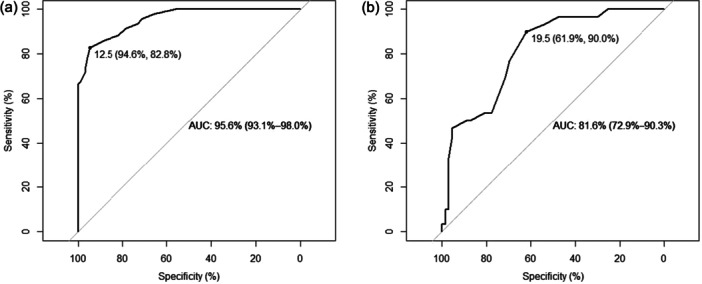
Subjects with neurodegenerative dementias exhibited significantly higher NSS scores than HCs (20.4 ± 7.9 vs. 5.7 ± 4.2, < 0.01). Notably, those with CBS/LBD showed markedly elevated NSSs compared to those with AD and FTD (26.2 ± 6.7 vs. 18.4 ± 7.1 and 16.6 ± 6.5, respectively, < 0.01). Diagnosis, Mini-Mental State Examination (MMSE), Frontal Assessment Battery, and anticholinergic burden were significant predictors of NSS expression in subjects with dementia. In HCs, only age and MMSE were significant predictors. A reduced Neurological Soft Signs (rNSS) Scale, including only five items that can be administered in less than a minute, demonstrated diagnostic performances comparable to the full NSS Scale.
NSSs are increased across neurodegenerative dementia subtypes, particularly in CBS and LBD. The Heidelberg NSS Scale, as well as its variant rNSS, may serve as quick and informative tools to be added to the visits in memory clinics.
神经软体征(NSSs)包括在各种神经精神疾病中观察到的细微神经异常,常提示运动和感觉整合受损。最近,NSSs已被作为神经退行性痴呆的潜在诊断标志物进行研究。我们旨在证实认知功能下降患者的NSS增加,并在神经退行性痴呆的鉴别诊断中对其进行评估。
使用16项海德堡NSS量表对93例痴呆患者(34例阿尔茨海默病[AD]、29例额颞叶痴呆[FTD]、16例路易体病[LBD]和14例皮质基底节综合征[CBS])和93例健康对照(HCs)进行评估。
神经退行性痴呆患者的NSS评分显著高于HCs(20.4±7.9对5.7±4.2,<0.01)。值得注意的是,与AD和FTD患者相比,CBS/LBD患者的NSS显著升高(分别为26.2±6.7对18.4±7.1和16.6±6.5,<0.01)。诊断、简易精神状态检查表(MMSE)、额叶评估量表和抗胆碱能负担是痴呆患者NSS表达的重要预测因素。在HCs中,只有年龄和MMSE是重要预测因素。简化神经软体征(rNSS)量表仅包括5项可在不到1分钟内完成的项目,其诊断性能与完整的NSS量表相当。
神经退行性痴呆各亚型的NSS均升高,尤其是CBS和LBD。海德堡NSS量表及其变体rNSS可作为记忆门诊就诊时快速且提供信息的工具。