Computational Brain Anatomy (CoBrA) Laboratory, Cerebral Imaging Centre, Douglas Mental Health University Institute, Montreal, Quebec, Canada.
Douglas Mental Health University Institute, McGill University, Montreal, Quebec, Canada.
Hum Brain Mapp. 2023 May;44(7):2684-2700. doi: 10.1002/hbm.26220. Epub 2023 Mar 9.
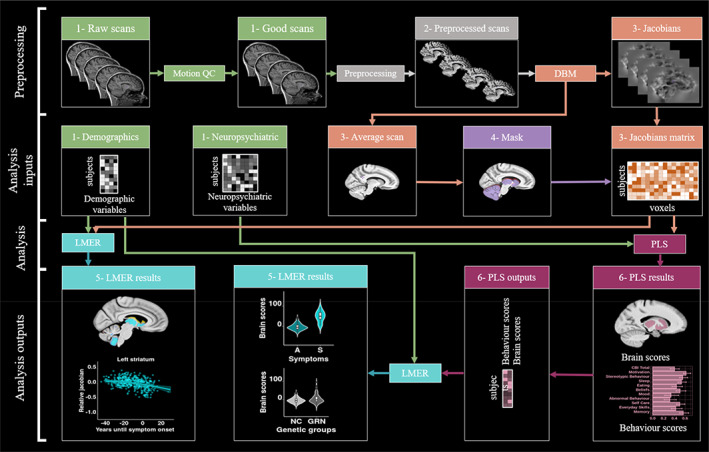
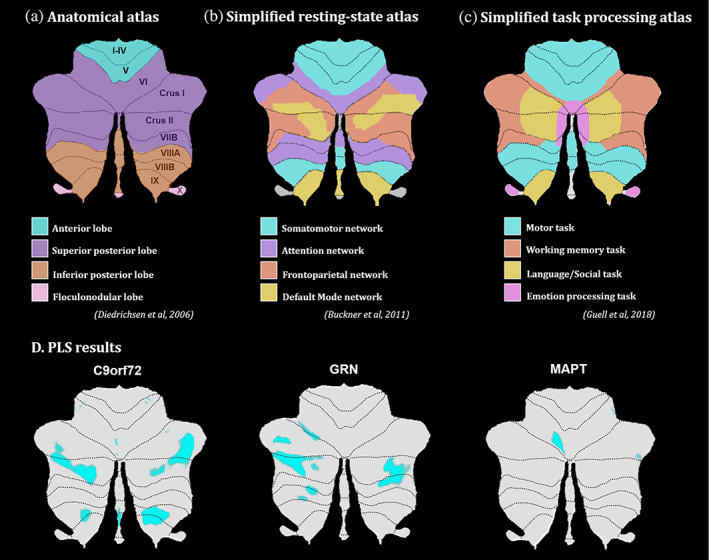
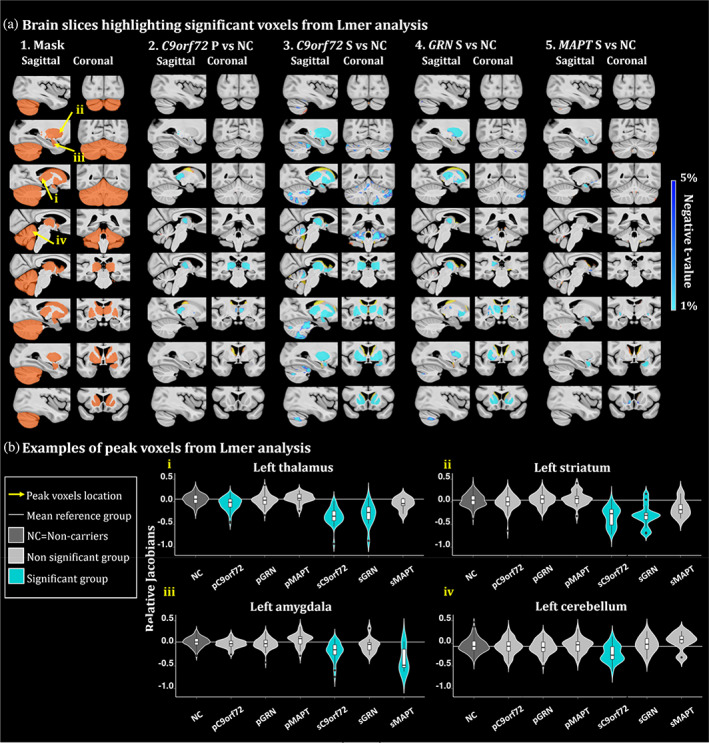
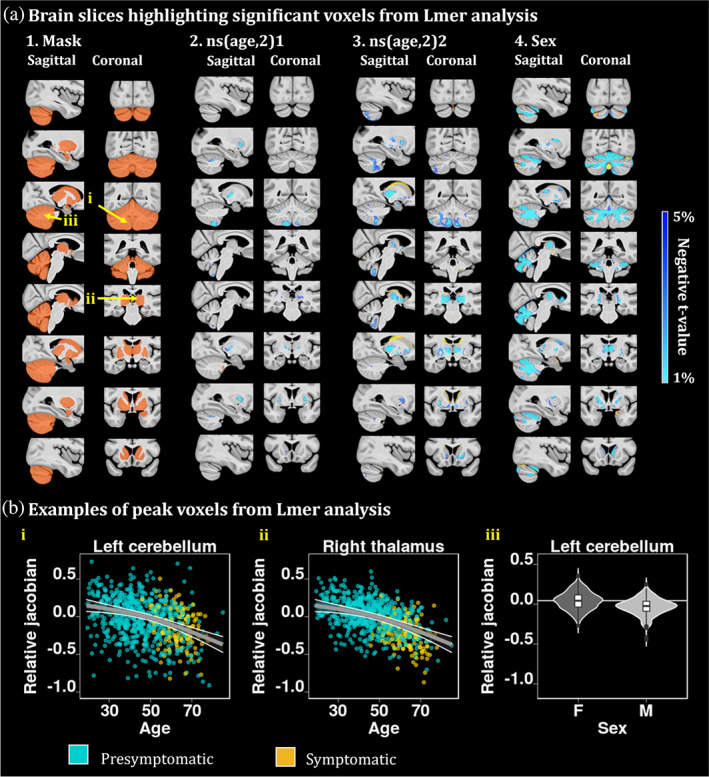
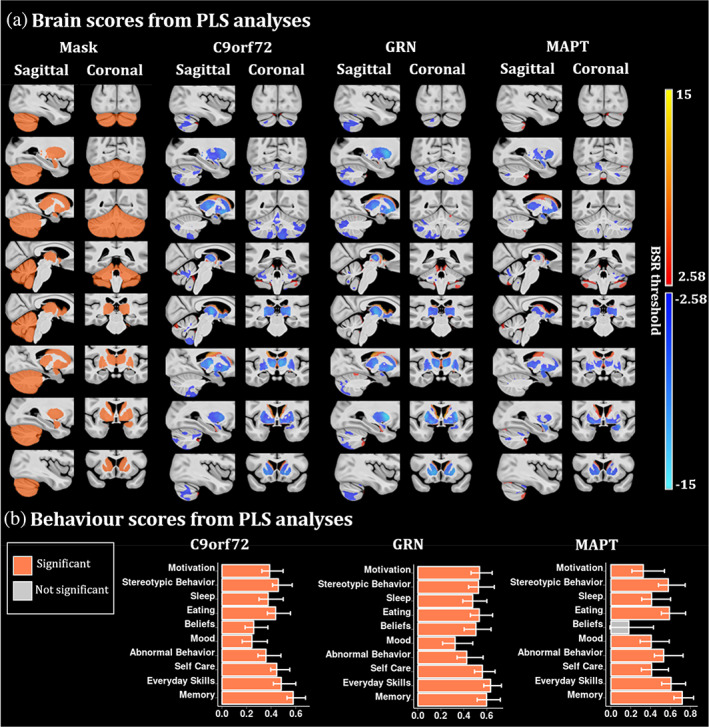
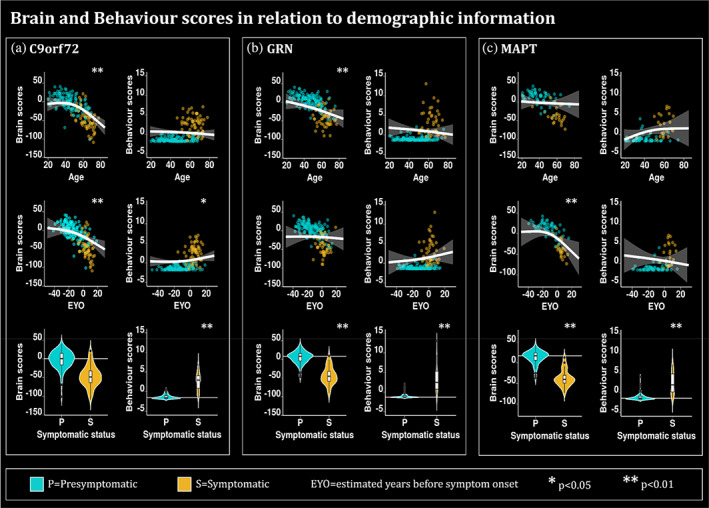
Recent studies have reported early cerebellar and subcortical impact in the disease progression of genetic frontotemporal dementia (FTD) due to microtubule-associated protein tau (MAPT), progranulin (GRN) and chromosome 9 open reading frame 72 (C9orf72). However, the cerebello-subcortical circuitry in FTD has been understudied despite its essential role in cognition and behaviors related to FTD symptomatology. The present study aims to investigate the association between cerebellar and subcortical atrophy, and neuropsychiatric symptoms across genetic mutations. Our study included 983 participants from the Genetic Frontotemporal dementia Initiative including mutation carriers and noncarrier first-degree relatives of known symptomatic carriers. Voxel-wise analysis of the thalamus, striatum, globus pallidus, amygdala, and the cerebellum was performed, and partial least squares analyses (PLS) were used to link morphometry and behavior. In presymptomatic C9orf72 expansion carriers, thalamic atrophy was found compared to noncarriers, suggesting the importance of this structure in FTD prodromes. PLS analyses demonstrated that the cerebello-subcortical circuitry is related to neuropsychiatric symptoms, with significant overlap in brain/behavior patterns, but also specificity for each genetic mutation group. The largest differences were in the cerebellar atrophy (larger extent in C9orf72 expansion group) and more prominent amygdalar volume reduction in the MAPT group. Brain scores in the C9orf72 expansion carriers and MAPT carriers demonstrated covariation patterns concordant with atrophy patterns detectable up to 20 years before expected symptom onset. Overall, these results demonstrated the important role of the subcortical structures in genetic FTD symptom expression, particularly the cerebellum in C9orf72 and the amygdala in MAPT carriers.
最近的研究报告称,由于微管相关蛋白 tau(MAPT)、颗粒体蛋白前体(GRN)和染色体 9 开放阅读框 72(C9orf72)的存在,遗传性额颞叶痴呆(FTD)的疾病进展中会较早出现小脑和皮质下影响。然而,尽管小脑-皮质下回路在认知和与 FTD 症状相关的行为中起着至关重要的作用,但 FTD 中的这一回路仍未得到充分研究。本研究旨在调查遗传突变中与小脑和皮质下萎缩以及神经精神症状相关的关联。我们的研究包括来自遗传额颞叶痴呆倡议的 983 名参与者,包括突变携带者和已知有症状携带者的一级非携带者亲属。对丘脑、纹状体、苍白球、杏仁核和小脑进行了体素分析,并使用偏最小二乘分析(PLS)将形态测量学和行为联系起来。在 C9orf72 扩展携带者的无症状前阶段,发现与非携带者相比,丘脑出现萎缩,这表明该结构在 FTD 前体中很重要。PLS 分析表明,小脑-皮质下回路与神经精神症状有关,脑/行为模式存在显著重叠,但也具有每个遗传突变组的特异性。最大的差异在于小脑萎缩(在 C9orf72 扩展组中更为明显)和 MAPT 组中杏仁核体积减少更为明显。C9orf72 扩展携带者和 MAPT 携带者的脑评分表现出与可检测到的萎缩模式一致的协变模式,这种模式可在预期症状出现前 20 年检测到。总的来说,这些结果表明皮质下结构在遗传 FTD 症状表达中起着重要作用,特别是在 C9orf72 携带者中的小脑和 MAPT 携带者中的杏仁核。