
新冠病毒病初始症状与临床结局之间的关联
Association Between Initial Symptoms and Clinical Outcomes in COVID-19.
作者信息
Ichihara Eiki, Mitsuhashi Toshiharu, Tsuge Mitsuru, Hasegawa Kou, Kudo Kenichiro, Tanimoto Yasushi, Nouso Kazuhiro, Oda Naohiro, Mitsumune Sho, Kimura Goro, Yamada Haruto, Takata Ichiro, Hagiya Hideharu, Taniguchi Akihiko, Tsukahara Kohei, Aokage Toshiyuki, Toyooka Shinichi, Tsukahara Hirokazu, Maeda Yoshinobu
机构信息
Department of Allergy and Respiratory Medicine, Okayama University Hospital, Okayama, JPN.
Center for Innovative Clinical Medicine, Okayama University Hospital, Okayama, JPN.
出版信息
Cureus. 2025 May 27;17(5):e84919. doi: 10.7759/cureus.84919. eCollection 2025 May.
BACKGROUND
The clinical presentation of coronavirus disease 2019 (COVID-19) ranges from localized respiratory symptoms such as cough and sore throat to systemic symptoms such as fever and fatigue. To our knowledge, no study has assessed severe disease risk by dividing onset symptoms into localized respiratory and other symptoms. We aimed to determine whether the risk of severe COVID-19 differs depending on whether the symptoms at onset are limited to local respiratory symptoms.
METHOD
This was a multicenter prospective cohort study. The patients were classified into localized respiratory or systemic symptom groups based on the symptoms at onset. Demographic data, blood biomarkers, and clinical outcomes, including mortality, intubation, admission to the intensive care unit, and time to discharge, were compared. This study included 100 adult patients diagnosed with COVID-19 between July 2020 and August 2021.
RESULT
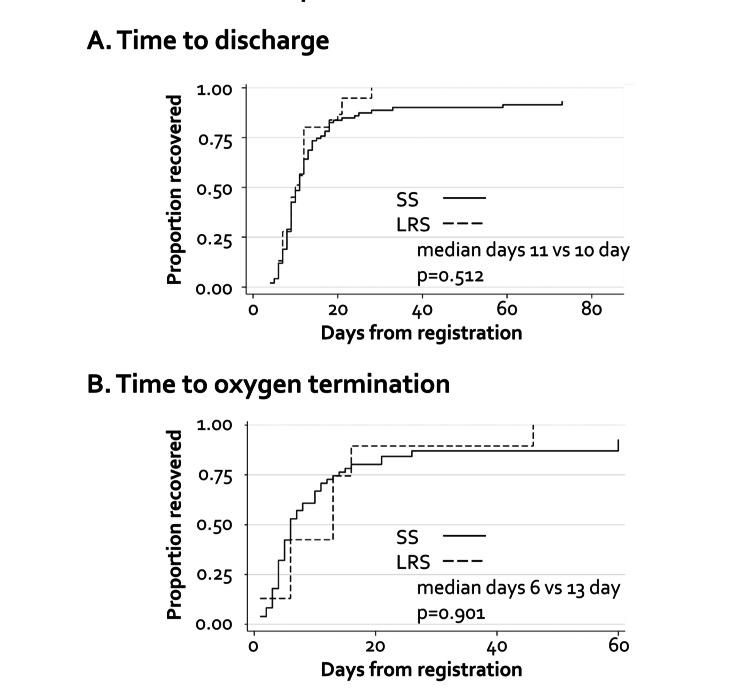
Twelve patients were classified into the localized respiratory symptom group and the remaining 88 into the systemic symptom group. No significant differences between the groups were observed in the baseline characteristics, blood biomarkers, or clinical outcomes. The mortality rates were 0.0% and 4.6%, respectively. The median durations to discharge were 11 and 10 days, respectively (p=0.512). The levels of inflammatory and oxidative stress biomarkers, including interleukin-6 and hydroperoxides, were similar between the groups.
CONCLUSION
The symptom type at disease onset was not significantly associated with differences in clinical outcomes. Comprehensive assessments beyond initial symptoms are crucial for predicting disease progression and optimizing management strategies.
背景
2019冠状病毒病(COVID-19)的临床表现范围从咳嗽和喉咙痛等局部呼吸道症状到发热和疲劳等全身症状。据我们所知,尚无研究通过将发病症状分为局部呼吸道症状和其他症状来评估重症疾病风险。我们旨在确定COVID-19重症风险是否因发病时症状是否仅限于局部呼吸道症状而有所不同。
方法
这是一项多中心前瞻性队列研究。根据发病时的症状将患者分为局部呼吸道症状组或全身症状组。比较人口统计学数据、血液生物标志物和临床结局,包括死亡率、插管、入住重症监护病房情况及出院时间。本研究纳入了2020年7月至2021年8月期间诊断为COVID-19的100例成年患者。
结果
12例患者被分类为局部呼吸道症状组,其余88例为全身症状组。两组在基线特征、血液生物标志物或临床结局方面未观察到显著差异。死亡率分别为0.0%和4.6%。中位出院时间分别为11天和10天(p = 0.512)。两组间炎症和氧化应激生物标志物水平,包括白细胞介素-6和氢过氧化物水平相似。
结论
疾病发病时的症状类型与临床结局差异无显著关联。除初始症状外的综合评估对于预测疾病进展和优化管理策略至关重要。
 Zotero 插件