Tian Dongxing, Zhao Mingqi, Liu Lihua, Lu Shuhua, Dong Haixin
Department of Clinical Laboratory, Affiliated Hospital of Jining Medical University, Jining, Shandong, China.
Institute of traditional Chinese medicine, Postdoctoral Mobile Station of Shandong University of Traditional Chinese Medicine, Jinan, Shandong, China.
Front Cell Infect Microbiol. 2025 Jun 12;15:1548300. doi: 10.3389/fcimb.2025.1548300. eCollection 2025.
The global rise in infections caused by hypervirulent and carbapenem-resistant (CR-hvKp) represents a growing public health threat. This study investigates ST65 CR-hvKp strains, with a focus on their genomic attributes and the mechanisms underlying the transmission of non-conjugative virulence plasmids.
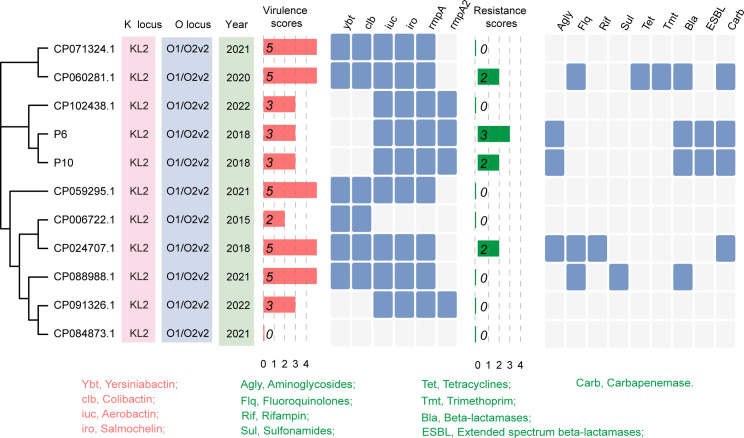
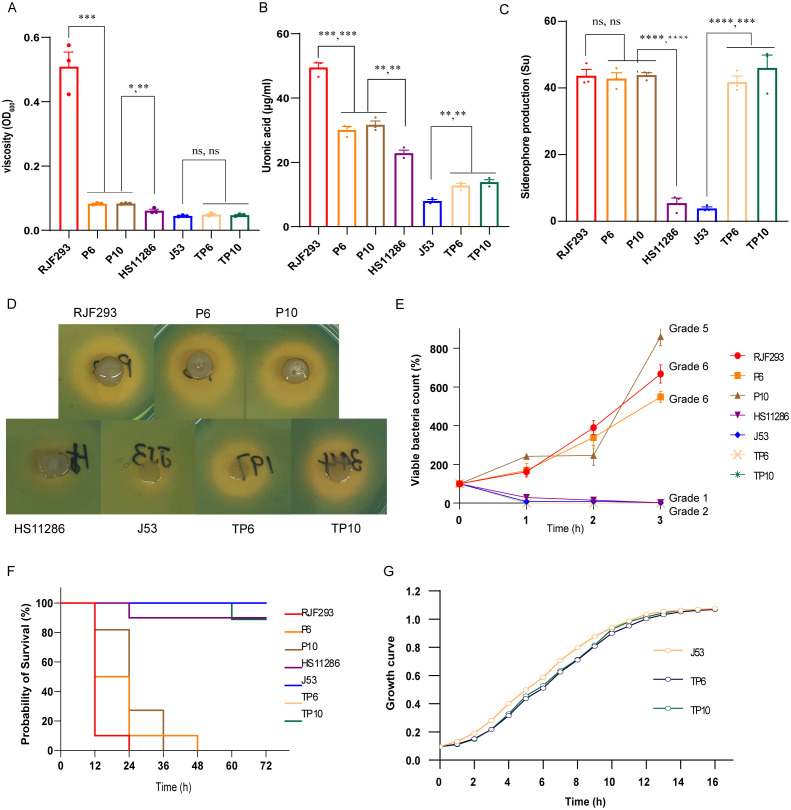
Two clinical K2-ST65 CR-hvKp isolates (P6 and P10) were identified. Plasmid conjugation experiments were performed to assess the dissemination of the virulence plasmid. Antimicrobial susceptibility testing and virulence assays, including serum resistance, siderophore production, and larvae infection models, were used to characterize resistance and virulence phenotypes. Comprehensive bioinformatic analyses were performed to explore genetic evolution.
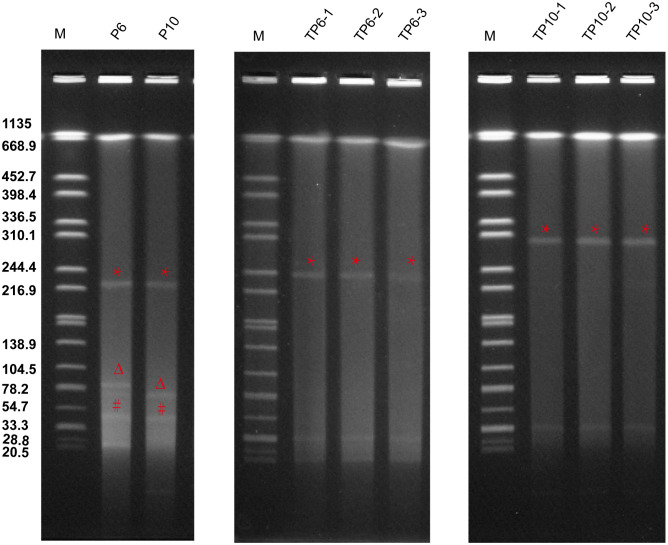
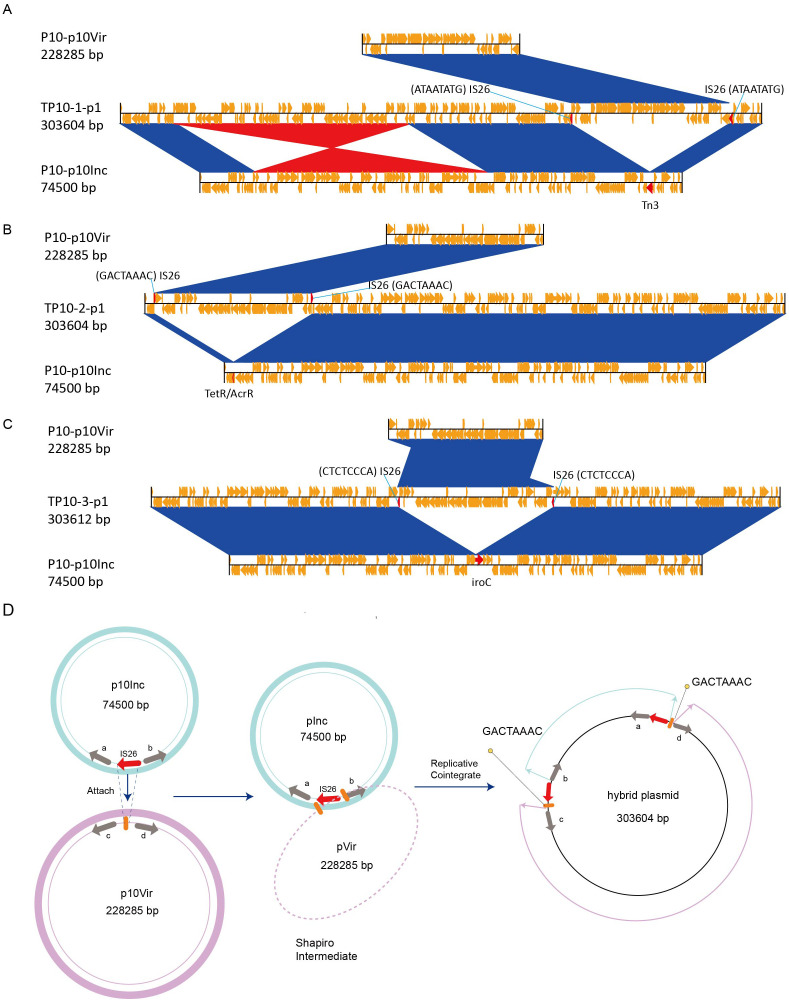
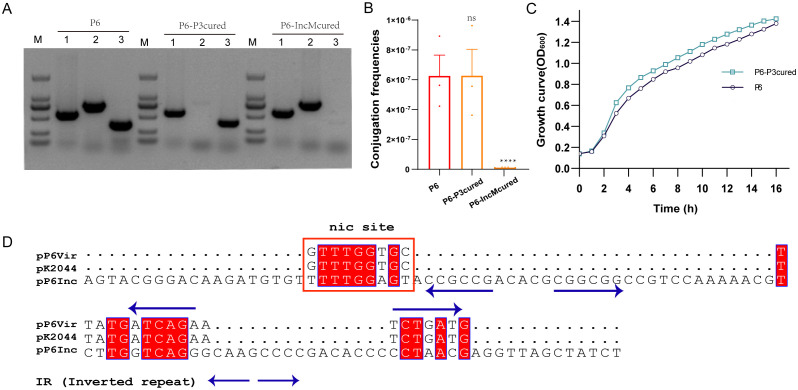
Genomic analyses showed that both P6 and P10 carry a non-conjugative virulence plasmid, a conjugative untyped KPC plasmid, and a conjugative IncM2 plasmid. These isolates displayed broad-spectrum anti-microbial resistance and multiple virulence phenotypes, although they failed to sustain both hypervirulence and carbapenem resistance over time. The IncM2 plasmid was shown to be essential for the transfer of non-conjugative virulence plasmid. Mechanistic studies highlighted IS-mediated plasmid fusion and the role of IncM2 plasmids in mobilizing non-conjugative virulence plasmids. The resulting transconjugants exhibited multidrug resistance, enhanced capsule production, and increased siderophore production.
This study provides new insights into the genomic dynamics of ST65-CR-hvKp strains and uncovers key mechanisms, such as IS-mediated plasmid fusion and IncM2-mediated mobilization, which facilitate the dissemination of non-conjugative virulence plasmids. Understanding these mechanisms is crucial for developing effective strategies to manage and prevent the spread of these clinically challenging strains.
高毒力和耐碳青霉烯类(CR-hvKp)引起的感染在全球范围内不断增加,对公共卫生构成了日益严重的威胁。本研究调查ST65 CR-hvKp菌株,重点关注其基因组特征以及非接合型毒力质粒的传播机制。
鉴定出两株临床K2-ST65 CR-hvKp分离株(P6和P10)。进行质粒接合实验以评估毒力质粒的传播。采用抗菌药敏试验和毒力测定,包括血清抗性、铁载体产生和幼虫感染模型,来表征抗性和毒力表型。进行全面的生物信息学分析以探索遗传进化。
基因组分析表明,P6和P10均携带非接合型毒力质粒、接合型未分型KPC质粒和接合型IncM2质粒。这些分离株表现出广谱抗菌抗性和多种毒力表型,尽管随着时间推移它们无法同时维持高毒力和碳青霉烯类抗性。IncM2质粒被证明对于非接合型毒力质粒的转移至关重要。机制研究强调了IS介导的质粒融合以及IncM2质粒在动员非接合型毒力质粒中的作用。产生的接合子表现出多重耐药性、增强的荚膜产生和增加的铁载体产生。
本研究为ST65-CR-hvKp菌株的基因组动态提供了新的见解,并揭示了关键机制,如IS介导的质粒融合和IncM2介导的动员,这些机制促进了非接合型毒力质粒的传播。了解这些机制对于制定有效策略来管理和预防这些具有临床挑战性的菌株的传播至关重要。