Naderi Tehrani Monireh, Hamidi Gholam Ali, Heydari Azhdar, Nasrollahi Saeedeh, Aghighi Fatemeh, Salami Mahmoud
Physiology Research Center, Institute for Basic Sciences, Kashan University of Medical Sciences, Kashan, Iran.
Basic Clin Neurosci. 2024 Sep-Oct;15(5):659-670. doi: 10.32598/bcn.2024.5523.1. Epub 2024 Sep 1.
Partial peripheral nerve injury often results in chronic pain, including hyperalgesia and allodynia. Caffeine, as a non-selective antagonist of adenosine receptors (ARs), has protective effects on neuropathic pain. Since nitric oxide (NO) is partially involved in the central effects of caffeine, we investigated the effects of acute caffeine administration on neuropathic pain, focusing on A and A receptors and the possible role of NO.
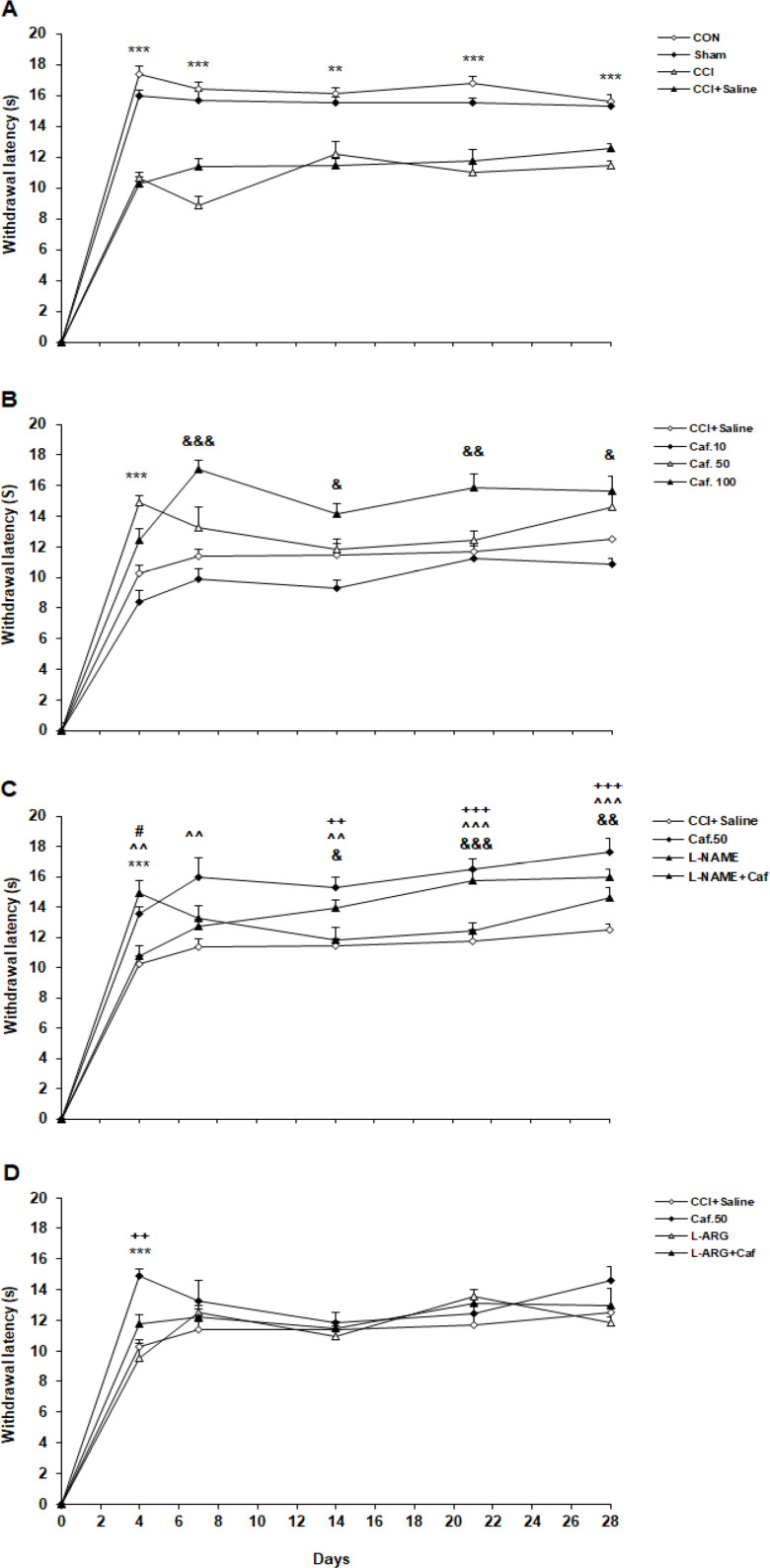
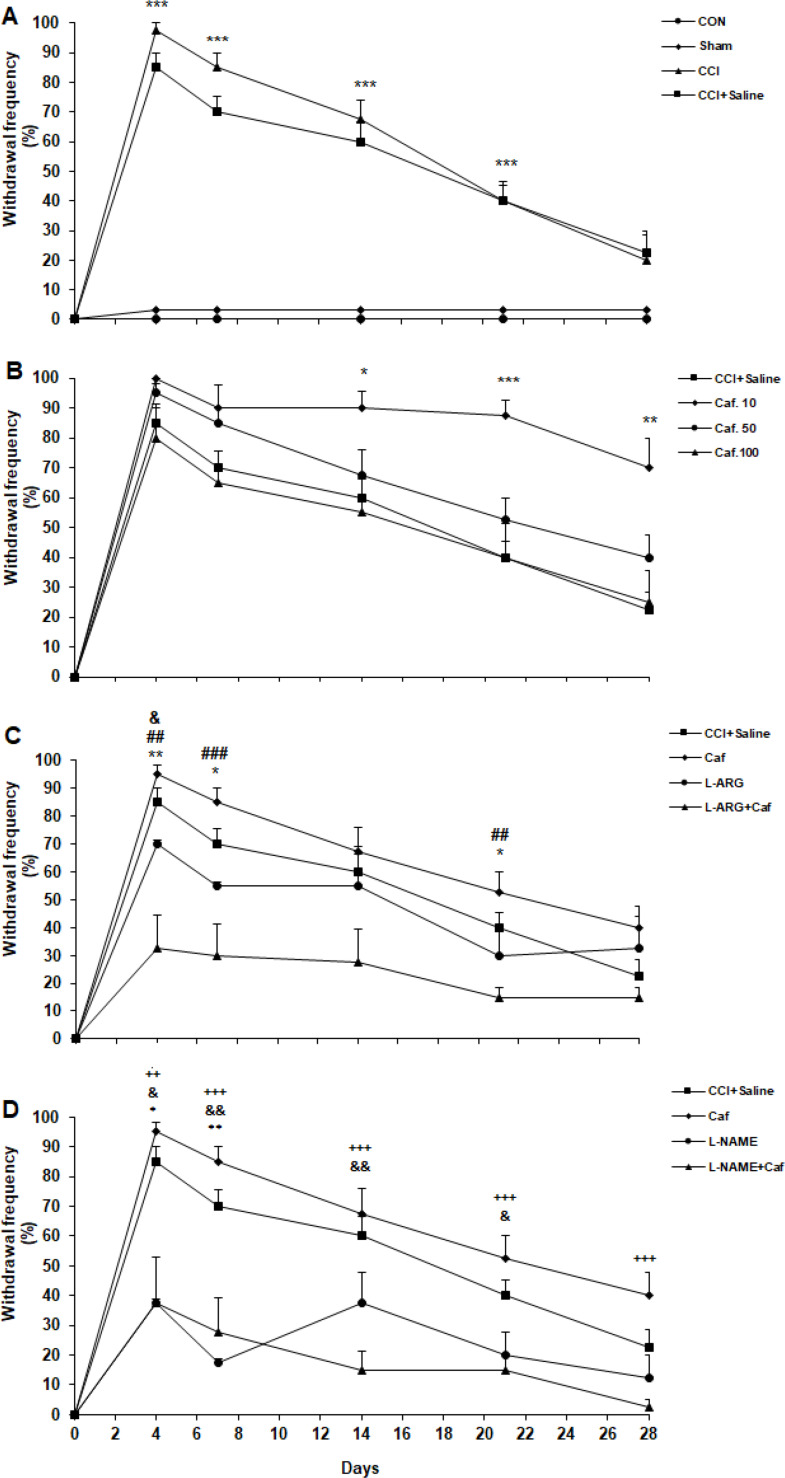
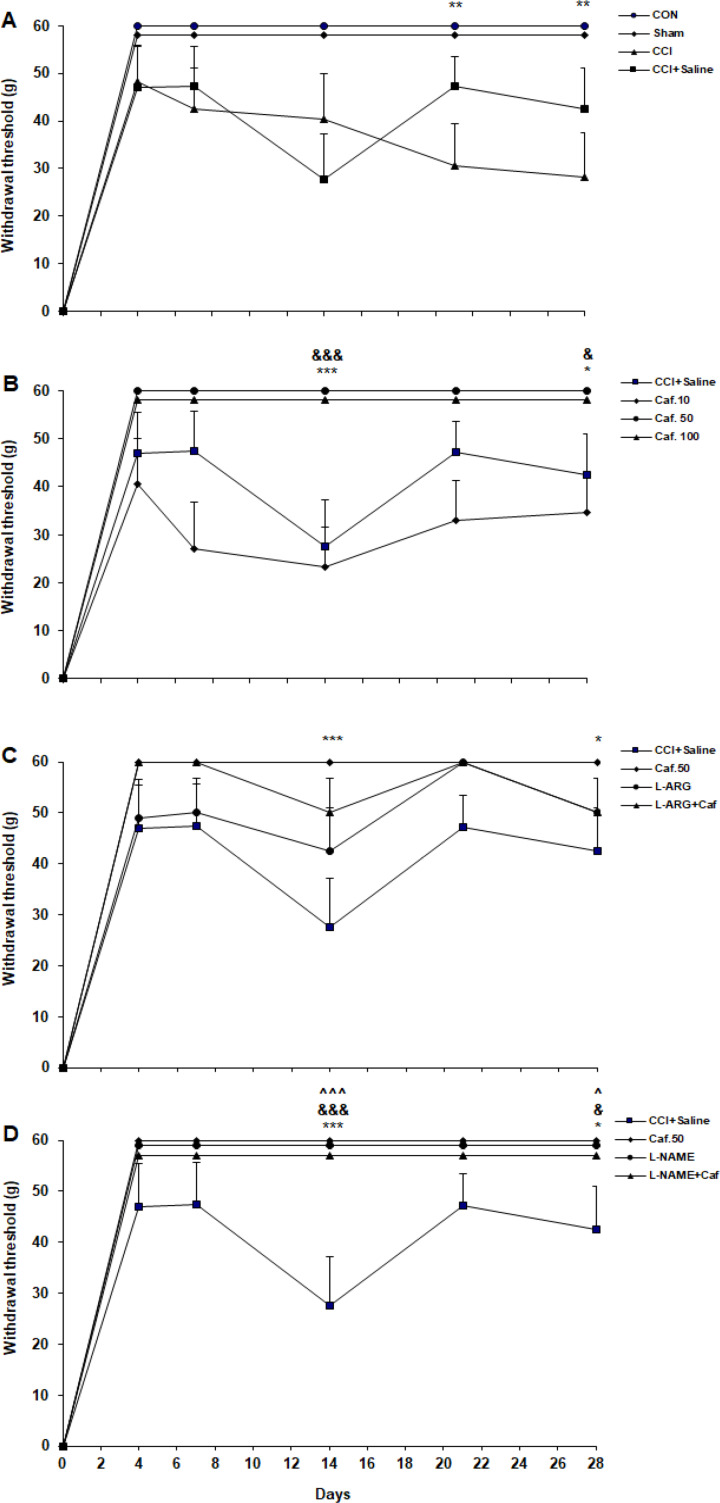
Following chronic constriction injury (CCI), male Wistar rats were administered caffeine (10, 50, and 100 mg/kg). Also, groups of animals received L-NAME (30 mg/kg) or L-arginine (100 mg/kg) either alone or before treatment with 50 mg/kg of caffeine. Rats were tested for hyperalgesia and allodynia at 4, 7, 14, 21, and 28 days following CCI.
Administration of 10 mg/kg of caffeine significantly increased cold allodynia, while 50 and 100 mg/kg of caffeine decreased mechanical allodynia and thermal hyperalgesia. Pre-treatment with L-NAME before caffeine administration decreased cold and mechanical allodynia and thermal hyperalgesia. Treatment with L-arginine before caffeine administration increased thermal hyperalgesia and decreased cold allodynia.
The present data show that caffeine dose-dependently affects the pro-analgesic or anti-analgesic states in the CCI model.
部分周围神经损伤常导致慢性疼痛,包括痛觉过敏和异常性疼痛。咖啡因作为腺苷受体(ARs)的非选择性拮抗剂,对神经性疼痛具有保护作用。由于一氧化氮(NO)部分参与了咖啡因的中枢作用,我们研究了急性给予咖啡因对神经性疼痛的影响,重点关注A和A受体以及NO的可能作用。
在慢性缩窄损伤(CCI)后,给雄性Wistar大鼠给予咖啡因(10、50和100mg/kg)。此外,动物组单独或在给予50mg/kg咖啡因治疗前接受L-NAME(30mg/kg)或L-精氨酸(100mg/kg)。在CCI后的第4、7、14、21和28天对大鼠进行痛觉过敏和异常性疼痛测试。
给予10mg/kg咖啡因显著增加冷异常性疼痛,而50和100mg/kg咖啡因降低机械性异常性疼痛和热痛觉过敏。在给予咖啡因前用L-NAME预处理可降低冷和机械性异常性疼痛以及热痛觉过敏。在给予咖啡因前用L-精氨酸治疗可增加热痛觉过敏并降低冷异常性疼痛。
目前的数据表明,咖啡因在CCI模型中剂量依赖性地影响镇痛或抗镇痛状态。