Ilari Sara, Dagostino Concetta, Malafoglia Valentina, Lauro Filomena, Giancotti Luigino Antonio, Spila Antonella, Proietti Stefania, Ventrice Domenica, Rizzo Milena, Gliozzi Micaela, Palma Ernesto, Guadagni Fiorella, Salvemini Daniela, Mollace Vincenzo, Muscoli Carolina
Institute of Research for Food Safety & Health (IRC-FSH), Department of Health Science, University "Magna Graecia" of Catanzaro, 88100 Catanzaro, Italy.
Institute for Research on Pain, ISAL Foundation, 47922 Torre Pedrera, Italy.
Antioxidants (Basel). 2020 Dec 16;9(12):1284. doi: 10.3390/antiox9121284.
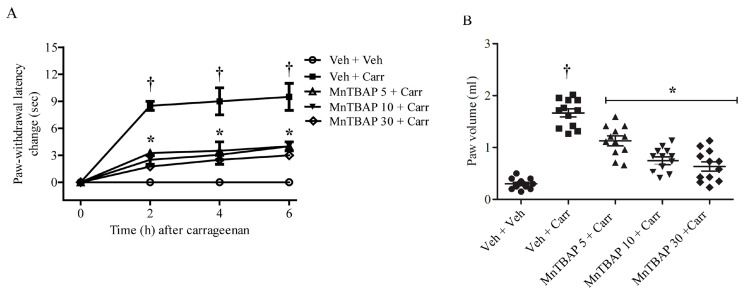
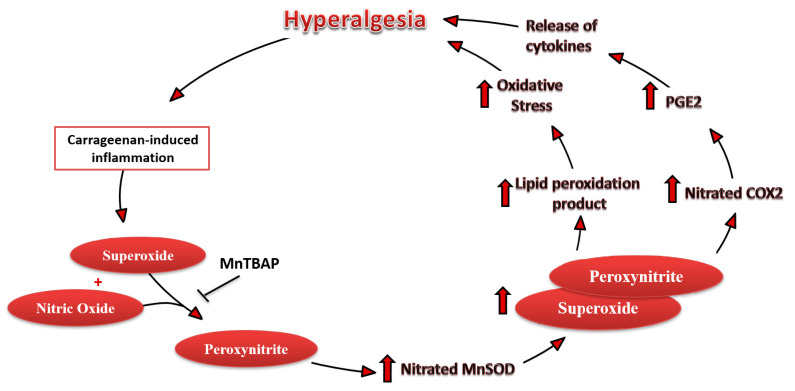
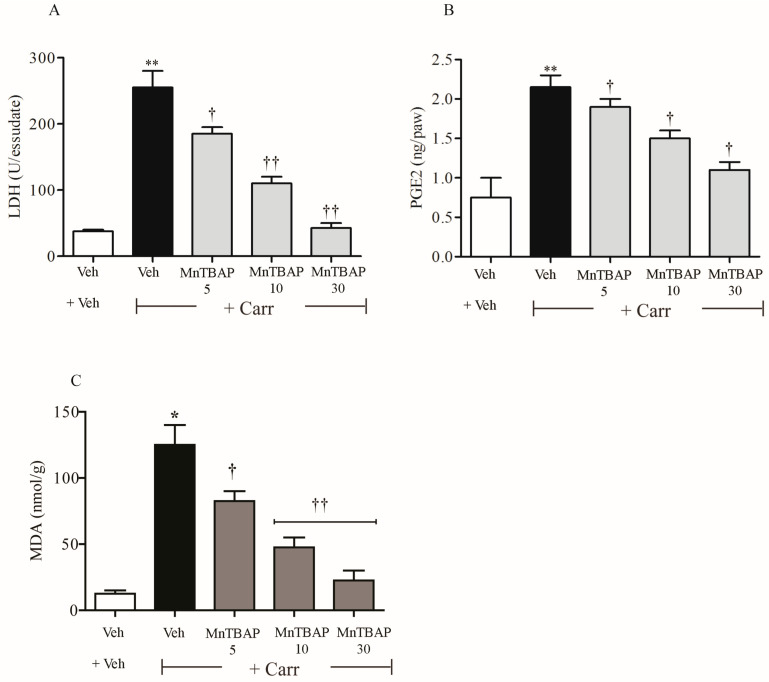
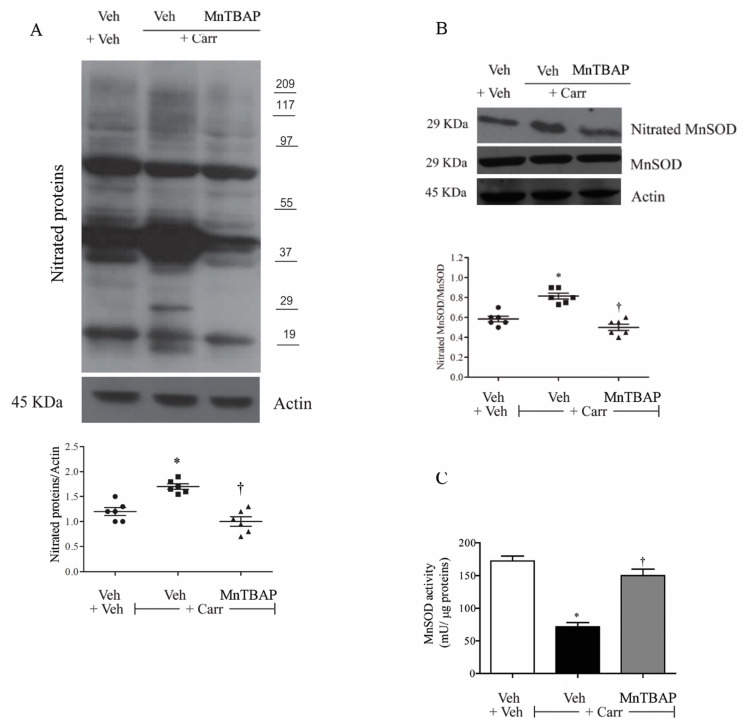
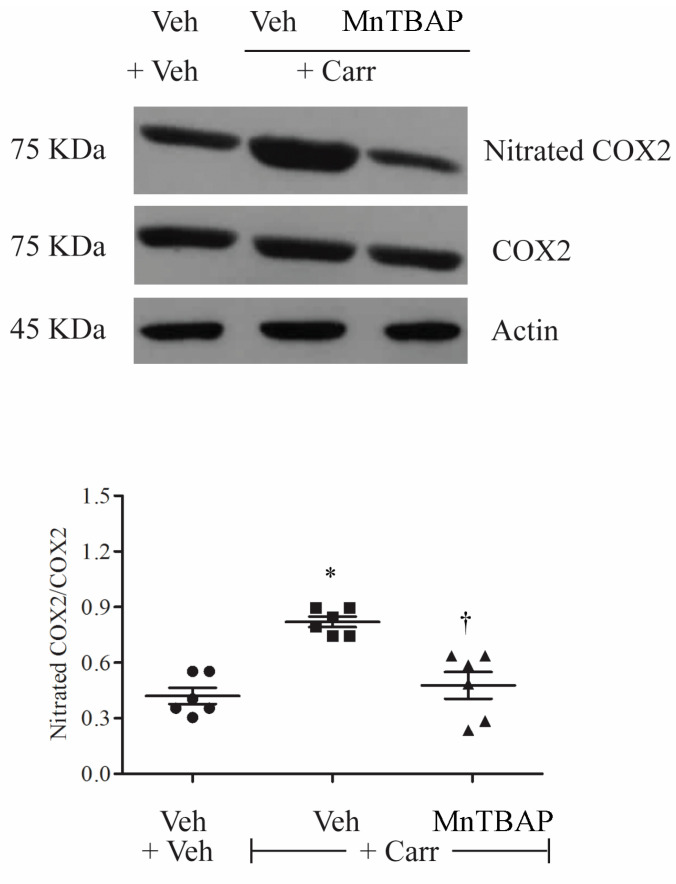
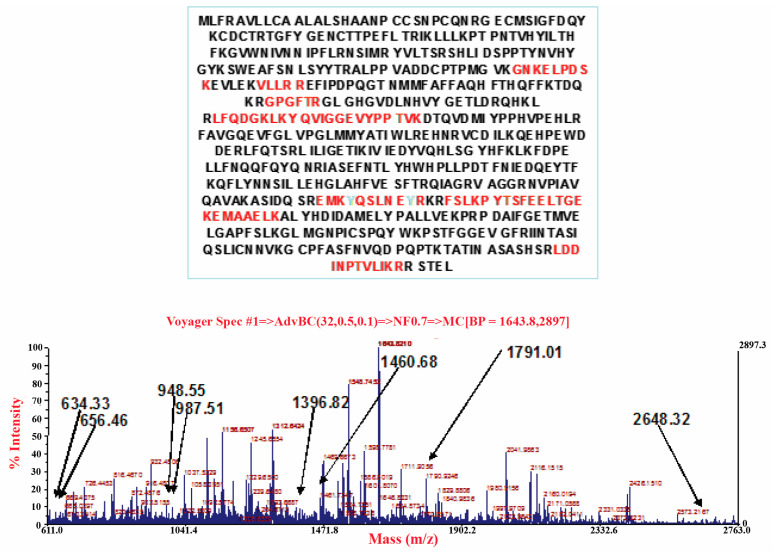
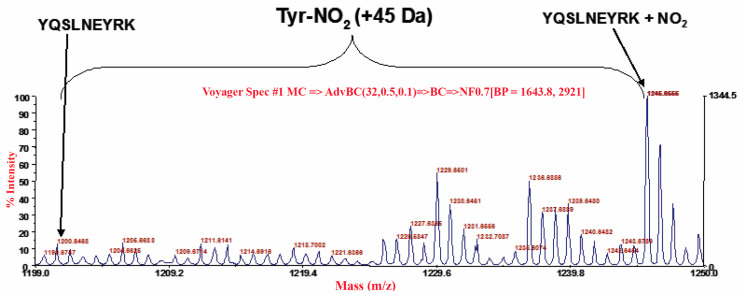
In clinical practice, inflammatory pain is an important, unresolved health problem, despite the utilization of non-steroidal anti-inflammatory drugs (NSAIDs). In the last decade, different studies have proven that reactive oxygen species (ROS) and reactive nitrogen species (RNS) are involved in the development and maintenance of inflammatory pain and hyperalgesia via the post-translation modification of key proteins, such as manganese superoxide dismutase (MnSOD). It is well-known that inducible cyclooxygenase 2 (COX-2) plays a crucial role at the beginning of the inflammatory response by converting arachidonic acid into proinflammatory prostaglandin PGE and then producing other proinflammatory chemokines and cytokines. Here, we investigated the impact of oxidative stress on COX-2 and prostaglandin (PG) pathways in paw exudates, and we studied how this mechanism can be reversed by using antioxidants during hyperalgesia in a well-characterized model of inflammatory pain in rats. Our results reveal that during the inflammatory state, induced by intraplantar administration of carrageenan, the increase of PGE levels released in the paw exudates were associated with COX-2 nitration. Moreover, we showed that the inhibition of ROS with Mn (III) tetrakis (4-benzoic acid) porphyrin(MnTBAP) antioxidant prevented COX-2 nitration, restored the PGE levels, and blocked the development of thermal hyperalgesia.
在临床实践中,尽管使用了非甾体抗炎药(NSAIDs),炎性疼痛仍是一个重要的、尚未解决的健康问题。在过去十年中,不同的研究已经证明,活性氧(ROS)和活性氮(RNS)通过对关键蛋白(如锰超氧化物歧化酶(MnSOD))的翻译后修饰,参与炎性疼痛和痛觉过敏的发生和维持。众所周知,诱导型环氧化酶2(COX-2)在炎症反应开始时通过将花生四烯酸转化为促炎前列腺素PGE,然后产生其他促炎趋化因子和细胞因子,发挥关键作用。在此,我们研究了氧化应激对爪部渗出液中COX-2和前列腺素(PG)途径的影响,并在一个特征明确的大鼠炎性疼痛模型中,研究了在痛觉过敏期间使用抗氧化剂如何逆转这一机制。我们的结果表明,在通过足底注射角叉菜胶诱导的炎症状态下,爪部渗出液中释放的PGE水平升高与COX-2硝化有关。此外,我们还表明,用锰(III)四(4-苯甲酸)卟啉(MnTBAP)抗氧化剂抑制ROS可防止COX-2硝化,恢复PGE水平,并阻止热痛觉过敏的发展。