Luthra Nijee S, Mehta Niyati, Munoz Miranda J, Fantuzzi Giamila, Lamotte Guillaume, Haus Jacob M, McFarland Nikolaus R, Tansey Malú G, Gonzalez-Latapi Paulina, Caraveo Gabriela, Kang Un Jung, Corcos Daniel M
Department of Neurology, University of California San Francisco, San Francisco, CA, USA.
Department of Physical Therapy and Human Movement Sciences, Northwestern University, Chicago, IL, USA.
NPJ Parkinsons Dis. 2025 Jul 1;11(1):190. doi: 10.1038/s41531-025-01042-8.
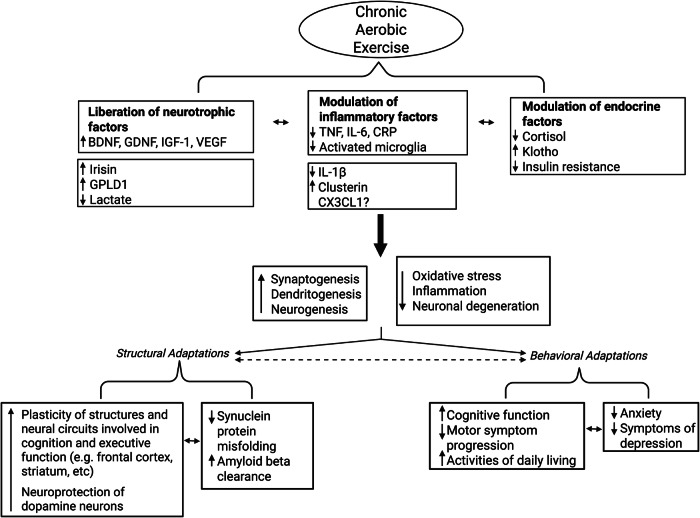
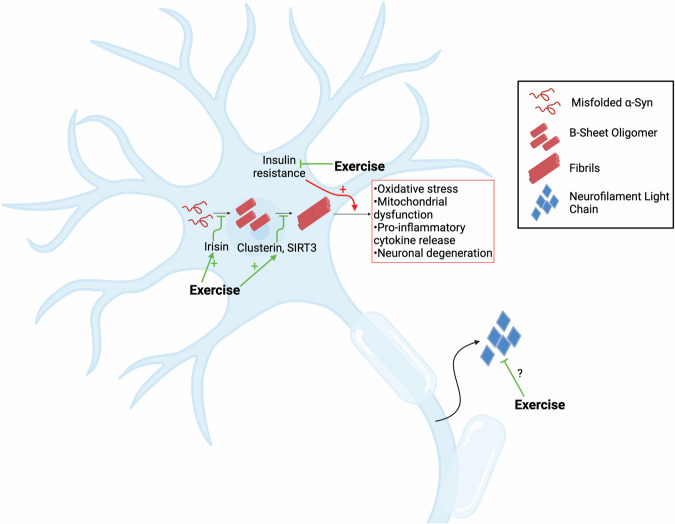
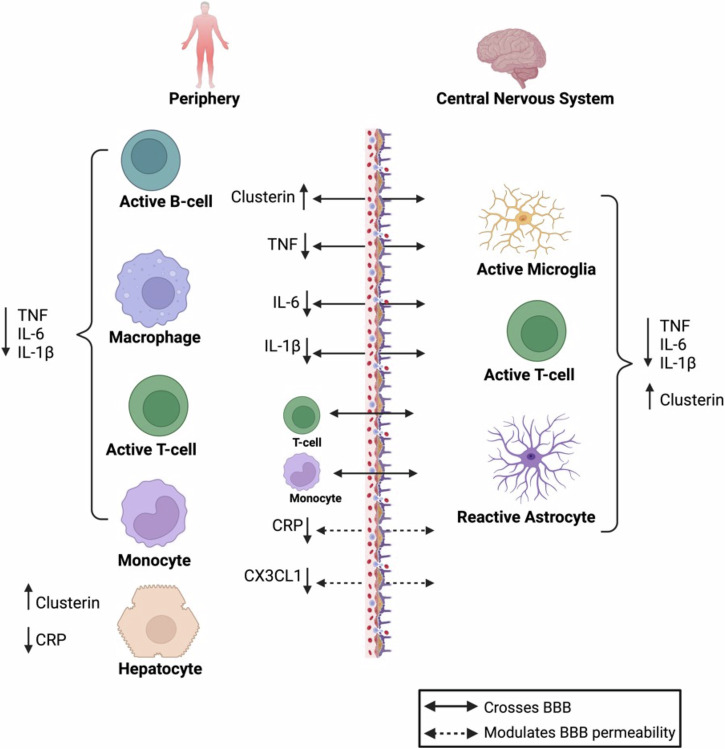
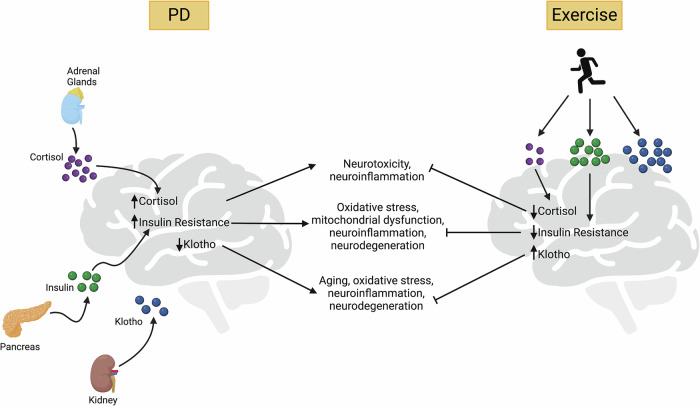
Parkinson's disease (PD) is a neurodegenerative disease characterized by motor and non-motor symptoms that progressively deteriorate and for which there is no disease-modifying pharmacological treatment. Exercise is widely recommended for individuals with PD due to its potential neuroprotective benefits. However, the mechanisms underlying these exercise-induced effects in PD remain poorly understood. Analyzing fluid biomarkers responsive to exercise could offer valuable insights into the mechanisms by which exercise impacts PD and aid in optimizing exercise prescriptions for individuals with PD. This review explores exercise-responsive biomarkers categorized into three key groups-neurotrophic, inflammatory, and neuroendocrine markers. It highlights both well-validated biomarkers and candidates with promising potential. We also highlight key biomarkers linked to PD pathology, such as α-synuclein, and their potential connection to exercise based on current evidence. Comprehensive characterization of these biomarkers will advance our understanding of the biological effects of exercise in PD, enabling mechanism-based and objective measures to evaluate exercise response in future clinical trials and its impact on PD signs and symptoms.
帕金森病(PD)是一种神经退行性疾病,其特征为运动和非运动症状会逐渐恶化,且尚无改变疾病进程的药物治疗方法。由于运动具有潜在的神经保护益处,因此广泛建议帕金森病患者进行运动。然而,运动在帕金森病中产生这些效应的潜在机制仍知之甚少。分析对运动有反应的液体生物标志物,可为运动影响帕金森病的机制提供有价值的见解,并有助于优化针对帕金森病患者的运动处方。本综述探讨了分为三个关键组的运动反应性生物标志物——神经营养、炎症和神经内分泌标志物。它既强调了经过充分验证的生物标志物,也强调了具有潜在前景的候选标志物。我们还强调了与帕金森病病理学相关的关键生物标志物,如α-突触核蛋白,以及基于当前证据它们与运动的潜在联系。对这些生物标志物的全面表征将增进我们对运动在帕金森病中的生物学效应的理解,从而在未来的临床试验中采用基于机制的客观方法来评估运动反应及其对帕金森病体征和症状的影响。