Altmann P, Fasching B, Rothschedl T, Matuschitz S, Krajnc N, Ebner J, Handgraaf M, Gottfried K, Rommer P S, Berger T, Wagner-Menghin M
Department of Neurology, Medical University of Vienna, Waehringer Guertel 18-20, 1090, Vienna, Austria.
Comprehensive Center for Clinical Neurosciences and Mental Health, Medical University of Vienna, Vienna, Austria.
BMC Med Educ. 2025 Jul 1;25(1):887. doi: 10.1186/s12909-025-07492-1.
Despite the essential role of interprofessional collaboration in neurology, to improve patient outcomes, targeted research on interprofessional learning (IPL) interventions during neurology clerkships remains limited. This study aimed to assess the impact of a brief interactive IPL workshop on interprofessional identity among medical students.
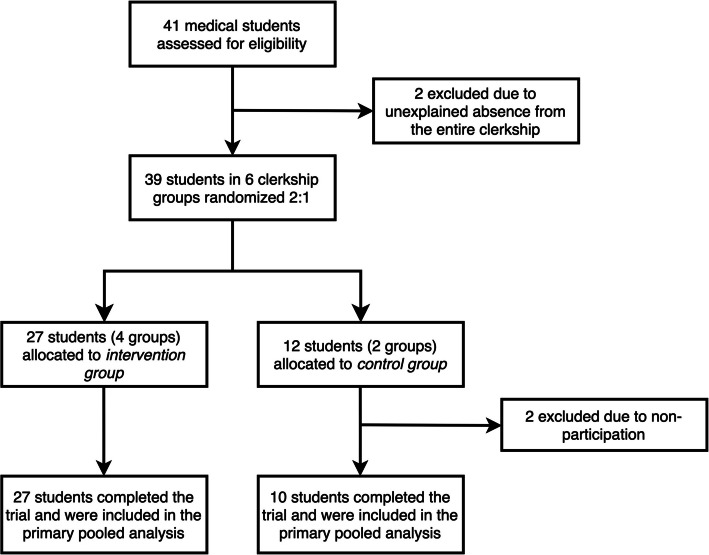
In this randomized controlled trial, neurology clerkship students (N = 39) were allocated to either a 90-min interactive IPL workshop or a non-interactive control session. We assessed outcomes by triangulating findings across Extended Professional Identity Scale (EPIS-G) scores, challenges and opportunities perceived by students, and reflective responses on interprofessional identity and applicability.
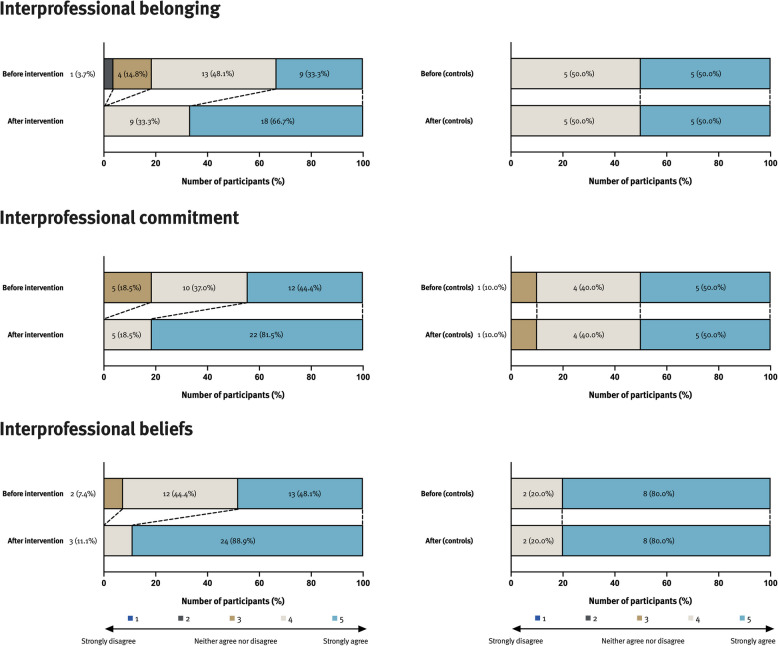
On a group level, The IPL intervention group (n = 27) demonstrated improvements in all domains of interprofessional identity on the EPIS-G (paired samples t-test, p < 0.001) which was not observed in the control group (n = 10). Communication challenges and resource limitations were primary concerns among students, while information sharing and enhanced patient care emerged as key opportunities. Qualitative analysis highlighted students' increased commitment to collaboration, openness to teamwork, and recognition of the patient care benefits inherent in collaborative practices.
An interactive 90-min IPL workshop within a neurology clerkship can initiate medical students' interprofessional identity formation. Students' insights into relevant challenges and opportunities indicate their basic understanding of the complexity of collaborative practice. This study supports the future integration of IPL specifically within neurology to advance collaborative practice.
尽管跨专业协作在神经病学中起着至关重要的作用,以改善患者预后,但针对神经病学实习期间跨专业学习(IPL)干预措施的针对性研究仍然有限。本研究旨在评估一次简短的互动式IPL工作坊对医学生跨专业身份认同的影响。
在这项随机对照试验中,神经病学实习学生(N = 39)被分配到90分钟的互动式IPL工作坊或非互动式对照组。我们通过综合扩展专业身份量表(EPIS-G)得分、学生感知到的挑战和机会以及对跨专业身份认同和适用性的反思性回答来评估结果。
在组间层面,IPL干预组(n = 27)在EPIS-G的所有跨专业身份认同领域均有改善(配对样本t检验,p < 0.001),而对照组(n = 10)未观察到这种情况。沟通挑战和资源限制是学生们的主要担忧,而信息共享和改善患者护理则成为关键机会。定性分析强调了学生们对协作的更多投入、对团队合作的开放性以及对协作实践中固有患者护理益处的认识。
神经病学实习期间90分钟的互动式IPL工作坊可以启动医学生的跨专业身份认同形成。学生们对相关挑战和机会的见解表明他们对协作实践复杂性的基本理解。本研究支持未来将IPL具体纳入神经病学领域以推进协作实践。