Chien Tung-Chun Russell, Weng Shao-En, Hsu Wan-Tseng
Graduate Institute of Clinical Pharmacy, College of Medicine, National Taiwan University, Taipei, Taiwan.
School of Pharmacy, College of Medicine, National Taiwan University, Taipei, Taiwan.
Patient Prefer Adherence. 2025 Jun 26;19:1855-1868. doi: 10.2147/PPA.S527419. eCollection 2025.
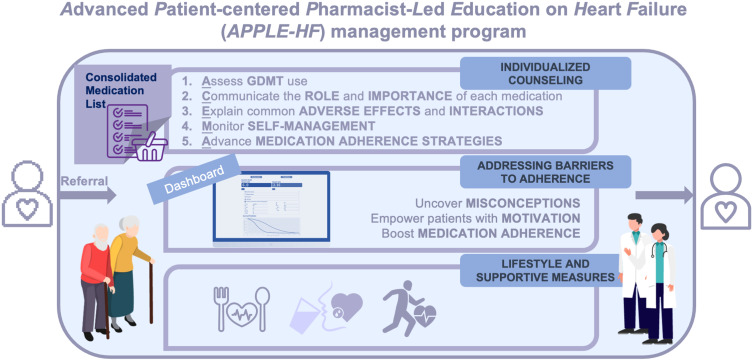
Heart failure (HF) remains a major global health challenge. Guideline-directed medical therapy can effectively reduce mortality and hospitalizations; however, persistent medication nonadherence hinders its real-world impact. Although recent guidelines emphasize the pivotal role of pharmacists in supporting medication adherence, the mechanisms through which pharmacist-led patient education influences medication adherence remain underexplored. Identifying these mechanisms could inform the development of evidence-based strategies to optimize medication adherence and ultimately improve long-term outcomes in HF management.
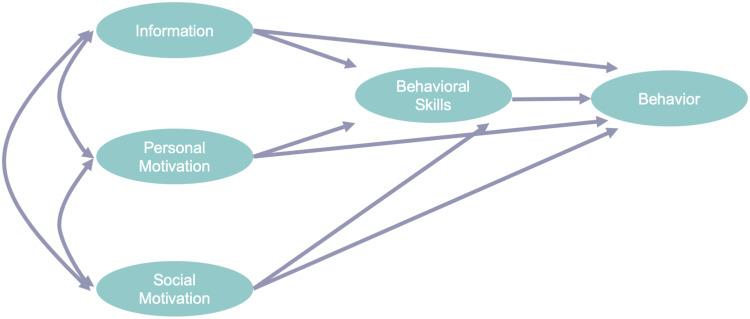
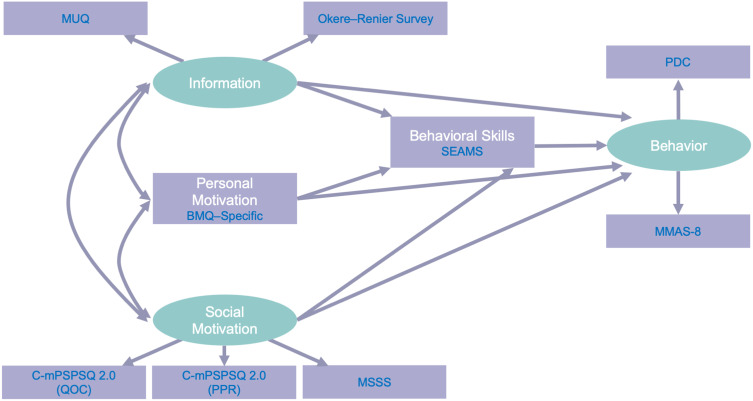
This study aims to establish an Information-Motivation-Behavioral Skills (IMB) model to elucidate the mechanisms influencing medication adherence among patients with HF and to compare pre- and postintervention models for identifying significant pathways affected by pharmacist-led patient education.
In this longitudinal pretest-posttest study, all IMB constructs-information, personal motivation, social motivation, behavioral skills, and behavior-will be assessed using validated patient-reported outcome measures (PROMs) at baseline and three and six months postintervention; additionally, verbal inquiries will be conducted to evaluate the information construct and prescription refill data will be incorporated to supplement the behavior construct. Multigroup structural equation modeling will examine relationships among these constructs and their impact on medication adherence. Latent class growth modeling will also be employed to identify distinct adherence trajectory subgroups after six-month follow-up.
The recruitment phase commenced in early May 2025. By evaluating structural changes in IMB pathways pre- and postintervention using PROMs, followed by identifying short-term and sustained responders, the study is expected to facilitate the precise targeting of pharmacist-led interventions to maximize clinical impact. This approach emphasizes the importance of tailoring healthcare delivery to individual medication adherence profiles. It aims to ensure that pharmacist-led patient education achieves its fullest potential in populations expected to benefit the most, particularly patients with HF-a perspective that, to our knowledge, has not been previously explored.
心力衰竭(HF)仍然是一项重大的全球健康挑战。指南指导的药物治疗可有效降低死亡率和住院率;然而,持续的用药不依从阻碍了其在现实世界中的效果。尽管近期指南强调了药剂师在支持用药依从性方面的关键作用,但药剂师主导的患者教育影响用药依从性的机制仍未得到充分探索。确定这些机制可为制定基于证据的策略提供依据,以优化用药依从性并最终改善心力衰竭管理的长期结果。
本研究旨在建立信息-动机-行为技能(IMB)模型,以阐明影响心力衰竭患者用药依从性的机制,并比较干预前后的模型,以确定受药剂师主导的患者教育影响的重要途径。
在这项纵向的干预前-干预后研究中,所有IMB构建要素——信息、个人动机、社会动机、行为技能和行为——将在基线以及干预后3个月和6个月使用经过验证的患者报告结局测量指标(PROMs)进行评估;此外,将进行口头询问以评估信息构建要素,并纳入处方 refill 数据以补充行为构建要素。多组结构方程模型将检验这些构建要素之间的关系及其对用药依从性的影响。潜在类别增长模型也将用于在6个月随访后识别不同的依从轨迹亚组。
招募阶段于2025年5月初开始。通过使用PROMs评估干预前后IMB途径的结构变化,然后识别短期和持续反应者,预计该研究将有助于精准定位药剂师主导的干预措施,以最大化临床影响。这种方法强调了根据个体用药依从性概况调整医疗服务的重要性。其目的是确保药剂师主导的患者教育在预期受益最大的人群中发挥最大潜力,特别是心力衰竭患者——据我们所知,这一观点此前尚未得到探索。