Fu Leihua, Yu Jieni, Wang Xin, Chen Zhe, Sun Jiaying, Gao Feidan, Zhang Zhijian, Fu Jiaping, Hong Pan, Feng Weiying
Department of Hematology, Shaoxing People's Hospital, Shaoxing City, Zhejiang Province, China.
Department of Genome Science and Microbiology, Faculty of Medical Sciences, University of Fukui, Fukui, Japan.
Int J Genomics. 2025 Jun 24;2025:9595651. doi: 10.1155/ijog/9595651. eCollection 2025.
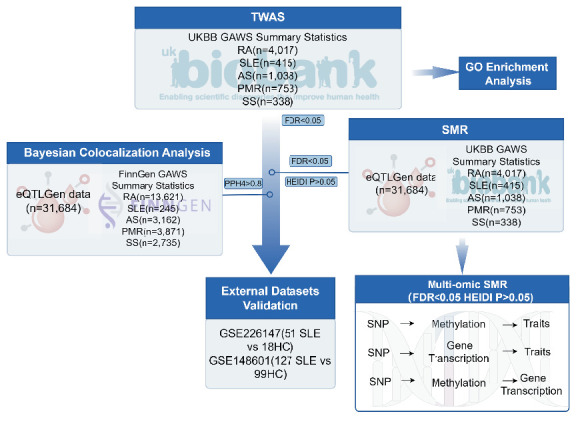
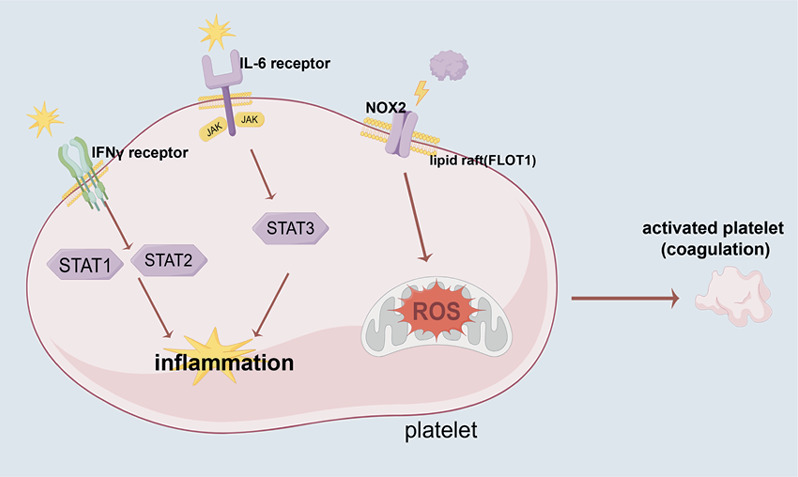
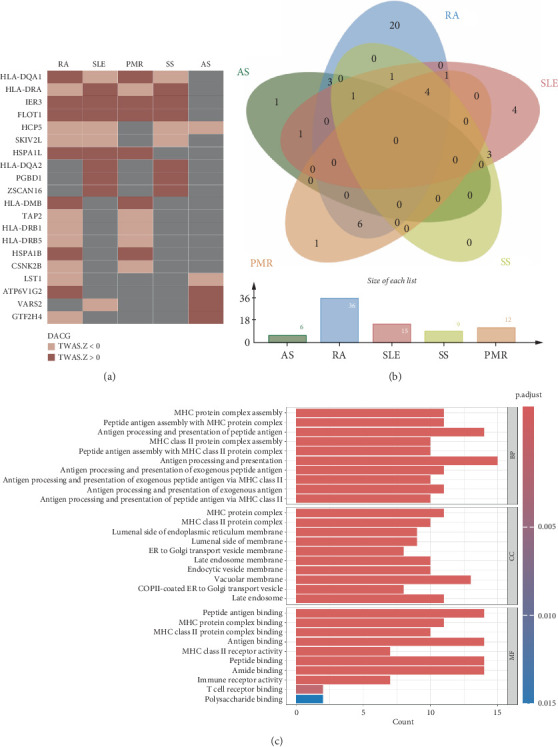
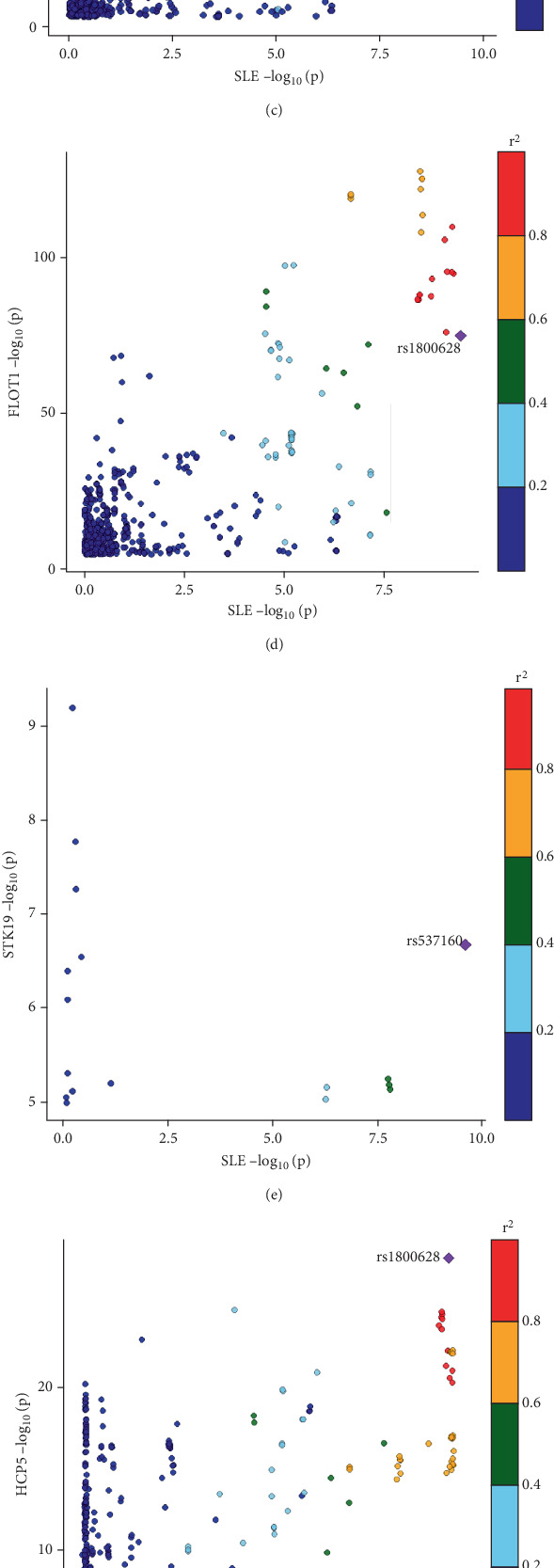
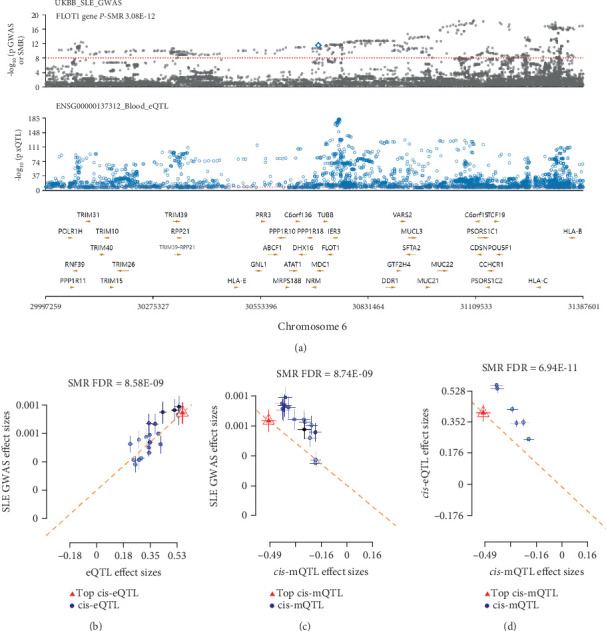
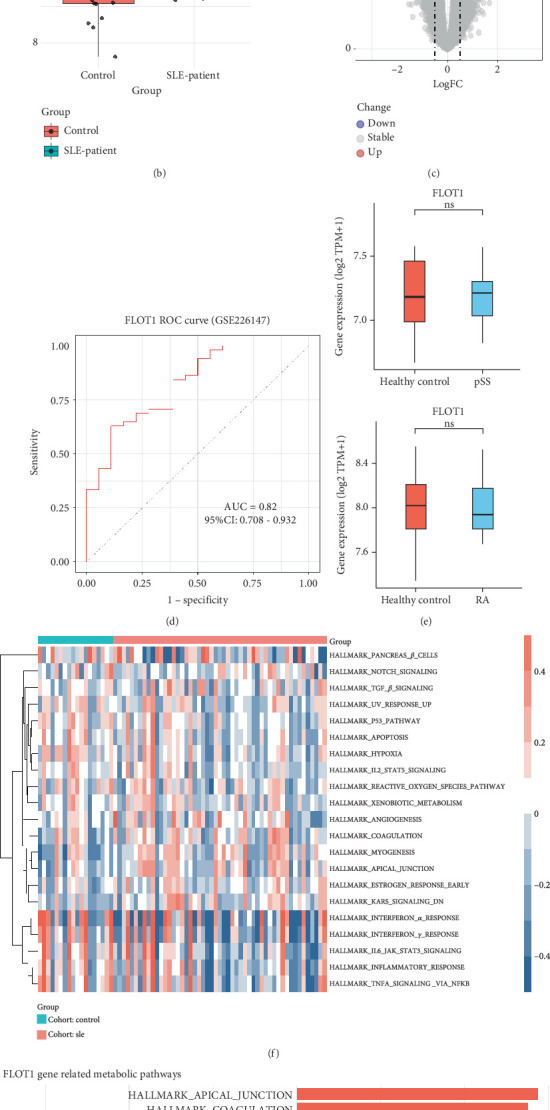
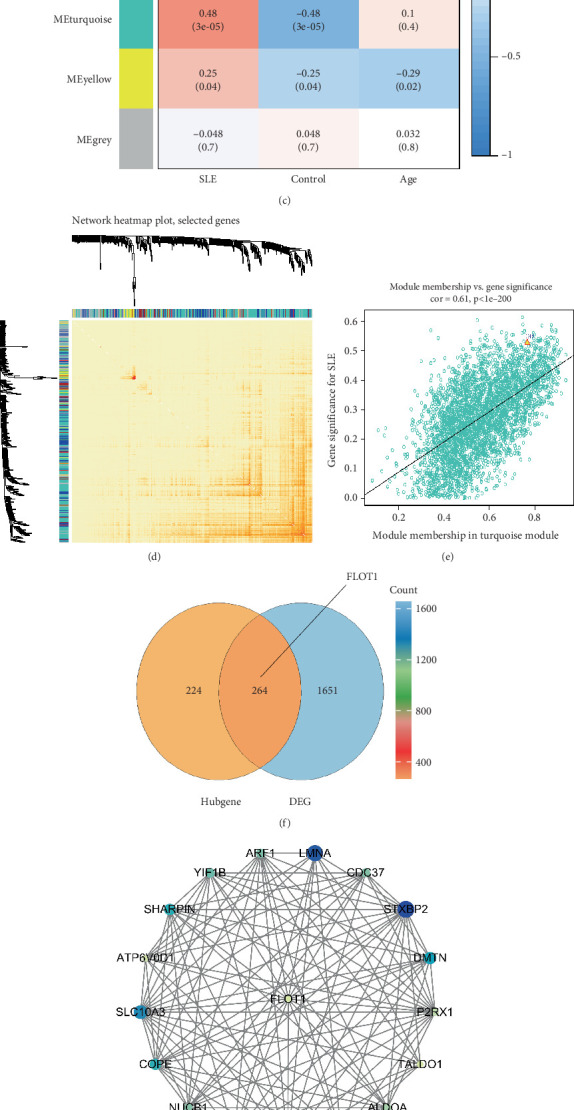
Autoimmune diseases exhibit familial clustering and co-occurrence, suggesting the presence of shared genetic risk factors. However, the overlapping genetic factors across these diseases have yet to be fully elucidated. This study aimed to identify shared genetic factors across five autoimmune diseases: systemic lupus erythematosus (SLE), rheumatoid arthritis (RA), ankylosing spondylitis (AS), Sjögren's syndrome (SS), and polymyalgia rheumatica (PMR). A blood tissue-based transcriptome-wide association study (TWAS) was conducted to identify candidate genes. Bayesian colocalization analysis was employed to pinpoint genetic variants shared across diseases. Multiomics summary data-based Mendelian randomization (SMR) was used to identify causal risk genes, while transcriptomic analysis, gene set variation analysis (GSVA), and weighted gene coexpression network analysis (WGCNA) were applied to further investigate the functional roles of these genes. The TWAS identified 78 candidate genes across the five autoimmune diseases. Bayesian colocalization analysis revealed five genes, GTF2H4, FLOT1, HCP5, IER3, and STK19, that share genetic variants across these disorders. Specifically, RA and AS shared independent variants of GTF2H4 (rs2230365 and rs147708689, respectively). HCP5 variants were shared with SS (rs1800628) and SLE (rs1150757), and rs1800628 was also identified as a shared locus in FLOT1 for SLE. SMR analysis highlighted FLOT1 as a strong causal risk gene for SLE. Transcriptomic analysis showed that FLOT1 is highly expressed in T cells and platelets, with involvement in multiple metabolic pathways. WGCNA identified four key neighboring genes, EHD1, SLC10A3, LMNA, and STXBP2, associated with FLOT1. This study uncovers shared genetic factors across five autoimmune diseases, with FLOT1 identified as a novel causal risk gene for SLE. These findings suggest that platelet-mediated pathogenic mechanisms may contribute to SLE, providing a potential target for future therapeutic interventions.
自身免疫性疾病呈现家族聚集性和共现性,提示存在共同的遗传风险因素。然而,这些疾病之间重叠的遗传因素尚未得到充分阐明。本研究旨在确定五种自身免疫性疾病(系统性红斑狼疮(SLE)、类风湿关节炎(RA)、强直性脊柱炎(AS)、干燥综合征(SS)和风湿性多肌痛(PMR))之间的共同遗传因素。进行了一项基于血液组织的全转录组关联研究(TWAS)以确定候选基因。采用贝叶斯共定位分析来确定疾病间共享的遗传变异。基于多组学汇总数据的孟德尔随机化(SMR)用于识别因果风险基因,同时应用转录组分析、基因集变异分析(GSVA)和加权基因共表达网络分析(WGCNA)进一步研究这些基因的功能作用。TWAS在这五种自身免疫性疾病中鉴定出78个候选基因。贝叶斯共定位分析揭示了五个基因,即GTF2H4、FLOT1、HCP5、IER3和STK19,它们在这些疾病中共享遗传变异。具体而言,RA和AS分别共享GTF2H4的独立变异(分别为rs2230365和rs147708689)。HCP5变异与SS(rs1800628)和SLE(rs1150757)共享,并且rs1800628也被确定为FLOT1中SLE的共享位点。SMR分析强调FLOT1是SLE的一个强因果风险基因。转录组分析表明,FLOT1在T细胞和血小板中高表达,参与多种代谢途径。WGCNA确定了与FLOT1相关的四个关键邻近基因,即EHD1、SLC10A3、LMNA和STXBP2。本研究揭示了五种自身免疫性疾病之间的共同遗传因素,其中FLOT1被确定为SLE的一个新的因果风险基因。这些发现表明血小板介导的致病机制可能导致SLE,为未来的治疗干预提供了一个潜在靶点。