Rauf Muhammad, Naveed Muhammad, Munir Muhammad, Ghafoor Abdul, Sattar Muhammad Naeem, Ali-Dinar Hassan, Mohamed Hisham A, Bashir Muhammad Asaad, Asif Muhammad, Mustafa Adnan
Institute of Soil and Environmental Sciences, University of Agriculture, Faisalabad, Pakistan.
College of Urban and Environmental Science, Northwest University, Xi'an, 710127, China.
BMC Plant Biol. 2025 Jul 4;25(1):875. doi: 10.1186/s12870-025-06906-y.
Heavy metals especially cadmium (Cd), has become a matter of concern for environmentalists due to extensive industrialization and poor management of industrial waste. As a toxic pollutant, Cd has ability to deteriorate soil quality and hence disturbs the plant growth and yield. Co-composted biochar (COMBI) has been reported as an excellent organic amendment for improving soil quality, crop productivity and amelioration of heavy metals polluted soil. Therefore, an experiment was performed to assess the potential of co-composted biochar to enhance sunflower growth under Cd stressed soil. Different concentrations 0, 30 and 60 mg kg Cd and normal, modified and co-composted biochar at the rate of 1% (w/w) were applied to soil.
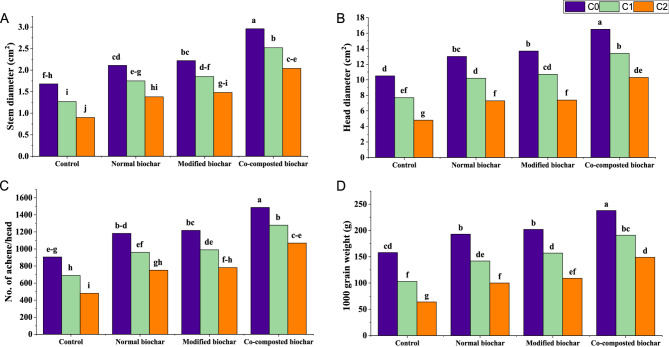
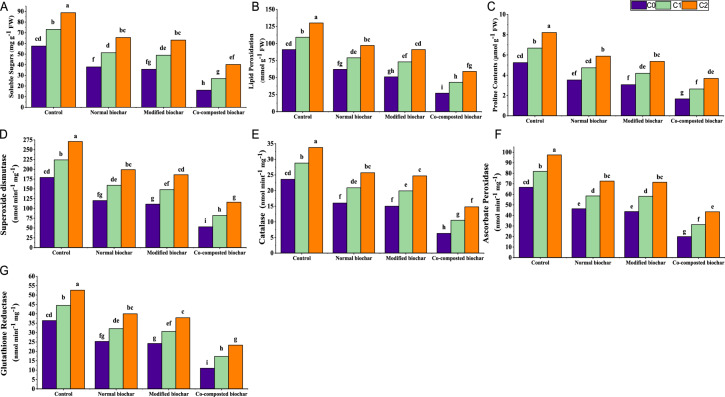
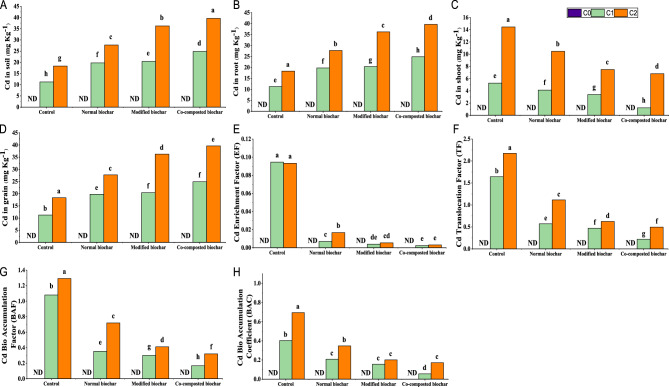
The application of normal and modified biochar considerably improved the sunflower growth, yield, physiology and biochemistry and decreased the Cd uptake in plant tissues. Among applied amendments, co-composted biochar showed better results, by increasing the crop agronomic parameters ranging from 115 to 132%, as compared to control treatment under Cd stress. The chlorophyll content, water use efficiency (WUE), photosynthetic rate (A), transpiration rate (E), stomatal conductance (gs), sub-stomatal conductance (Ci), relative water content (RWC), and electrolyte leakage (EL) were improved by 122, 117, 126, 133, 128, 131, 123, and 121%, respectively, when co-composted biochar was used compared to the control. Moreover, stress related metabolites and antioxidant enzyme essays showed increase in proline content, soluble sugars, lipid peroxidation, catalase (CAT), ascorbate peroxidase (APX), superoxide dismutase (SOD) and glutathione reductase (GR) by using co-composted biochar by 123, 121, 118, 128, 124, 133 and 126%, respectively, in Cd (60 mg kg) contaminated soil. In addition to this, a prominent reduction in accumulation of Cd in the root (66%), shoot (77%) and grain (94%) was observed due to its immobilization in soil (121%) under the influence of co-composted biochar application.
The results of this study revealed that application of biochar could improve crop growth and immobilize Cd in soil and co-composted biochar could be adopted as a better strategy to remediate the heavy metal stressed soils. It can be considered as an effective practical approach to transform agricultural waste materials into organic soil amendments to be applied for sustainable agricultural practices in polluted soil.
由于工业化进程的加快以及工业废物管理不善,重金属尤其是镉(Cd)已成为环保主义者关注的问题。作为一种有毒污染物,镉有能力使土壤质量恶化,从而干扰植物生长和产量。据报道,共堆肥生物炭(COMBI)是一种改善土壤质量、提高作物生产力和改良重金属污染土壤的优质有机改良剂。因此,进行了一项实验,以评估共堆肥生物炭在镉胁迫土壤中促进向日葵生长的潜力。分别以0、30和60毫克/千克镉的不同浓度以及1%(w/w)的普通、改良和共堆肥生物炭施用于土壤。
施用普通生物炭和改良生物炭显著促进了向日葵的生长、提高了产量、改善了生理生化指标,并降低了植物组织对镉的吸收。在所施用的改良剂中,共堆肥生物炭表现出更好的效果,与镉胁迫下的对照处理相比,作物农艺参数提高了115%至132%。与对照相比,使用共堆肥生物炭时,叶绿素含量、水分利用效率(WUE)、光合速率(A)、蒸腾速率(E)、气孔导度(gs)、胞间二氧化碳浓度(Ci)、相对含水量(RWC)和电解质渗漏(EL)分别提高了122%、117%、126%、133%、128%、131%、123%和121%。此外,在镉(60毫克/千克)污染土壤中,使用共堆肥生物炭时,与胁迫相关的代谢物和抗氧化酶分析表明,脯氨酸含量、可溶性糖、脂质过氧化、过氧化氢酶(CAT)、抗坏血酸过氧化物酶(APX)、超氧化物歧化酶(SOD)和谷胱甘肽还原酶(GR)分别增加了123%、121%、118%、128%、124%、133%和126%。除此之外,由于共堆肥生物炭的作用使土壤中镉固定化,从而使根(66%)、茎(77%)和籽粒(94%)中镉的积累显著减少。
本研究结果表明,施用生物炭可以促进作物生长并使镉固定在土壤中,共堆肥生物炭可作为修复重金属胁迫土壤的更好策略。它可被视为一种有效的实用方法,将农业废料转化为有机土壤改良剂,用于污染土壤的可持续农业实践。