Wang Qin, Li Ye, Zhang Shunhan, Yuan Wei, Du Zeqian, Shi Ting, Chang Zhao, Zhai Xingye, Lu Yinhua, Wang Meng, Guo Juan, Zhong Jian-Jiang, Xiao Han
State Key Laboratory of Microbial Metabolism, Joint International Research Laboratory of Metabolic & Developmental Sciences, School of Life Sciences and Biotechnology, Shanghai Jiao Tong University, Shanghai, China.
Key Laboratory of Engineering Biology for Low-Carbon Manufacturing, Tianjin, China.
Cell Discov. 2025 Jul 8;11(1):61. doi: 10.1038/s41421-025-00812-1.
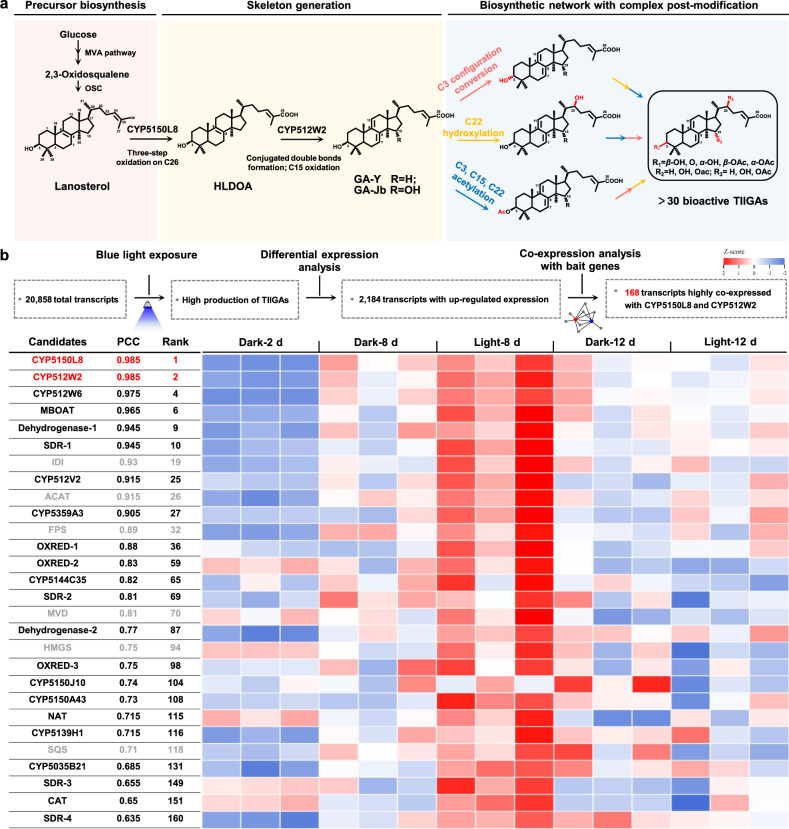
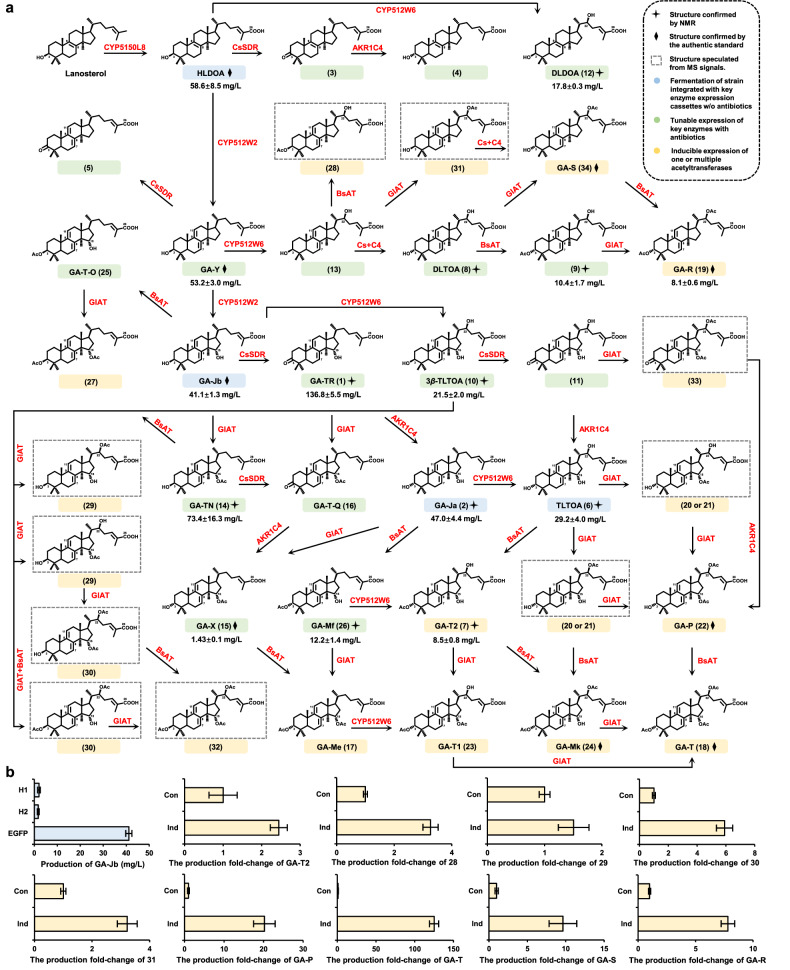
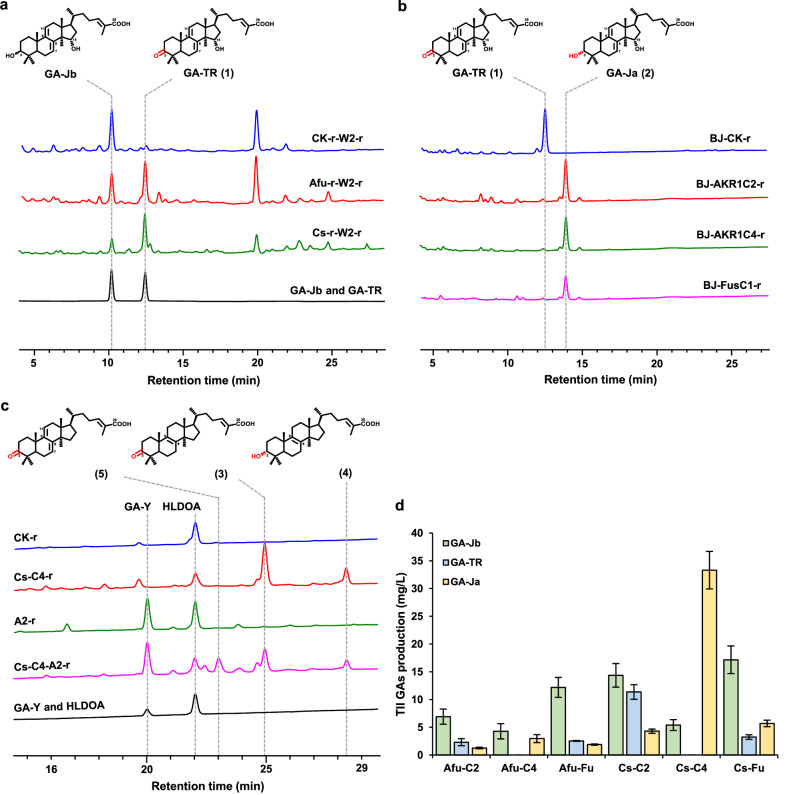
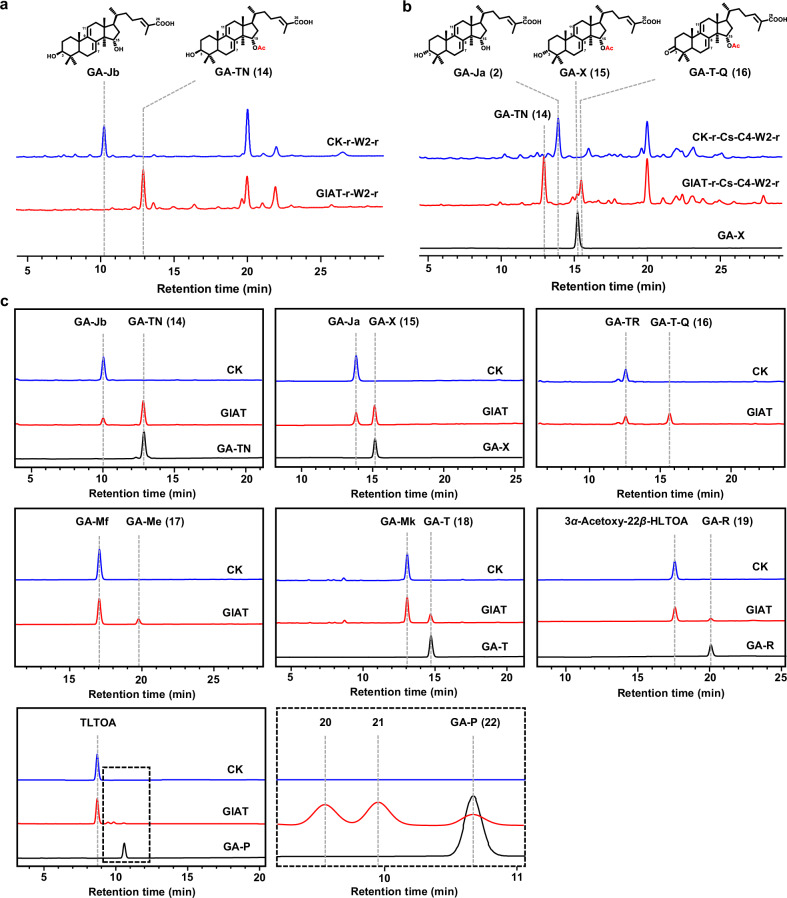
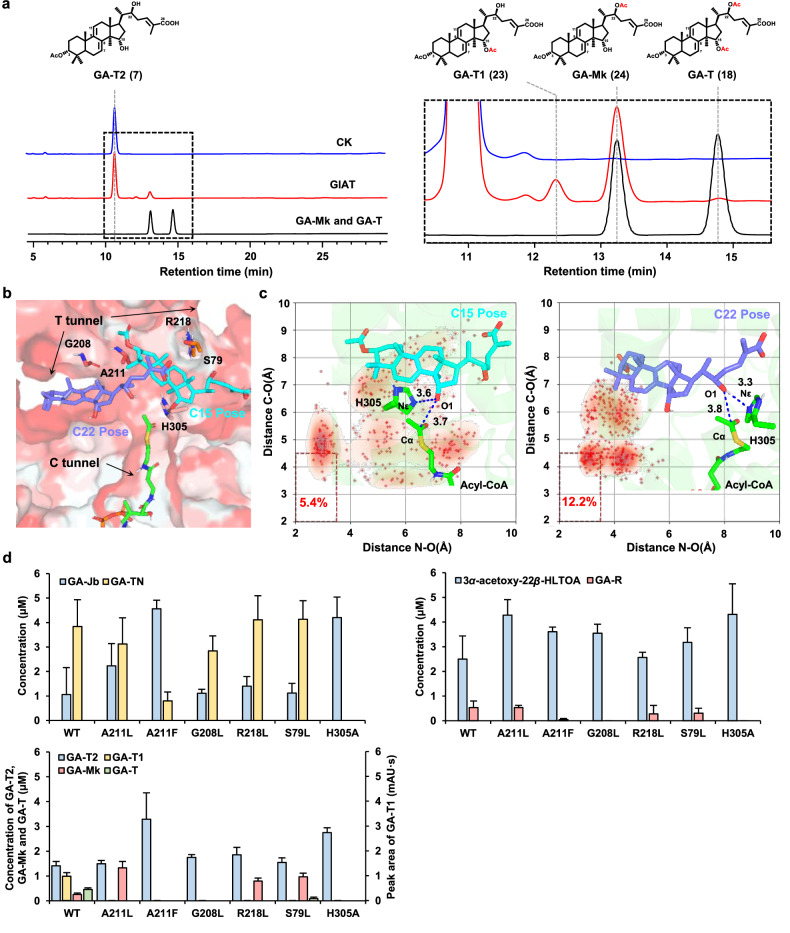
Mushroom's specialized secondary metabolites possess important pharmacological activities, but their biosynthetic pathway elucidation is extremely challenging, not to mention reprogramming of their biosynthetic networks to target metabolites. By taking Ganoderma lucidum, a famous traditional medicinal mushroom, as a lead example, here we decoded the biosynthetic networks of type II ganoderic acids (TIIGAs), a group of its main bioactive metabolites by studying the coordinated gene expression in G. lucidum, identifying endogenous or heterologous enzymes capable of C22 hydroxylation, configuration conversion of C3 hydroxyl group, and acetylation on C3, C15 and C22 hydroxyl groups. Notably, we revealed the catalytic mechanism of the C22 hydroxylase CYP512W6, and an unexpected bifunctional acetyltransferase GlAT that is required to transfer acetyl groups to C15 and C22. Using a fluorescence-guided integration method, we achieved efficient biosynthesis of significant TIIGAs applicable to industrial fermentation. After introducing all the identified enzymes to baker's yeast, we observed that biosynthesis of downstream TIIGAs was severely impeded, and dredged the metabolic block by temporally regulating the expression of acetyltransferases. By reprogramming of the biosynthetic networks of TIIGAs, we were able to produce over 30 TIIGAs, exhibiting 1-4 orders of magnitude higher titers or efficiencies than those from farmed mushrooms. The work enables the access to valuable TIIGAs, facilitates their widespread application, and sheds light on research of other mushroom products.
蘑菇的特殊次生代谢产物具有重要的药理活性,但其生物合成途径的阐明极具挑战性,更不用说对其生物合成网络进行重新编程以靶向代谢产物了。以著名的传统药用蘑菇灵芝为例,我们通过研究灵芝中基因的协同表达,鉴定出能够进行C22羟基化、C3羟基构型转化以及C3、C15和C22羟基乙酰化的内源或异源酶,从而解码了其二型灵芝酸(TIIGAs)的生物合成网络,TIIGAs是灵芝的一组主要生物活性代谢产物。值得注意的是,我们揭示了C22羟化酶CYP512W6的催化机制,以及一种将乙酰基转移到C15和C22所需的意外双功能乙酰转移酶GlAT。我们采用荧光引导整合方法,实现了适用于工业发酵的重要TIIGAs的高效生物合成。将所有鉴定出的酶导入面包酵母后,我们发现下游TIIGAs的生物合成受到严重阻碍,并通过暂时调节乙酰转移酶的表达疏通了代谢障碍。通过对TIIGAs生物合成网络进行重新编程,我们能够生产出30多种TIIGAs,其产量或效率比人工养殖的蘑菇高出1 - 4个数量级。这项工作使得人们能够获得有价值的TIIGAs,促进其广泛应用,并为其他蘑菇产品的研究提供了思路。