Karran Alexander John, Charland Patrick, Trempe-Martineau Joé, Ortiz de Guinea Lopez de Arana Ana, Lesage Anne-Marie, Sénécal Sylvain, Léger Pierre-Majorique
HEC Montréal, Montréal, Québec, Canada.
University of Québec in Montréal, Québec, Canada.
NPJ Sci Learn. 2025 Jul 8;10(1):44. doi: 10.1038/s41539-025-00333-2.
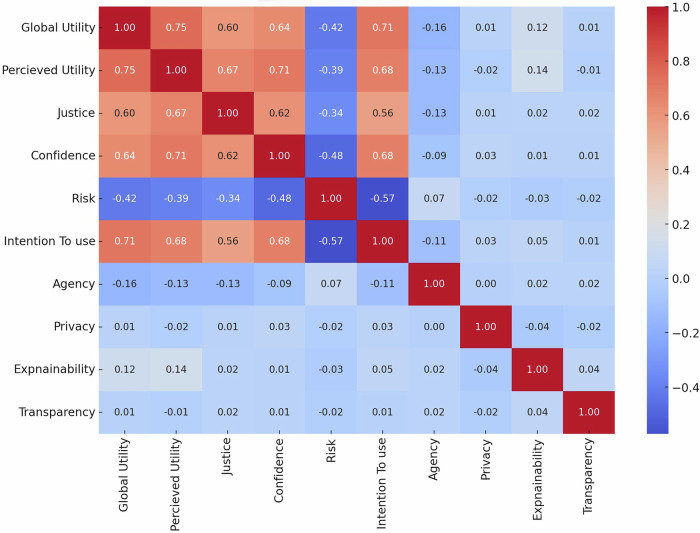
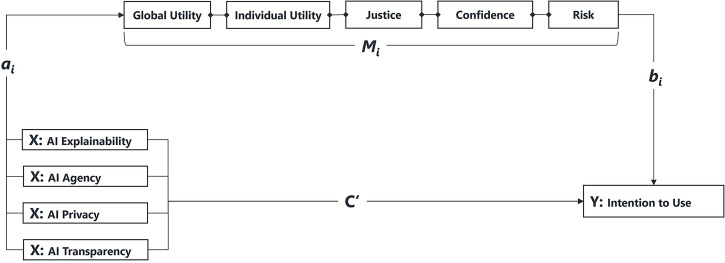
Recognising a need to investigate the concerns and barriers to the acceptance of artificial intelligence (AI) in education, this study explores the acceptability of different AI applications in education from a multi-stakeholder perspective, including students, teachers, and parents. Acknowledging the transformative potential of AI, it addresses concerns related to data privacy, AI agency, transparency, explainability, and ethical deployment of AI. Using a vignette methodology, participants were presented with four scenarios where AI agency, transparency, explainability, and privacy were manipulated. After each scenario, participants completed a survey that captured their perceptions of AI's global utility, individual usefulness, justice, confidence, risk, and intention to use each scenario's AI if it was available. The data collection, comprising a final sample of 1198 participants, focused on individual responses to four AI use cases. A mediation analysis of the data indicated that acceptance and trust in AI vary significantly across stakeholder groups and AI applications.
认识到有必要调查教育领域中接受人工智能(AI)的相关担忧和障碍,本研究从多利益相关者的角度探讨了不同AI应用在教育中的可接受性,这些利益相关者包括学生、教师和家长。承认AI的变革潜力,它解决了与数据隐私、AI自主性、透明度、可解释性以及AI的道德部署相关的问题。采用小场景描述方法,向参与者展示了四个场景,其中AI自主性、透明度、可解释性和隐私被进行了不同设置。在每个场景之后,参与者完成了一项调查,该调查收集了他们对AI的总体效用、个人有用性、公正性、信心、风险以及如果可用是否打算使用每个场景中的AI的看法。数据收集工作以1198名参与者为最终样本,重点关注个人对四个AI用例的反应。对数据的中介分析表明,不同利益相关者群体和AI应用对AI的接受度和信任度差异显著。