Statsenko Y, Liaonchyk K, Morozova D, Voitetskii R, Pazniak M, Likhorad E, Pazniak A, Beliakouski P, Abelski D, Smetanina D, Simiyu G, Gorkom K N V, AlMahmoud T, Aldhaheri H, Ljubisavljevic M
Imaging Platform, ASPIRE Precision Medicine Research Institute Abu Dhabi, Al Ain, UAE.
Radiology Department, College of Medicine and Health Sciences, United Arab Emirates University, Al Ain, UAE.
J Ophthalmol. 2025 Jul 1;2025:3678453. doi: 10.1155/joph/3678453. eCollection 2025.
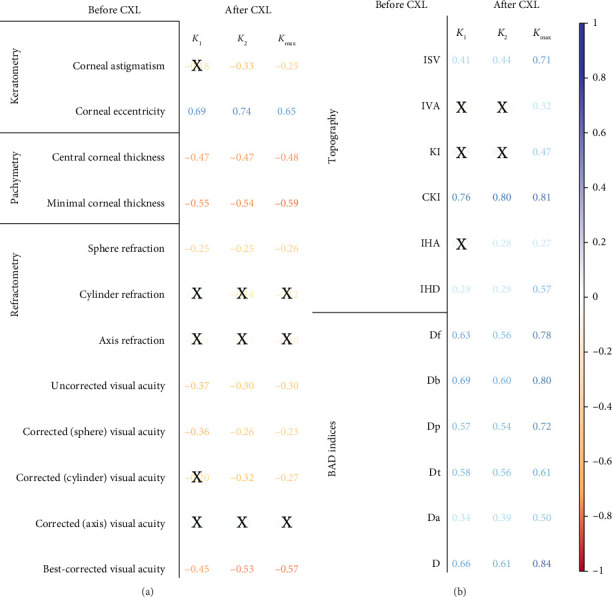
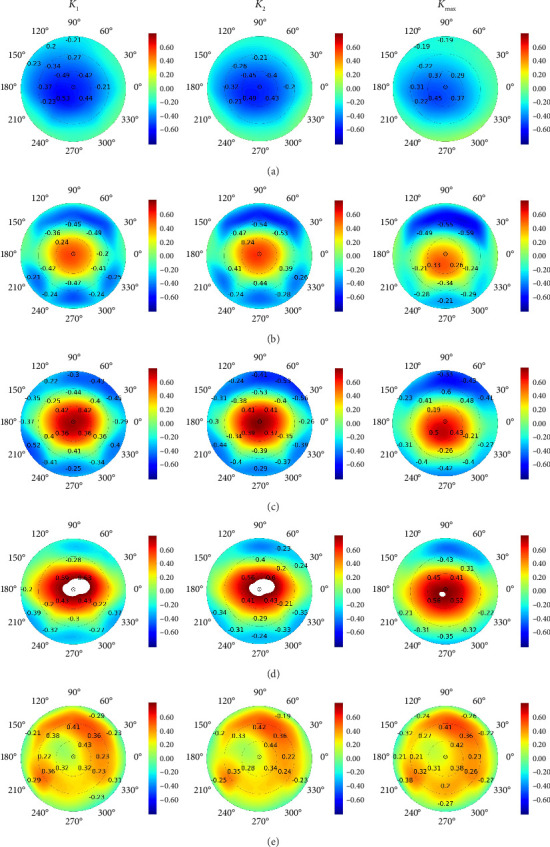
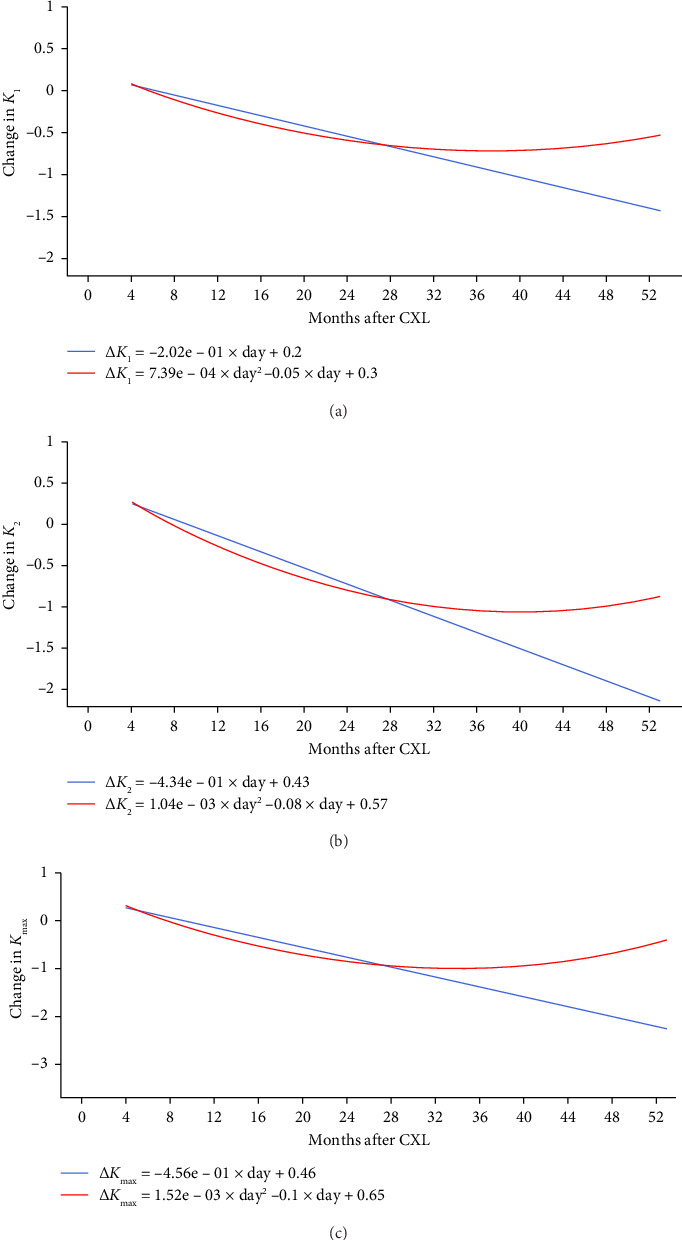
Corneal collagen cross-linking (CXL) is a treatment which arrests keratoconus (KC) progression, but its effectiveness differs radically among patients. Herein, we report preoperative diagnostic findings that reflect CXL outcomes and allow physicians to prognosticate treatment efficiency. In a medical centre, we retrospectively analysed pre- and postoperative data about 107 patients (112 eyes) treated with CXL from January 2018 to December 2022. Exclusion criteria were age below 16 years, a corneal thickness below 400 microns, severe dry eye, other corneal diseases/infections, re-CXL, pregnancy and missing follow-up examinations. All the subjects (79 males and 28 females) were followed for a minimum of 4 and a maximum of 40 months. The study dataset was comprised of 796 cases of clinical assessment, pachymetry, visiometry, refractometry and topography examinations. With these data, we modelled maximum anterior keratometry ( ) and curvature power of the flat and steep meridians of the corneal anterior surface ( and ). Two years after the invasion, corneal curvature coefficients decreased progressively. Then, they remained stable for four months and rose afterwards. In the most accurate , and models, the proportion of mean absolute error to the range of values was 1.72, 3.66 and 2.37%, respectively. Pronounced corneal thinning, low best-corrected visual acuity and high levels predict unfavourable outcomes. The high accuracy of the models advocates for a personalised approach to candidate selection for CXL.
角膜胶原交联(CXL)是一种阻止圆锥角膜(KC)进展的治疗方法,但其有效性在患者之间存在显著差异。在此,我们报告术前诊断结果,这些结果反映了CXL的疗效,并使医生能够预测治疗效果。在一家医疗中心,我们回顾性分析了2018年1月至2022年12月期间接受CXL治疗的107例患者(112只眼)的术前和术后数据。排除标准为年龄低于16岁、角膜厚度低于400微米、严重干眼、其他角膜疾病/感染、再次CXL、妊娠以及缺少随访检查。所有受试者(79例男性和28例女性)的随访时间最短为4个月,最长为40个月。研究数据集包括796例临床评估、角膜测厚、视力测量、验光和地形图检查。利用这些数据,我们建立了最大角膜前表面曲率( )以及角膜前表面平坦和陡峭子午线的曲率屈光力( 和 )模型。干预两年后,角膜曲率系数逐渐下降。然后,它们在四个月内保持稳定,之后又上升。在最准确的 、 和 模型中,平均绝对误差与值范围的比例分别为1.72%、3.66%和2.37%。明显的角膜变薄、低最佳矫正视力和高 水平预示着不良结果。模型的高准确性支持在CXL候选者选择上采用个性化方法。