Biswas Asim, Eisfeld Amie J, Guan Lizheng, Gu Chunyang, Wang Tong, Abozeid Hassanein H, Shi Hua, Trifkovic Sanja, Halfmann Peter J, Neumann Gabriele, Kawaoka Yoshihiro
Department of Pathobiological Sciences, Influenza Research Institute, University of Wisconsin-Madison, Madison, WI, 53711, USA.
Department of Pathobiological Sciences, Influenza Research Institute, University of Wisconsin-Madison, Madison, WI, 53711, USA; Department of Poultry Diseases, Faculty of Veterinary Medicine, Cairo University, Giza, 12211, Egypt.
EBioMedicine. 2025 Jul 8;118:105842. doi: 10.1016/j.ebiom.2025.105842.
Clade 2.3.4.4b highly pathogenic avian influenza A(H5N1) (HPAI H5N1) viruses have spread prolifically in dairy cattle in the US, resulting in dozens of human infections, some without well-established links to animal contacts. Many wild mammals have also been affected, including peridomestic house mice.
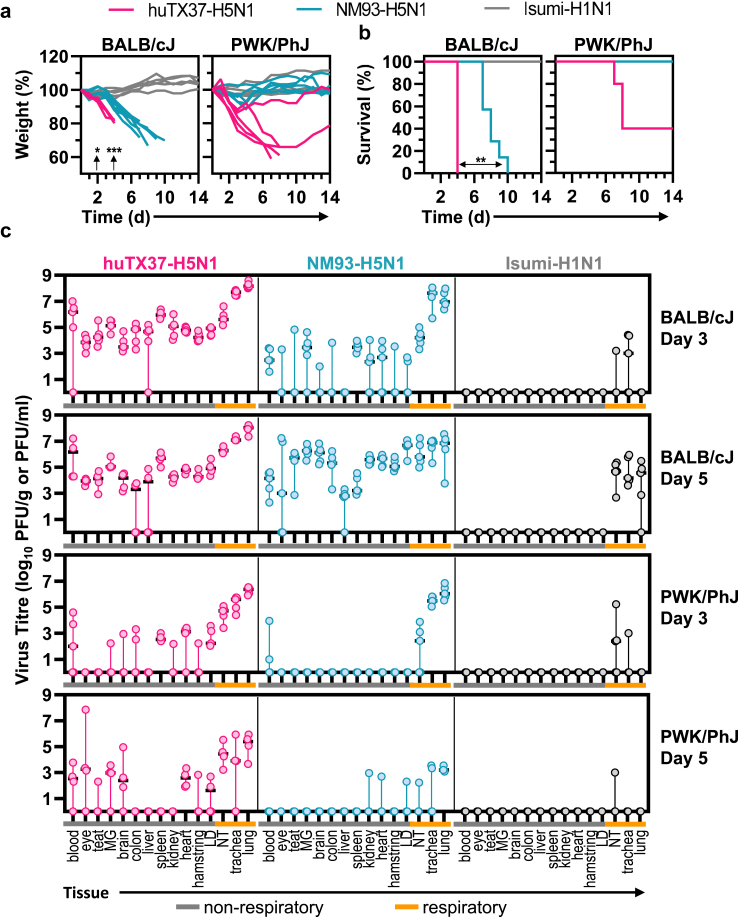
Here, we evaluated susceptibility, tissue tropism, and shedding in female PWK/PhJ and BALB/cJ mice, two laboratory strains derived from house mice that differ in expression of the antiviral restriction factor Mx1. PWK/PhJ mice, which were selected for their natural expression of Mx1, better reflect the antiviral capacity of most wild house mice, whereas BALB/cJ mice lack functional Mx1.
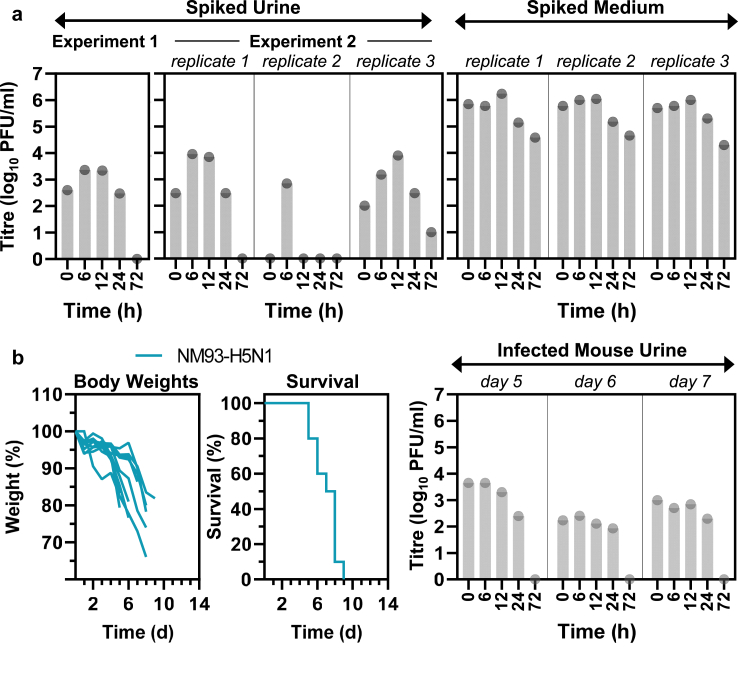
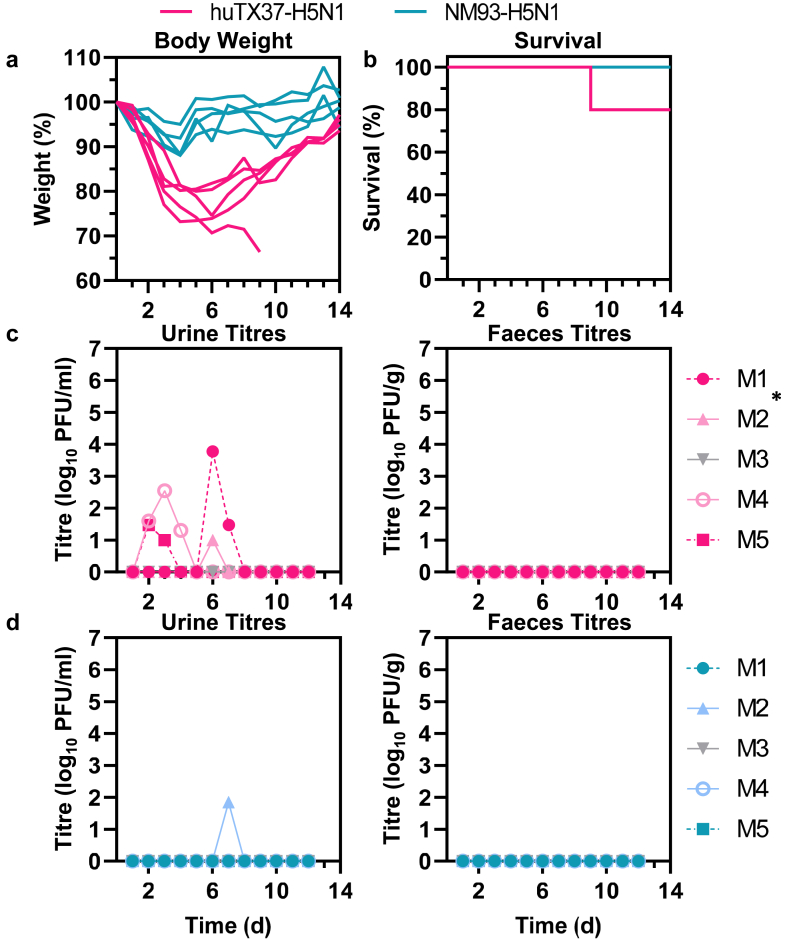
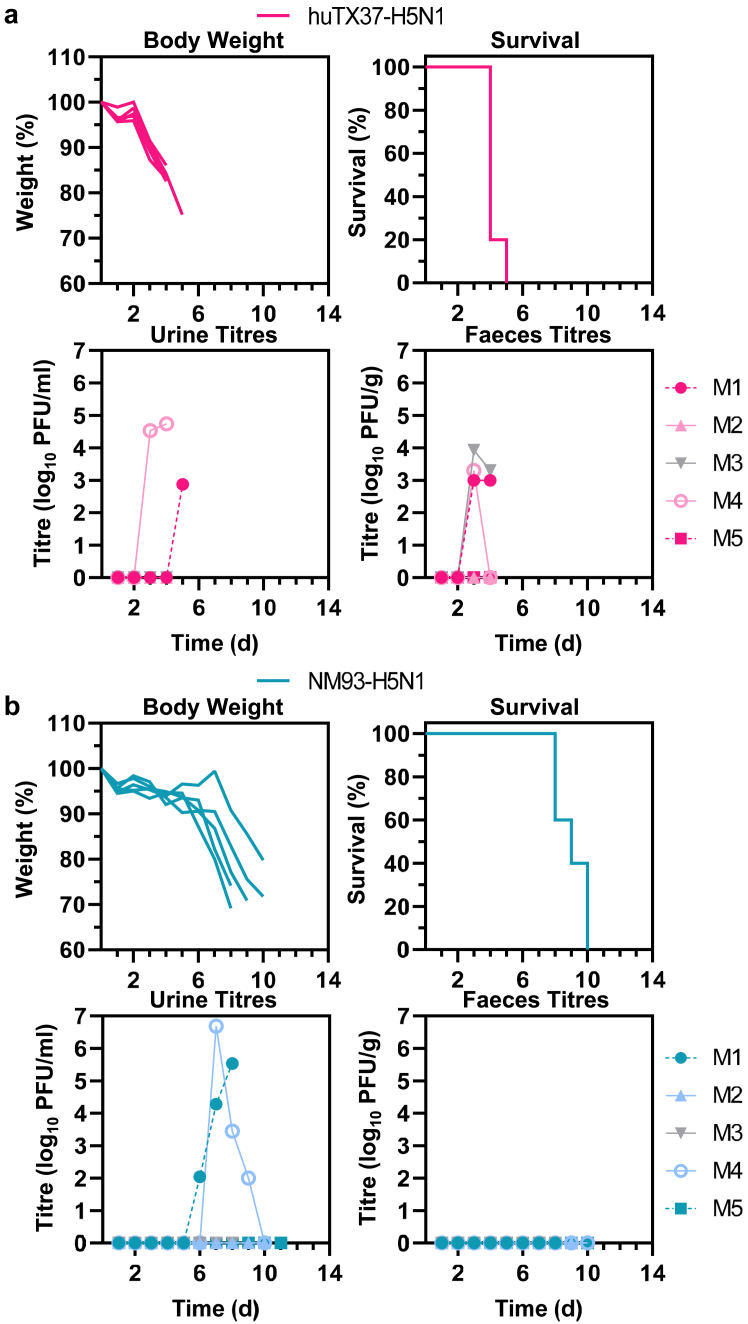
We found that, regardless of Mx1 expression status, mice are susceptible to infection by dairy cattle HPAI H5N1 viruses, that infection leads to systemic spread to non-respiratory sites, and that infected animals shed virus into the environment via urine. Shed virus remained infectious in urine for at least 24 h at room temperature.
These findings suggest that wild house mice could contribute to HPAI H5N1 environmental contamination and may play a role in transmission to other hosts.
This work was supported by the National Institute of Allergy and Infectious Diseases Centers of Excellence for Influenza Research and Response (contract 75N93021C00014) and by grants from the Japan Agency for Medical Research and Development (JP25wm0125002, JP253fa627001, and JP24fk0108626, to Y.K.).
2.3.4.4b进化枝高致病性甲型禽流感病毒(H5N1)(HPAI H5N1)在美国的奶牛中大量传播,导致数十人感染,其中一些人与动物接触的关联并不明确。许多野生哺乳动物也受到了影响,包括家栖小鼠。
在此,我们评估了雌性PWK/PhJ和BALB/cJ小鼠的易感性、组织嗜性和病毒排泄情况,这两种实验室小鼠品系源自家栖小鼠,在抗病毒限制因子Mx1的表达上存在差异。选择自然表达Mx1的PWK/PhJ小鼠能更好地反映大多数野生家栖小鼠的抗病毒能力,而BALB/cJ小鼠缺乏功能性Mx1。
我们发现,无论Mx1的表达状态如何,小鼠都易感染奶牛HPAI H5N1病毒,感染会导致病毒全身扩散至非呼吸道部位,且受感染动物会通过尿液将病毒排放到环境中。在室温下,尿液中的病毒至少24小时内仍具有传染性。
这些发现表明,野生家栖小鼠可能会造成HPAI H5N1环境污染,并可能在病毒传播给其他宿主的过程中发挥作用。
本研究得到了美国国立过敏和传染病研究所流感研究与应对卓越中心(合同编号75N93021C00014)以及日本医疗研究与开发机构的资助(给Y.K.的资助编号为JP25wm0125002、JP253fa627001和JP24fk0108626)。