Saeed Diana K, Nashwan Abdulqadir J
Nursing and Midwifery Research Department, Hamad Medical Corporation, Doha, QAT.
Cureus. 2025 Jun 8;17(6):e85580. doi: 10.7759/cureus.85580. eCollection 2025 Jun.
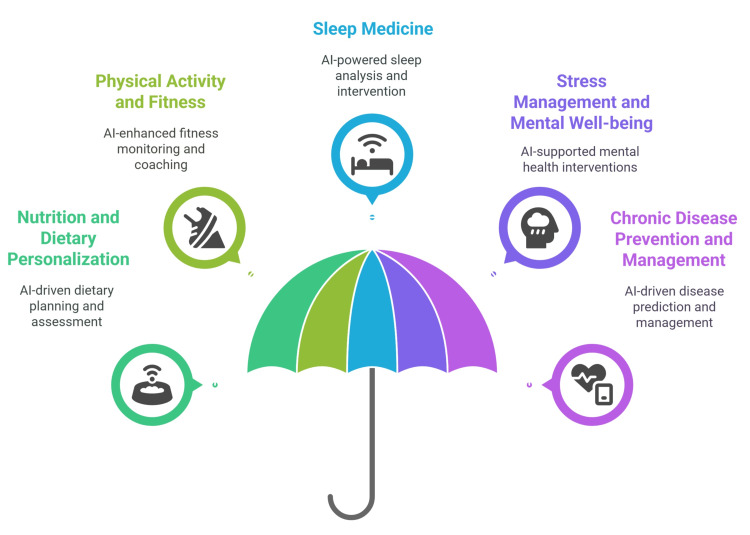
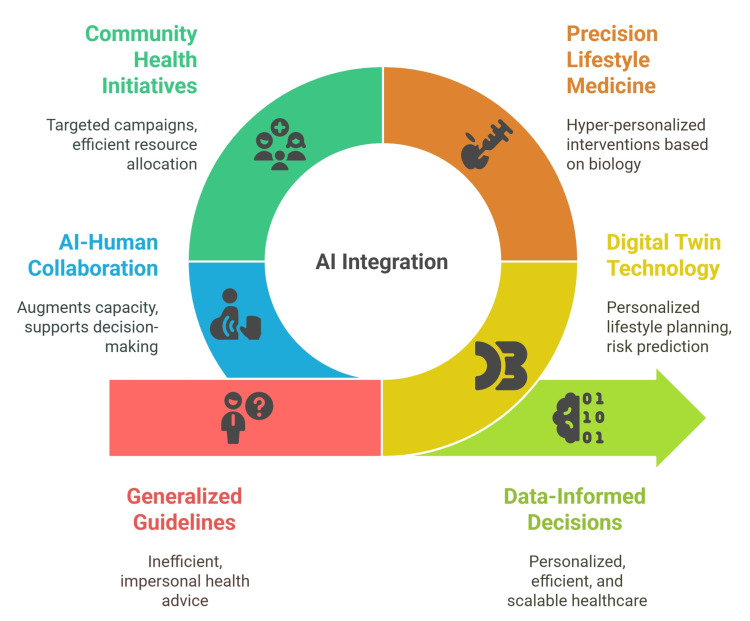
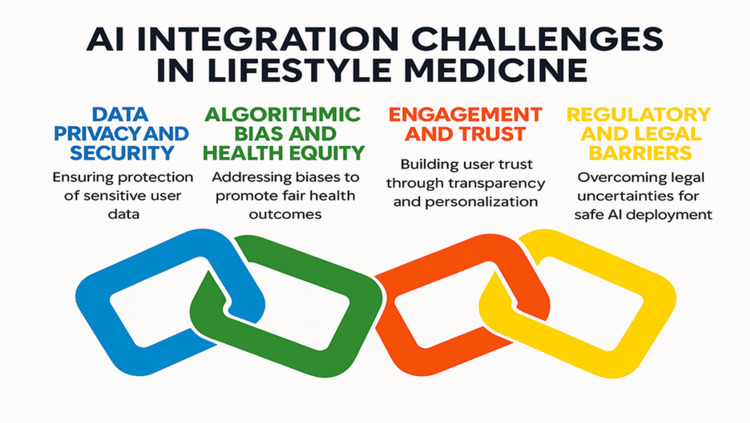
Lifestyle medicine (LM) offers a transformative, evidence-based approach to preventing, managing, and potentially reversing chronic diseases by targeting modifiable lifestyle factors such as nutrition, physical activity, sleep, stress, substance use, and social connectivity. However, real-world implementation of LM is often hindered by patient adherence issues, limited clinical time, and the need for ongoing personalized support. Artificial intelligence (AI), with its capabilities in data processing, pattern recognition, and predictive modeling, presents a unique opportunity to overcome these barriers and enhance the reach and precision of LM interventions. This narrative review explores AI's integration into LM's core domains. In nutrition, AI facilitates real-time dietary assessment and personalized recommendations through image recognition and machine learning. In physical activity and fitness, AI-powered wearable devices deliver tailored feedback, support virtual coaching, and predict injury risk. AI applications in sleep medicine allow for continuous, non-invasive monitoring and the early detection of sleep disorders. AI-driven cognitive behavioral therapy chatbots and biosensor-based stress prediction tools provide scalable, cost-effective support for mental health and stress management. Moreover, AI is pivotal in chronic disease prevention by integrating lifestyle data with electronic health records to forecast disease trajectories and optimize interventions. Despite these advances, several challenges remain. Data privacy concerns, algorithmic bias, regulatory ambiguities, and varying user trust and engagement levels must be addressed to ensure equitable and ethical implementation. AI's integration with digital twin technology and precision LM represents the next frontier in personalized health. As LM continues to evolve, AI will be indispensable in driving a more proactive, participatory, and person-centered model of care that meets the complex demands of chronic disease management in the 21st century.
生活方式医学(LM)提供了一种变革性的、基于证据的方法,通过针对营养、体育活动、睡眠、压力、物质使用和社会联系等可改变的生活方式因素来预防、管理并有可能逆转慢性疾病。然而,LM在现实世界中的实施往往受到患者依从性问题、临床时间有限以及持续个性化支持需求的阻碍。人工智能(AI)凭借其在数据处理、模式识别和预测建模方面的能力,为克服这些障碍以及提高LM干预措施的覆盖范围和精准度提供了独特机遇。这篇叙述性综述探讨了AI融入LM核心领域的情况。在营养方面,AI通过图像识别和机器学习促进实时饮食评估和个性化建议。在体育活动和健身领域,由AI驱动的可穿戴设备提供量身定制的反馈、支持虚拟指导并预测受伤风险。AI在睡眠医学中的应用能够进行持续的、非侵入性监测并早期发现睡眠障碍。由AI驱动的认知行为疗法聊天机器人和基于生物传感器的压力预测工具为心理健康和压力管理提供了可扩展且经济高效的支持。此外,AI通过将生活方式数据与电子健康记录相结合来预测疾病轨迹并优化干预措施,在慢性病预防中起着关键作用。尽管取得了这些进展,但仍存在一些挑战。必须解决数据隐私问题、算法偏差、监管模糊以及不同的用户信任和参与度水平等问题,以确保公平和符合道德的实施。AI与数字孪生技术和精准LM的整合代表了个性化健康的下一个前沿领域。随着LM不断发展,AI对于推动一种更积极主动、参与性更强且以患者为中心的护理模式将不可或缺,这种模式能够满足21世纪慢性病管理的复杂需求。