Shalom Jonathan G, Korem Maya, Strauss Asher Y, Huppert Jonathan D, Andersson Gerhard, Aderka Idan M
School of Psychological Sciences, University of Haifa, Mount Carmel, Israel.
Department of Psychology, The Hebrew University of Jerusalem, Mount Scopus, Jerusalem, Israel.
Internet Interv. 2025 Jun 23;41:100845. doi: 10.1016/j.invent.2025.100845. eCollection 2025 Sep.
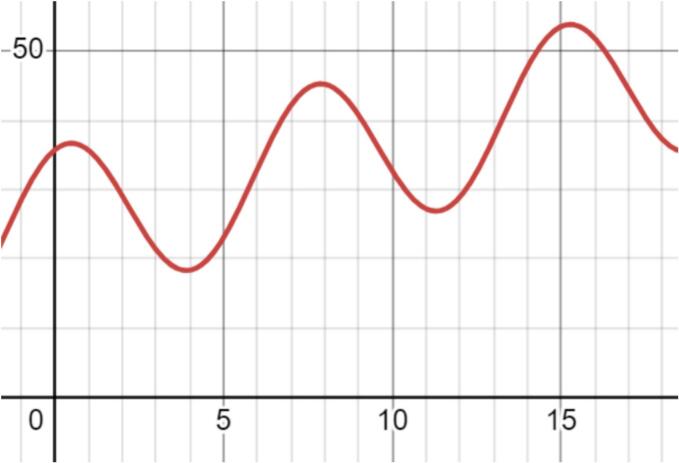
The present study examined the association between the therapeutic alliance and social anxiety symptoms during internet-delivered cognitive behavior therapy (ICBT) for social anxiety disorder (SAD). We examined 162 individuals diagnosed with SAD who underwent therapist-assisted ICBT and completed measures of the therapeutic alliance weekly during a randomized controlled trial. We used a novel modeling strategy and modeled changes in the therapeutic alliance over time using sinusoidal models. We found that a model that incorporated both a linear component and a sinusoidal component ( = 0.72), explained significantly more variance than models using only linear ( = 0.42) or only sinusoidal ( = 0.41) components. We also found that higher average levels of the alliance as well as greater increases in the therapeutic alliance during treatment were associated with greater reductions in social anxiety during treatment. Finally, we found that greater fluctuations around the slope of alliance were associated with greater reductions in social anxiety during treatment (above and beyond average alliance and increases in alliance). Considering fluctuations around a linear slope may be a useful model for the ups and downs experienced in the therapeutic alliance over the course of therapy. Fluctuations in alliance may not be a sign of negative processes, but could potentially indicate a healthy ebb and flow of the alliance that is predictive of better outcomes.
本研究考察了在针对社交焦虑障碍(SAD)的互联网认知行为疗法(ICBT)中,治疗联盟与社交焦虑症状之间的关联。我们对162名被诊断为SAD的个体进行了研究,这些个体接受了治疗师辅助的ICBT,并在一项随机对照试验中每周完成治疗联盟的测量。我们使用了一种新颖的建模策略,采用正弦模型对治疗联盟随时间的变化进行建模。我们发现,一个同时包含线性成分和正弦成分的模型(R² = 0.72),比仅使用线性成分(R² = 0.42)或仅使用正弦成分(R² = 0.41)的模型能解释更多的方差。我们还发现,治疗联盟的平均水平越高,以及治疗期间治疗联盟的增加幅度越大,与治疗期间社交焦虑的更大程度减轻相关。最后,我们发现联盟斜率周围的波动越大,与治疗期间社交焦虑的更大程度减轻相关(超出平均联盟水平和联盟增加幅度)。考虑到围绕线性斜率的波动可能是治疗过程中治疗联盟起伏的一个有用模型。联盟的波动可能不是负面过程的迹象,但可能表明联盟有一个健康的起伏,这预示着更好的结果。