Zhu Aixia, Pan Wenjing, Jiao Wenjia, Peng Kai, Wang Chunwei, Zhang Chi, Zhang Jiaqi
Hubei Key Laboratory of Animal Nutrition and Feed Science, Wuhan Polytechnic University, Wuhan 430023, China.
Institute of Animal Science, Guangdong Academy of Agricultural Sciences, Key Laboratory of Animal Nutrition and Feed Science in South China, Ministry of Agriculture and Rural Affairs, Guangdong Provincial Key Laboratory of Animal Breeding and Nutrition, Guangzhou 510640, China.
Nutrients. 2025 Jun 23;17(13):2086. doi: 10.3390/nu17132086.
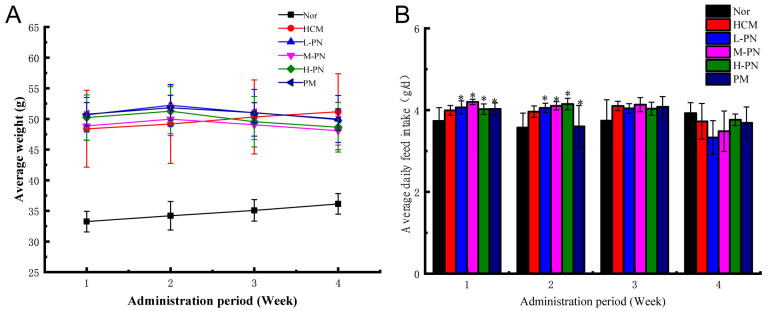
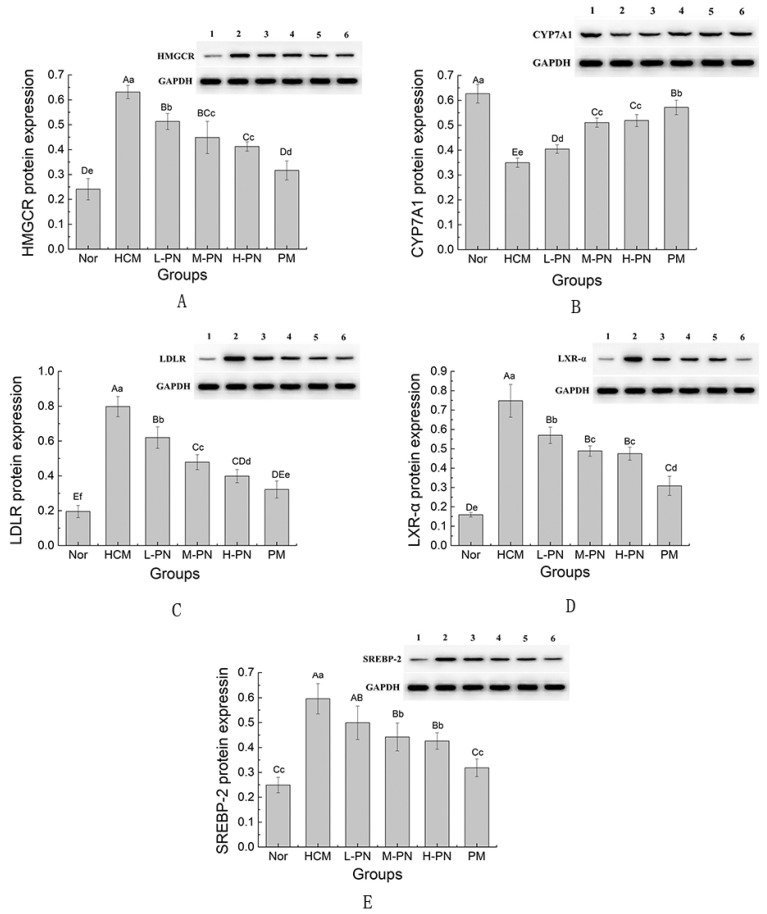
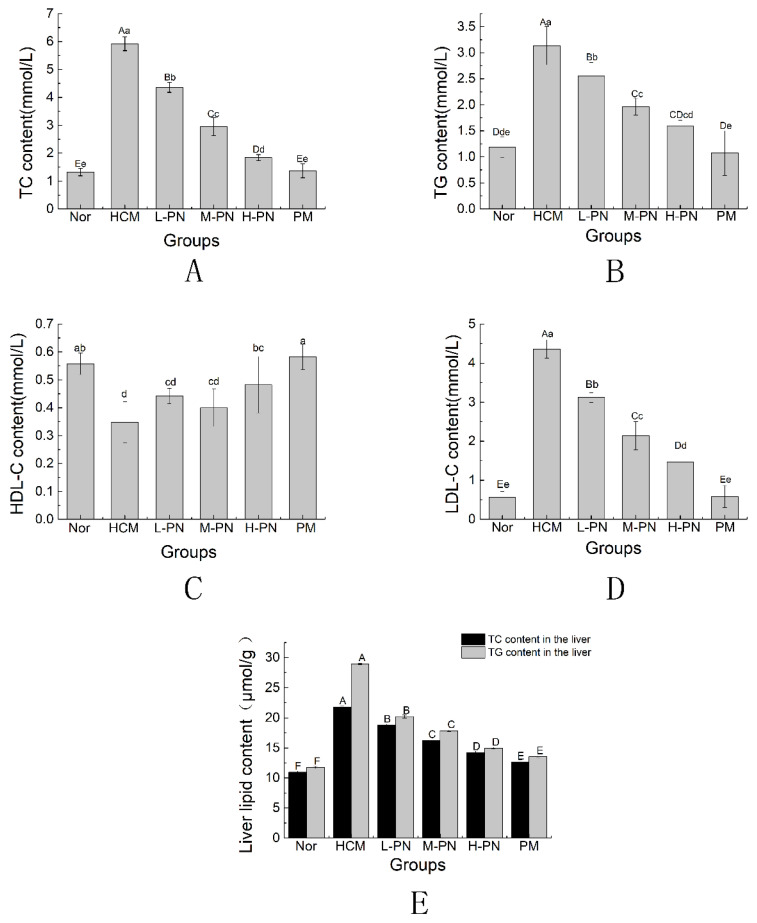
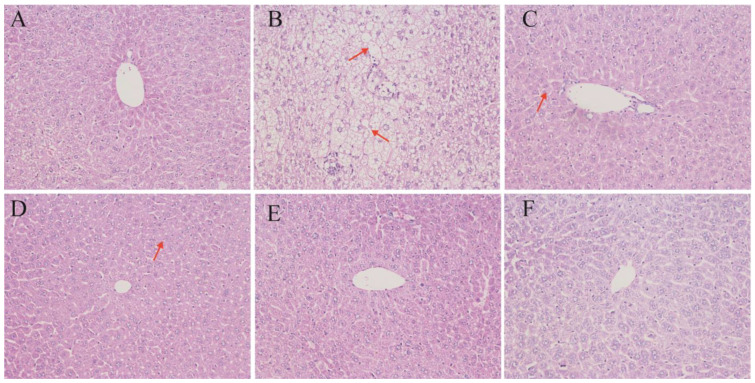
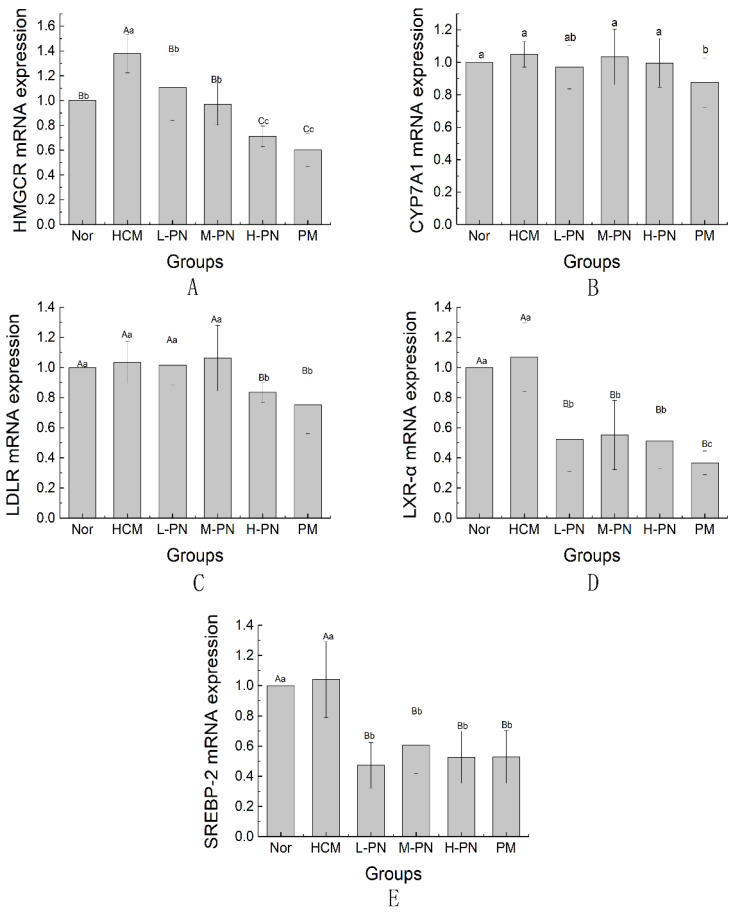
The limited bioavailability of free phytosterols restricts their clinical application in managing hypercholesterolemia. This study aimed to develop phytosterol nanoparticles (PNs) to enhance bioactivity and investigate their cholesterol-lowering efficacy and underlying mechanisms in vivo. Phytosterol nanoparticles (PNs) (93.35 nm) were engineered using soy protein isolate and administered orally at concentrations of 4.00-12.50 mg/mL to high-fat-diet-induced hypercholesterolemic mice ( = 60) over a 4-week period. Serum and hepatic lipid profiles, histopathology, gene/protein expression related to cholesterol metabolism, and fecal sterol content were evaluated. PNs dose-dependently reduced serum total cholesterol (TC: 28.6-36.8%), triglycerides (TG: 22.4-30.1%), and LDL-C (31.2-39.5%), while increasing HDL-C by 18.7-23.4% compared to hyperlipidemic controls ( < 0.01). Hepatic TC and TG accumulation decreased by 34.2% and 41.7%, respectively, at the highest dose, with histopathology confirming attenuated fatty degeneration. Mechanistically, PNs simultaneously suppressed cholesterol synthesis through downregulating HMGCR (3.2-fold) and SREBP2 (2.8-fold), while enhancing cholesterol catabolism via CYP7A1 upregulation (2.1-fold) at protein level. Although less potent than simvastatin ( < 0.05), the nanoparticles exhibited unique dual-pathway modulation absent in conventional phytosterol formulations. Fecal analysis revealed dose-responsive cholesterol excretion (36.01 vs. 11.79 mg/g in controls), indicating enhanced enteric elimination. While slightly less potent than simvastatin ( < 0.05), PNs offered unique dual-pathway modulation absent in conventional phytosterol formulations. Nano-encapsulation significantly improves the bioavailability and hypocholesterolemic efficacy of phytosterols. PNs represent a promising nutraceutical strategy for cholesterol management by concurrently regulating cholesterol synthesis and catabolism, with potential application in both preventive and therapeutic contexts.
游离植物甾醇有限的生物利用度限制了它们在治疗高胆固醇血症方面的临床应用。本研究旨在开发植物甾醇纳米颗粒(PNs)以增强其生物活性,并研究其在体内降低胆固醇的功效及潜在机制。使用大豆分离蛋白制备了粒径为93.35 nm的植物甾醇纳米颗粒(PNs),并以4.00 - 12.50 mg/mL的浓度对高脂饮食诱导的高胆固醇血症小鼠(n = 60)进行为期4周的口服给药。评估了血清和肝脏脂质谱、组织病理学、与胆固醇代谢相关的基因/蛋白表达以及粪便甾醇含量。与高脂血症对照组相比,PNs剂量依赖性地降低了血清总胆固醇(TC:28.6 - 36.8%)、甘油三酯(TG:22.4 - 30.1%)和低密度脂蛋白胆固醇(LDL-C:31.2 - 39.5%),同时使高密度脂蛋白胆固醇(HDL-C)升高了18.7 - 23.4%(P < 0.01)。在最高剂量下,肝脏TC和TG积累分别减少了34.2%和41.7%,组织病理学证实脂肪变性减轻。从机制上讲,PNs通过在蛋白水平下调HMGCR(3.2倍)和SREBP2(2.8倍)同时抑制胆固醇合成,而通过上调CYP7A1(2.1倍)增强胆固醇分解代谢。尽管效力低于辛伐他汀(P < 0.05),但纳米颗粒表现出传统植物甾醇制剂所没有的独特双途径调节作用。粪便分析显示胆固醇排泄呈剂量依赖性(对照组为11.79 mg/g,PNs组为36.01 mg/g),表明肠道清除增强。虽然效力略低于辛伐他汀(P < 0.05),但PNs具有传统植物甾醇制剂所没有的独特双途径调节作用。纳米包封显著提高了植物甾醇的生物利用度和降胆固醇功效。PNs通过同时调节胆固醇合成和分解代谢,代表了一种有前景的用于胆固醇管理的营养保健策略,在预防和治疗方面均有潜在应用。