Yendo Tatiana Mina, Orfali Raquel Leão, Pereira Naiura Vieira, Pereira Natalli Zanete, Ramos Yasmim Álefe Leuzzi, Kawakami Joyce Tiyeko, Duarte-Neto Amaro Nunes, Sotto Mirian Nacagami, Silva Luiz Fernando Ferraz, Duarte Alberto José da Silva, Sato Maria Notomi, Aoki Valeria
Department of Dermatology, Faculdade de Medicina FMUSP, Universidade de Sao Paulo, Sao Paulo 01246-903, SP, Brazil.
Laboratory of Heart Pathology, Heart Institute (InCor), Faculdade de Medicina FMUSP, Universidade de Sao Paulo, Sao Paulo 05403-900, SP, Brazil.
Int J Mol Sci. 2025 Jun 24;26(13):6049. doi: 10.3390/ijms26136049.
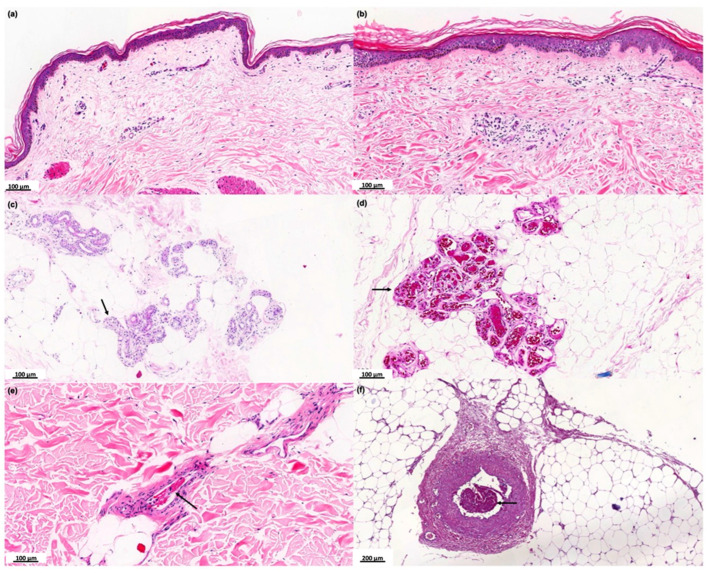
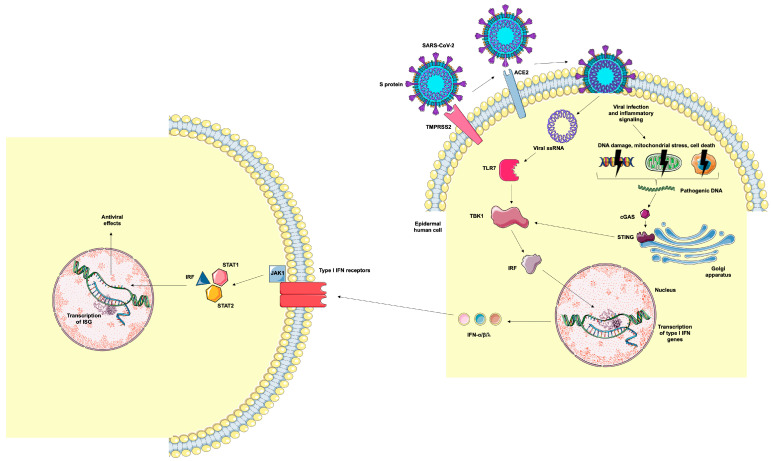
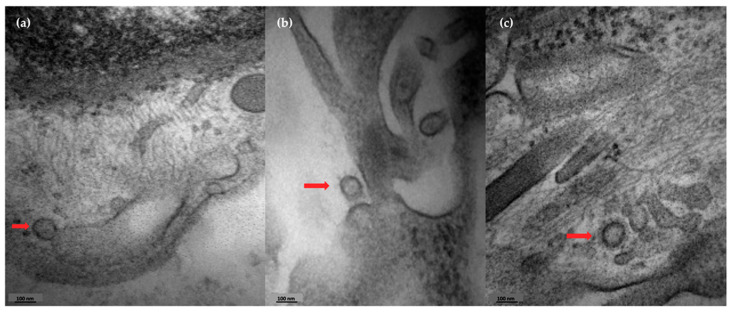
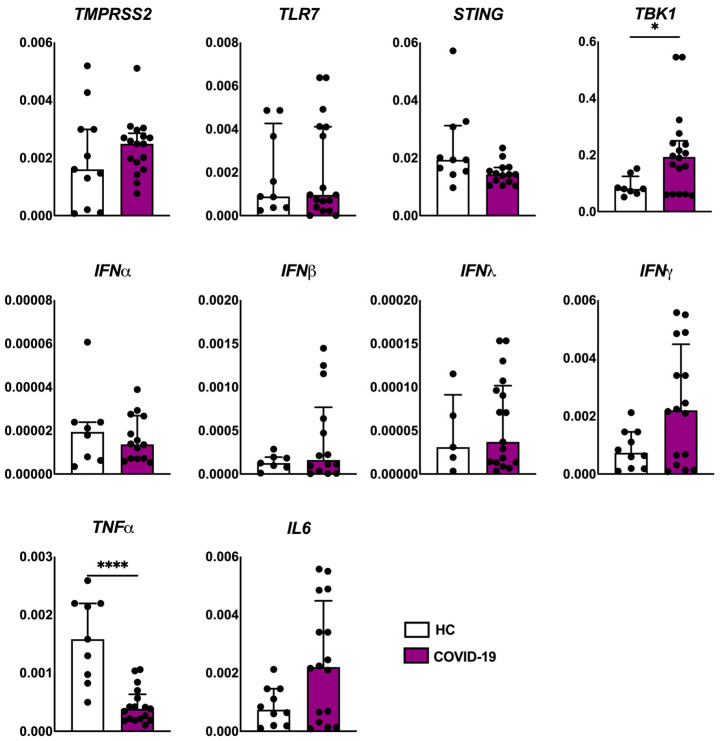
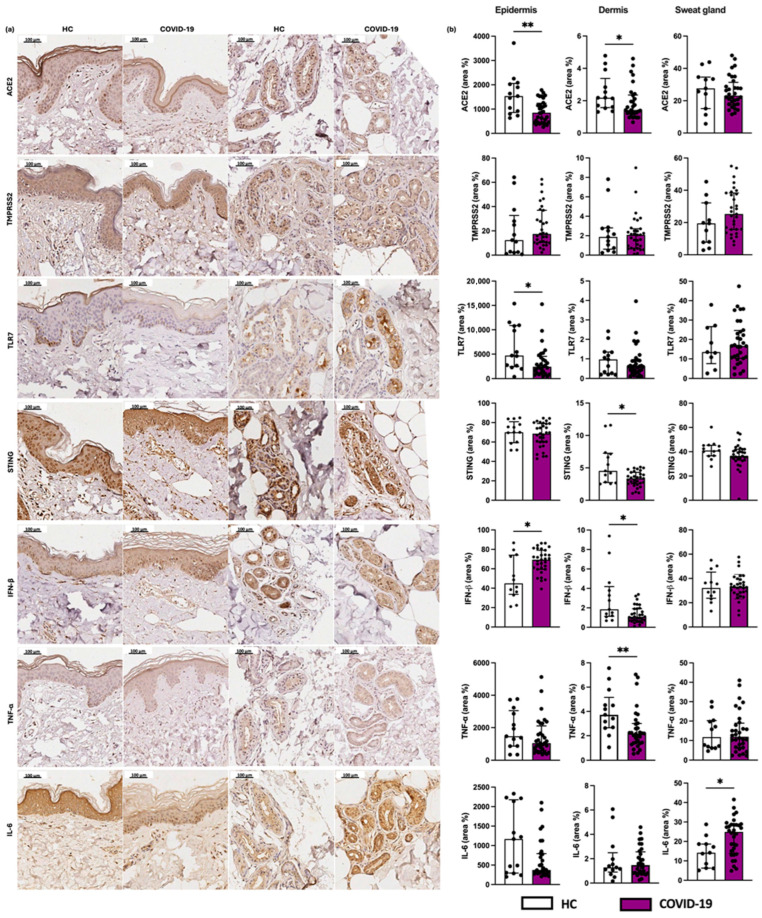
SARS-CoV-2, a β-coronavirus, primarily affects the lungs, with non-specific lesions and no cytopathic viral effect in the skin. Cutaneous antiviral mechanisms include activation of TLR/IRF pathways and production of type I IFN. We evaluated the antiviral mechanisms involved in the skin of COVID-19 patients, including skin samples from 35 deceased patients who had contracted COVID-19 before the launch of the vaccine. Detection of SARS-CoV-2 in the skin was performed using transmission electron microscopy and RT-qPCR. Microscopic and molecular effects of the virus in skin were evaluated by histopathology, RT-qPCR, and immunohistochemistry (IHC). The results revealed the presence of SARS-CoV-2 and microscopic changes, including microvascular hyaline thrombi, perivascular dermatitis, and eccrine gland necrosis. There was increased transcription of TBK1 and a reduction in transcription of TNFα by RT-qPCR in the COVID-19 group. IHC revealed reduced expression of ACE2, TLR7, and IL-6, and elevated expression of IFN-β by epidermal cells. In the dermis, there was decreased expression of STING, IFN-β, and TNF-α and increased expression of IL-6 in sweat glands. Our results highlight the role of type I IFN in the skin of COVID-19 patients, which may modulate the cutaneous response to SARS-CoV-2.
严重急性呼吸综合征冠状病毒2(SARS-CoV-2),一种β冠状病毒,主要影响肺部,在皮肤中表现为非特异性病变且无细胞病变性病毒效应。皮肤抗病毒机制包括Toll样受体(TLR)/干扰素调节因子(IRF)途径的激活和I型干扰素的产生。我们评估了新型冠状病毒肺炎(COVID-19)患者皮肤中的抗病毒机制,样本包括35名在疫苗推出前感染COVID-19的死亡患者的皮肤。使用透射电子显微镜和逆转录定量聚合酶链反应(RT-qPCR)检测皮肤中的SARS-CoV-2。通过组织病理学、RT-qPCR和免疫组织化学(IHC)评估病毒在皮肤中的微观和分子效应。结果显示存在SARS-CoV-2及微观变化,包括微血管透明血栓、血管周围皮炎和汗腺坏死。COVID-19组通过RT-qPCR检测发现,TANK结合激酶1(TBK1)转录增加,肿瘤坏死因子α(TNFα)转录减少。免疫组织化学显示,表皮细胞中血管紧张素转换酶2(ACE2)、TLR7和白细胞介素6(IL-6)表达降低,干扰素β(IFN-β)表达升高。在真皮中,含硫鸟苷结合蛋白(STING)、IFN-β和TNF-α表达降低,汗腺中IL-6表达增加。我们的结果突出了I型干扰素在COVID-19患者皮肤中的作用,其可能调节皮肤对SARS-CoV-2的反应。