
通过纳米等离子体无标记检测细胞外囊泡的微流控液体活检微创癌症诊断:综述
Microfluidic Liquid Biopsy Minimally Invasive Cancer Diagnosis by Nano-Plasmonic Label-Free Detection of Extracellular Vesicles: Review.
作者信息
Neriya Hegade Keshava Praveena, Bhat Rama B, Packirisamy Muthukumaran
机构信息
Optical Bio-Microsystems Laboratory, Department of Mechanical and Industrial Engineering, Concordia University, Montreal, QC H3G 1M8, Canada.
出版信息
Int J Mol Sci. 2025 Jul 1;26(13):6352. doi: 10.3390/ijms26136352.
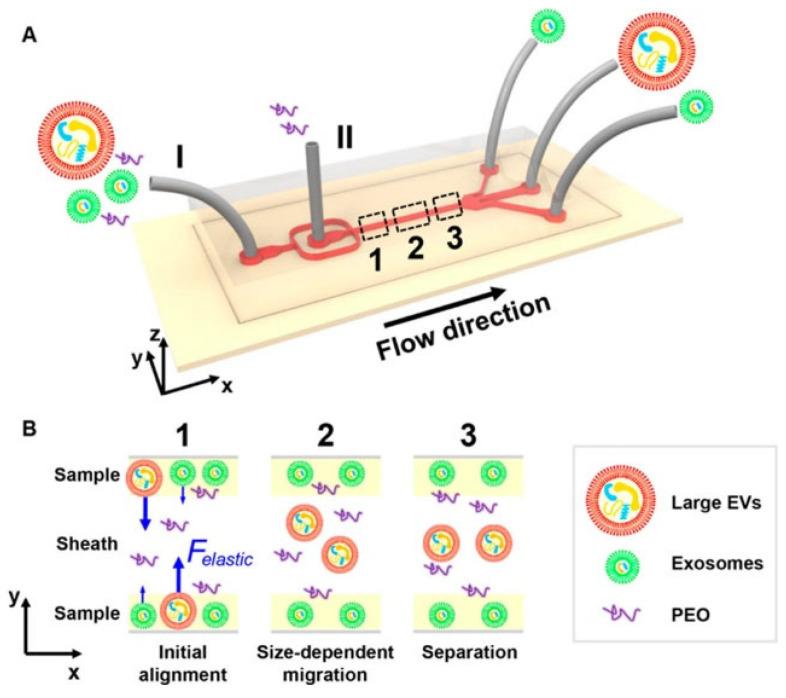
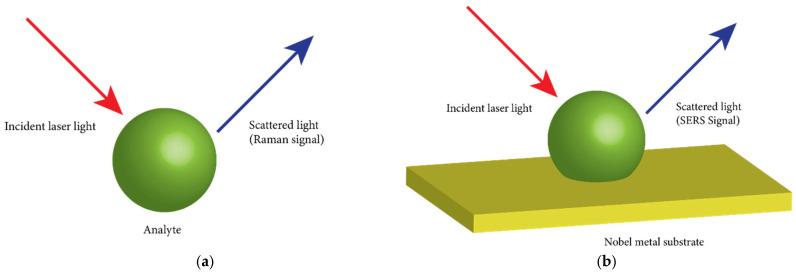
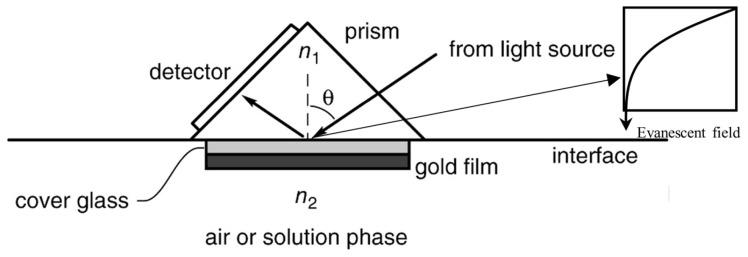
Cancer diagnosis requires alternative techniques that allow for early, non-invasive, or minimally invasive identification. Traditional methods, like tissue biopsies, are highly invasive and can be traumatic for patients. Liquid biopsy, a less invasive option, detects cancer biomarkers in body fluids such as blood and urine. However, early-stage cancer often presents low biomarker levels, making sensitivity a challenge for integrating liquid biopsy into early diagnosis. Recent studies revealed that extracellular vesicles (EVs) secreted by cells are apt markers for liquid biopsy. Detecting extracellular vesicles (EVs) for liquid biopsy faces challenges like low sensitivity, EV subtype heterogeneity, and difficulty isolating pure populations. Label-free methods, such as plasmonic biosensors and Raman spectroscopy, offer potential solutions by enabling direct analysis without markers, improving accuracy, and reducing complexity. This review paper discusses current challenges in EV-based liquid biopsy for cancer diagnosis and prognosis. It addresses the effective use of microfluidics and nano-plasmonic approaches to address these challenges. Enhancing label-free EV detection in liquid biopsy could revolutionize early cancer diagnosis by offering non-invasive, cost-effective, and rapid testing. This could improve patient outcomes through personalized treatment and ease the burden on healthcare systems.
癌症诊断需要能够实现早期、非侵入性或微创识别的替代技术。传统方法,如组织活检,具有高度侵入性,可能会给患者带来创伤。液体活检是一种侵入性较小的选择,可检测血液和尿液等体液中的癌症生物标志物。然而,早期癌症通常生物标志物水平较低,这使得将液体活检纳入早期诊断面临灵敏度方面的挑战。最近的研究表明,细胞分泌的细胞外囊泡(EVs)是液体活检的合适标志物。用于液体活检的细胞外囊泡(EVs)检测面临着灵敏度低、EV亚型异质性以及难以分离纯群体等挑战。无标记方法,如等离子体生物传感器和拉曼光谱,通过无需标记物即可进行直接分析、提高准确性和降低复杂性,提供了潜在的解决方案。这篇综述文章讨论了基于EV的液体活检在癌症诊断和预后方面当前面临的挑战。它阐述了有效利用微流控和纳米等离子体方法来应对这些挑战。在液体活检中增强无标记的EV检测可能会彻底改变早期癌症诊断,提供非侵入性、经济高效且快速的检测。这可以通过个性化治疗改善患者预后,并减轻医疗系统的负担。

 Zotero 插件